Egypt has taken a major step forward in its clean energy ambitions with the inauguration of the first phase of the Obelisk hybrid solar photovoltaic (PV) project in Qena Governorate, supported by a $150 million financing commitment from the European Investment Bank (EIB) through EIB Global.
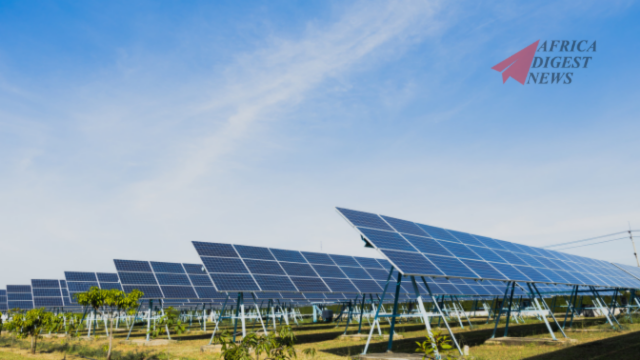
Developed by Norwegian company Scatec, Obelisk is Africa’s largest hybrid solar facility, combining 1.1 GWp of solar PV generation with a 100 MW/200 MWh battery energy storage system (BESS).
The project addresses one of the key challenges of renewable energy: intermittency. The battery system allows electricity generated during the day to be stored and dispatched strategically during peak demand or periods of low solar output, effectively transforming the facility into a dispatchable clean energy asset. For Egypt’s electricity grid, this means improved reliability, smoother load management, and support for industrial and urban expansion.
The Obelisk project has drawn strong multilateral backing. In addition to the EIB, the African Development Bank, European Bank for Reconstruction and Development (EBRD), and British International Investment (BII) are co-financing the project under a “Team Europe” approach.
Grants, concessional financing, and EU guarantees reduce risk and improve project affordability. Norwegian development finance institution Norfund has also joined as an equity partner, with Scatec retaining operational control.
Electricity generated by Obelisk will be sold to the Egyptian Electricity Transmission Company under a long-term power purchase agreement, providing revenue certainty and contributing to the country’s goal of 42% renewable energy in electricity generation by 2030.
Egypt currently relies on fossil fuels for the majority of its electricity supply, and projects like Obelisk are critical to both decarbonization and energy security.
The project’s location in Upper Egypt leverages some of the highest solar irradiance in the world, ranging from 2,000 to 3,200 kWh/m² annually, while the battery system provides essential grid services such as frequency regulation, voltage support, and reserve capacity.
This combination enhances the economic viability of the project and demonstrates how utility-scale storage can support high renewable penetration in emerging markets.
Beyond energy generation, Obelisk delivers substantial economic and social benefits. During construction, the project generates local employment in civil works, electrical installation, and equipment deployment. Operational roles focus on higher-skilled, long-term positions. Local content requirements ensure that Egyptian labor, materials, and subcontractors play a central role, supporting national industrial development.
Read Also: Masdar Signs First Power Purchase Agreement for 150 MW Solar Project in Angola
The project also has global climate implications. By displacing fossil fuel generation, Obelisk contributes to Egypt’s Paris Agreement commitments, helping reduce CO₂ emissions while providing a model for clean energy development across Africa.
The EU-Egypt partnership exemplifies how strategic international financing and technical support can accelerate energy transitions in emerging economies, with Egypt potentially becoming a renewable energy exporter to Europe via planned interconnectors.
Obelisk represents a major milestone in Africa’s renewable energy trajectory. It demonstrates that large-scale solar with integrated storage can be financed, constructed, and integrated into national grids, while providing economic, social, and climate benefits.
As Egypt pushes toward its 2030 targets, Obelisk offers a blueprint for how hybrid renewable projects can transform power systems, bolster energy security, and accelerate the continent’s clean energy transition.
By Thuita Gatero, Managing Editor, Africa Digest News. He specializes in conversations around data centers, AI, cloud infrastructure, and energy.