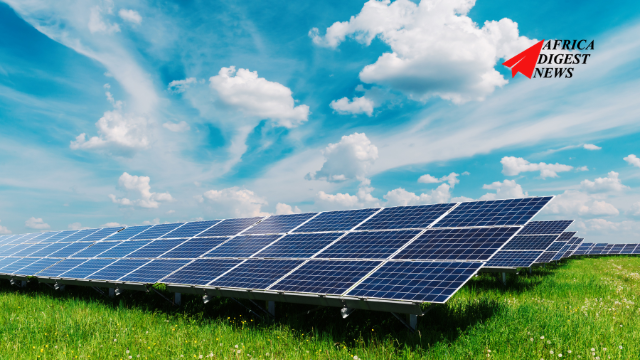
In a world increasingly defined by energy choices, the question remains: should households rely on traditional grid electricity or shift to solar power? This decision impacts not only a family’s budget but also the environment and long-term sustainability.
Across Africa and globally, debates over affordability, reliability, accessibility, and sustainability continue to shape energy policies and personal decisions. With rising electricity tariffs and more accessible solar technologies, many are rethinking their power sources. So, which one is more suitable and affordable, solar or traditional electricity?
Upfront vs. Long-Term Savings
When comparing affordability, one must distinguish between initial investment and long-term expenditure.
Traditional electricity, especially in countries with national grids, requires minimal upfront cost. Households are simply connected and begin to pay monthly bills. However, these bills fluctuate and often increase due to fuel price volatility, infrastructure maintenance, and government policy shifts. For instance, in many parts of Africa, electricity tariffs have gone up by over 20% in just a year, putting immense pressure on low-income households.
On the other hand, solar power demands a high initial investment, purchasing panels, batteries, and installation. But after this, operational costs are minimal or non-existent. A household with a well-installed solar system may never pay another electricity bill, apart from occasional maintenance. Over 5 to 10 years, the cost savings are substantial, often making solar the cheaper option.
Winner in affordability (long term): Solar.
Reliability and Power Consistency
Power reliability is another critical factor, especially in regions prone to blackouts.
Grid electricity often suffers from frequent outages, especially in countries with aging infrastructure, underinvestment, and poor maintenance. South Africa’s load-shedding crisis, Nigeria’s power instability, and Kenya’s urban blackouts are examples. Power interruptions affect everything, from studying at night to running a refrigerator or small business.
Solar power, when installed with sufficient battery storage, offers independence and consistency. Once the sun charges the batteries during the day, the household enjoys uninterrupted power, even during national outages. However, it’s weather-dependent, and without batteries or hybrid systems, cloudy days can affect power supply.
Winner in reliability (with storage): Solar.
Accessibility and Rural Potential
In rural areas, grid extension is costly and often delayed. Some communities may wait years or even decades before being connected to the national grid. And even when connected, the power is often weak or unstable.
Solar offers decentralized energy, allowing homes to produce their own electricity without waiting for government infrastructure. Solar companies like M-KOPA, BBOXX, and d.light in Kenya and other African countries have revolutionized rural electrification. Through pay-as-you-go models, households with as little as $1 per day can start using solar for lighting, phone charging, or even powering TVs and fridges.
In short, solar is often the only accessible solution for millions in off-grid regions.
Winner in rural accessibility: Solar.
Environmental Impact
The climate crisis has added urgency to the energy debate. Traditional electricity, particularly from coal and diesel plants, contributes significantly to greenhouse gas emissions, air pollution, and climate change.
Solar power is clean, renewable, and has zero emissions during operation. It reduces carbon footprints and aligns with global efforts toward sustainable development and net-zero targets.
Governments and global bodies increasingly favor solar and other renewable options, offering tax incentives, subsidies, and funding for solar adoption.
Winner in environmental sustainability: Solar.
Also read: How Remote Kenyan Communities Are Embracing Solar Power
Technological Advances and Modern Trends
One of the historical challenges of solar power was its limitation to daytime energy production. However, technological progress in battery storage, smart grids, and hybrid systems has drastically improved its usability. Now, a solar system can store energy for use at night or during cloudy periods, ensuring consistent availability.
Additionally, the price of solar panels has dropped by over 80% in the last decade, making it more attractive to middle and low-income earners. The rise of solar appliances, such as solar fridges, TVs, and water pumps, also makes it easier for households to fully shift to solar living.
Meanwhile, traditional electricity systems are slow to innovate, bogged down by bureaucracy and aging infrastructure.
Winner in innovation and future-readiness: Solar.
Flexibility and Control
With traditional electricity, households are at the mercy of utility companies. If prices rise, if power is cut, or if there are billing errors, there’s little consumers can do.
Solar gives users control. They decide their system size, monitor their consumption, and enjoy energy autonomy. Even when connected to the grid, hybrid solar systems allow users to switch sources depending on cost or availability.
This flexibility is increasingly attractive to small business owners, schools, and hospitals, who cannot afford power disruptions.
Winner in flexibility: Solar.
Challenges of Solar Adoption
Despite its advantages, solar is not without challenges. The initial cost, while falling, remains a barrier to the poorest. Without financing options, many still cannot afford quality systems. Cheap, poorly installed solar setups also fail and cause frustration.
Additionally, solar systems require space (rooftops or land) and sometimes struggle in apartment settings or highly shaded environments. There’s also the need for technical know-how, which may be lacking in some regions.
Electricity, by contrast, is plug-and-play once connected. No learning curve, no maintenance decisions, no sunlight dependency.
Winner in ease of use: Electricity.
Policy Support and Financing
Governments and donors increasingly support solar energy through grants, low-interest loans, and tax exemptions. Kenya, Rwanda, and Ghana are leading examples, offering incentives for solar companies and consumers alike.
Still, national policies often favor large utility companies and fossil fuel subsidies. There’s a need for stronger solar policy support to make it affordable and widespread.
Where such support exists, solar flourishes.
Also read: How Namibia Is Tackling Drought and Desertification with Innovation and Renewable Energy
The choice between solar and electricity depends on context. But based on the core comparisons:
| Factor | Winner |
| Long-term affordability | Solar |
| Reliability | Solar (with storage) |
| Accessibility (especially rural) | Solar |
| Environmental impact | Solar |
| Innovation & control | Solar |
| Ease of use | Electricity |