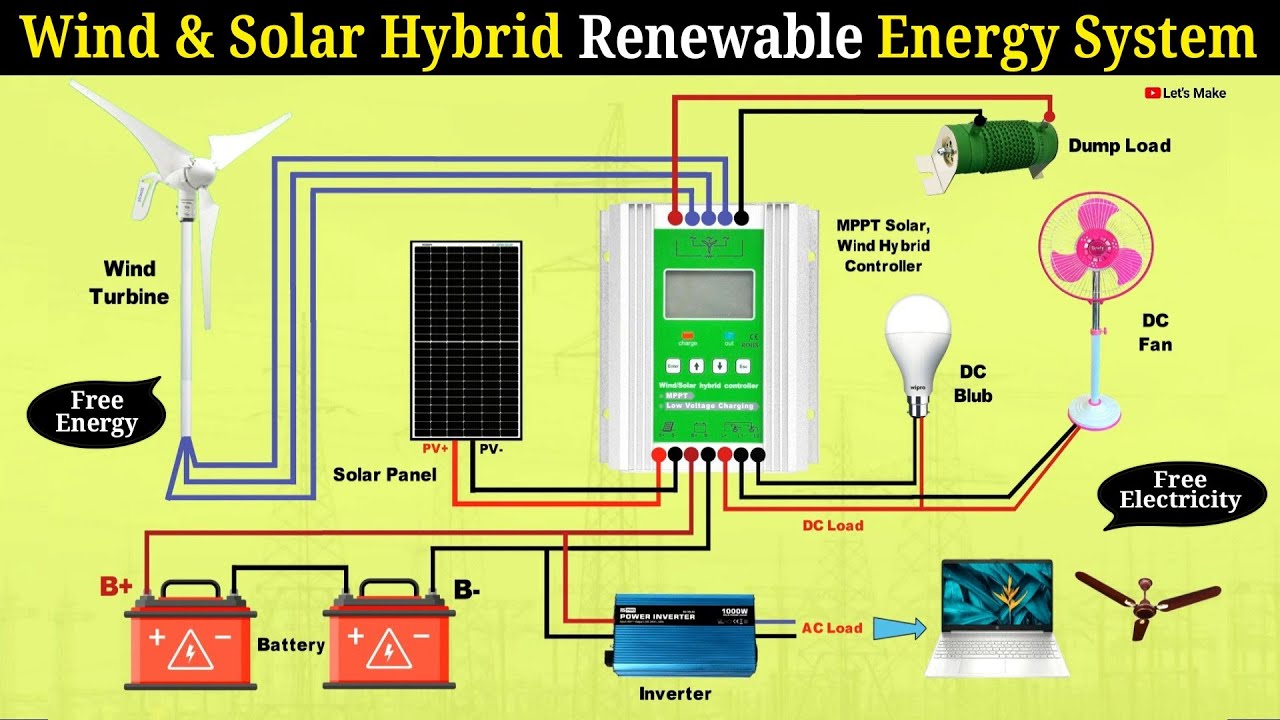
Hybrid solar–wind systems combine solar photovoltaic (PV) panels with wind turbines , often integrated with battery storage and smart controllers , to generate more stable and reliable renewable power.
By merging two complementary energy sources, these systems deliver consistent electricity even when the sun isn’t shining or the wind isn’t blowing. As global energy demand grows, hybrid systems are emerging as a powerful solution for off-grid communities, industrial microgrids, and large-scale renewable plants.
What a Hybrid Solar–Wind System Is
At its core, a hybrid solar–wind system is an integrated energy setup that uses both solar and wind resources to produce electricity. It includes three main components:
- Energy sources: Solar panels capture sunlight and convert it to electricity, while wind turbines use moving air to spin blades connected to a generator.
- Power management system: Inverters, controllers, and converters manage the flow of power between the sources, storage, and the load.
- Energy storage: Batteries store excess power for use when neither solar nor wind is producing enough energy.
Unlike stand-alone solar or wind systems, hybrids are designed so that one source compensates for the variability of the other. When the sun sets, wind power often increases. When winds are calm, solar takes the lead.
How Hybrid Systems Work
Hybrid solar–wind systems work through a seamless flow of energy between the sources, storage, and loads.
- Solar panels (PV modules) convert sunlight into direct current (DC) electricity. Controllers ensure the panels operate at their maximum efficiency through Maximum Power Point Tracking (MPPT).
- Wind turbines generate alternating current (AC) power as their blades rotate. The output fluctuates with wind speed, but a charge controller smooths this to a usable form.
- Inverters transform DC electricity into AC, which can be used by most appliances or fed into the power grid.
- Battery storage systems store surplus power generated during high production periods and release it when output drops.
- Energy management systems (EMS) oversee the entire operation predicting power production, managing charging and discharging cycles, and maintaining grid stability.
In modern systems, smart controllers use real-time data and weather forecasts to balance solar and wind inputs. This automation ensures efficient use of energy, reduces waste, and maximizes system lifespan.
System Configurations AC-Coupled vs DC-Coupled
Hybrid systems are typically designed in two main configurations:
1. AC-Coupled Systems
In this setup, both solar and wind power are converted to AC electricity before being integrated. Batteries connect via a separate inverter. AC-coupled designs are ideal for retrofitting or adding storage to existing systems.
2. DC-Coupled Systems
Here, both solar and battery storage share a DC bus before the power is converted to AC. This design minimizes energy loss because electricity undergoes fewer conversions. DC-coupled systems are more efficient for new installations, particularly where battery integration is essential.
The choice between the two depends on system scale, cost, and existing infrastructure.
Why Combine Solar and Wind?
Hybrid systems offer several advantages that make them more attractive than single-source renewable setups:
- Complementary power generation:
Solar output peaks during the day, while wind speeds often rise at night or in different seasons. This natural balance ensures round-the-clock power generation. - Improved reliability:
By using two energy sources, hybrids reduce downtime and provide consistent energy to critical operations such as hospitals, data centers, or remote villages. - Lower storage requirements:
Since solar and wind complement each other, less energy storage is needed compared to a solar-only or wind-only setup, reducing battery costs. - Cost efficiency:
Shared infrastructure such as power converters, grid connections, and monitoring systems — reduces overall project costs. - Reduced carbon footprint:
Hybrid systems eliminate the need for diesel backup generators, cutting greenhouse gas emissions and improving environmental sustainability.
Design and Optimization Considerations
To build an effective hybrid system, engineers conduct a detailed resource assessment and modeling process:
- Resource analysis: Collecting long-term solar irradiance and wind speed data helps determine the best combination and sizing.
- Load assessment: Understanding the energy demand profile ensures the system is optimized for the intended application.
- System sizing: Software simulations help determine the right ratio of solar to wind capacity and the appropriate battery size.
- Control strategy: Advanced controllers balance generation and storage, ensuring smooth operation under varying weather and load conditions.
- Maintenance planning: Because hybrid systems involve multiple technologies, maintenance schedules must include turbine servicing, solar panel cleaning, and inverter inspections.
Proper design ensures long-term reliability and cost savings throughout the system’s lifespan.
Real-World Applications
Hybrid solar–wind systems are now used across different scales and environments:
- Off-grid rural communities: In regions with limited grid access — such as parts of Africa and Asia — hybrid systems power homes, schools, and health centers.
- Industrial microgrids: Mines, manufacturing plants, and telecom towers use hybrids for dependable, clean energy.
- Utility-scale projects: Large hybrid farms integrate solar, wind, and battery storage to stabilize national grids and improve energy diversity.
- Islands and coastal areas: These regions benefit greatly due to consistent wind speeds and strong sunlight, reducing dependence on imported diesel fuel.
Governments and investors are increasingly backing hybrid energy projects to accelerate energy access and climate resilience.
The Future of Hybrid Systems
With battery prices falling and energy management software improving, hybrid solar–wind systems are expected to dominate the next wave of renewable installations. As climate targets tighten, hybrids offer a pathway toward 24-hour clean energy generation.
Future systems may integrate artificial intelligence (AI) for predictive energy management and hydrogen storage to capture excess generation for long-term use. In emerging markets, especially in Africa, hybrid systems are key to closing the energy access gap while supporting industrial growth.
Also read: Mauritania Signs $300 Million IPP Deal for Hybrid Solar-Wind Plant Under Desert to Power Initiative
FAQs
1. Do hybrid solar–wind systems always need batteries?
Not always. In grid-connected setups, excess power can be exported to the grid, reducing the need for batteries. However, for off-grid or remote applications, batteries are essential to store energy for night-time or low-wind conditions.
2. Which setup is better — AC-coupled or DC-coupled?
AC-coupled systems are better for retrofits or flexible operations, while DC-coupled systems are more efficient for new installations that prioritize battery use. The best choice depends on cost, scale, and energy demand patterns.
3. Are hybrid systems cheaper than solar-only or wind-only projects?
Yes, over time. While the initial cost can be higher, hybrids save money by sharing infrastructure, reducing storage size, and delivering more consistent power output.
4. Where are hybrid systems most common?
They are widely used in remote regions, islands, industrial zones, and large-scale renewable plants where stable and continuous energy supply is crucial.
5. What is the first step to setting up a hybrid solar–wind system?
The first step is conducting a resource and load assessment to understand local wind speeds, solar irradiance, and energy demand. This helps in determining the right system design, sizing, and financial feasibility.


