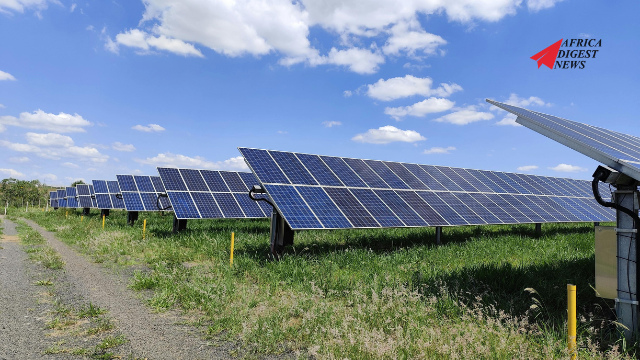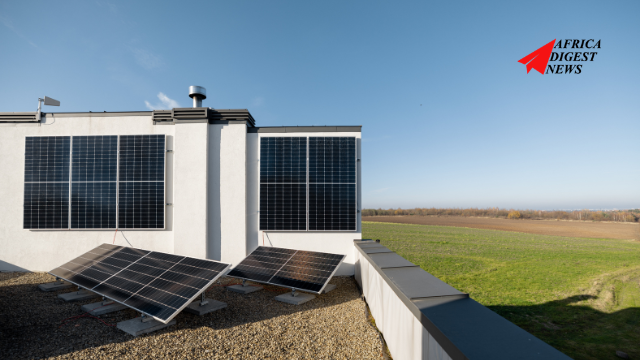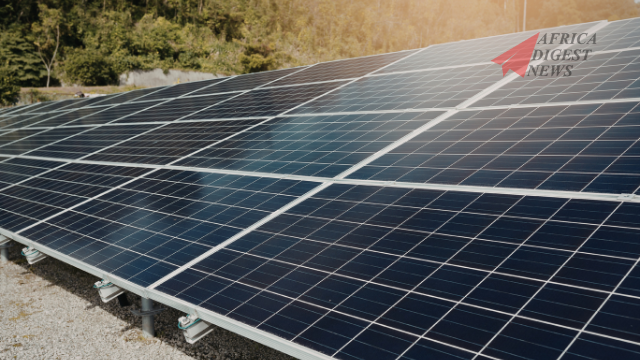
Government incentives are not peripheral to Africa’s solar boom; they are central to it. In 2025, Africa added 4.5 gigawatts of solar capacity, and a significant portion of this growth was driven by tax incentives, feed-in tariffs, and grants that made solar projects financially viable.
For solar companies and installers, understanding these incentives is not just about maximizing client value; it is about understanding market dynamics and positioning your business for growth.
The Three Pillars of Solar Incentives
African governments deploy three primary mechanisms to incentivize solar adoption: tax incentives for investors and businesses, feed-in tariffs that guarantee prices for grid-connected solar energy, and grants and concessional financing for off-grid and mini-grid projects. Each mechanism serves a different market segment and creates different opportunities for solar companies.
Tax Incentives: The Commercial Solar Driver
South Africa’s Section 12L renewable energy tax incentive is the most mature and well-established tax incentive in Africa. It allows businesses to claim a 125% deduction on renewable energy assets in the first year of installation, effectively reducing the cost of solar systems by 30-40% depending on the company’s tax bracket. This incentive has been transformative for South Africa’s commercial solar sector, driving billions of rands in investment.
The mechanics are straightforward but require precision. A business that invests R1 million in a solar system can claim a R1.25 million deduction against its taxable income. If the company’s marginal tax rate is 28%, this translates into R350,000 in tax savings, a 35% reduction in the effective cost of the system. For solar companies, this means that commercial clients are willing to invest in larger systems than they would without the incentive.
Nigeria’s approach is different but equally powerful. The 2026 Tax Act preserves VAT and import duty exemptions for solar equipment and introduces a 5% corporate income tax rate for renewable energy companies.
This creates a two-pronged incentive: lower equipment costs due to VAT exemptions, and lower corporate taxes for solar businesses. For installers and solar companies operating in Nigeria, this means that both the supply side and the demand side of the market are incentivized.
Kenya does not currently have a direct tax incentive for solar installations, but the government has indicated plans to introduce one. In the interim, the focus is on net metering, which provides an indirect incentive by allowing consumers to offset their electricity bills with excess solar generation.
Feed-in Tariffs: Guaranteed Returns for Grid-Connected Solar
Feed-in tariffs (FITs) guarantee that solar generators can sell excess energy to the grid at a predetermined rate, typically locked in for 15-20 years. This certainty makes solar projects bankable, as financiers can project cash flows with confidence.
Uganda’s FIT is a prime example. The Electricity Regulatory Authority (ERA) sets tariff rates that vary by system size, with higher rates for smaller systems and lower rates for larger installations.
The impact of FITs on project development is significant. A commercial solar system in Uganda can generate revenue from two sources: reduced electricity bills (self-consumption) and revenue from selling excess energy to the grid (FIT).
This dual revenue stream makes projects more attractive to investors and allows solar companies to design larger systems that would not be economically viable on self-consumption alone.
However, FITs are not static. Governments adjust them periodically based on grid conditions, renewable energy targets, and budget constraints. Solar companies must monitor these adjustments and communicate them to clients, as changes in FIT rates can significantly impact project economics.
Grants and Concessional Financing: Unlocking Off-Grid Markets
While tax incentives and FITs drive grid-connected solar, grants and concessional financing are the engines of off-grid solar adoption. The Beyond the Grid Fund for Africa (BGFA) provides financing to off-grid solar companies, while the Sustainable Energy Fund for Africa (SEFA) offers grants and concessional loans for renewable energy projects.
These mechanisms are critical for rural electrification and mini-grid development, where the customer base has limited ability to pay. BGFA financing, for example, is structured to support solar home systems and mini-grids in underserved markets.
For solar companies, this means that off-grid markets are becoming increasingly viable, as the financing burden is shared between the company, the customer, and the fund.
The Market Reshaping Effect
The cumulative impact of these incentives is a fundamental reshaping of Africa’s solar market. In South Africa, tax incentives have driven commercial solar capacity to over 3 GW, with businesses accounting for the majority of new installations.
In Uganda, FITs have attracted utility-scale solar developers, with projects ranging from 5 MW to 50 MW. In Kenya, net metering is beginning to drive grid-connected residential and commercial solar adoption.
Read Also: New African Solar Regulations Every Installer Must Know in 2026
For solar companies, this reshaping creates both opportunities and challenges. The opportunity is clear: incentives expand the addressable market by making solar projects more affordable and more bankable.
The challenge is that incentives are often temporary and subject to political change. A solar company that builds its entire business model around a specific incentive risks disruption if that incentive is withdrawn or modified.
Strategic Implications for Solar Companies
The strategic implication is that solar companies must diversify their revenue streams across different incentive mechanisms and different market segments. A company that relies solely on tax incentives in South Africa is vulnerable to changes in tax policy.
A company that operates across multiple countries, leveraging different incentive mechanisms, is more resilient.
Additionally, solar companies must invest in understanding incentive programs and helping clients navigate them. This is not a peripheral service; it is a core competency. Clients are willing to pay for expertise that reduces their effective cost of solar systems by 30-40%. Solar companies that can position themselves as incentive specialists will win market share and command premium pricing.
By Thuita Gatero, Managing Editor, Africa Digest News. He specializes in conversations around data centers, AI, cloud infrastructure, and energy.