Nairobi, Kenya – February 10, 2026 – Africa is navigating a complex, dual-track energy transition, simultaneously pursuing large-scale, grid-connected renewable projects and a burgeoning decentralized solar revolution.
However, a critical misalignment in financing models threatens to impede this progress, with a staggering 82% of clean energy finance in Africa still geared towards utility-scale projects, leaving the rapidly expanding distributed solar sector significantly underserved.
This imbalance, highlighted in the Global Solar Council’s latest report, poses a substantial risk to the continent’s ability to achieve universal energy access and sustainable development goals.
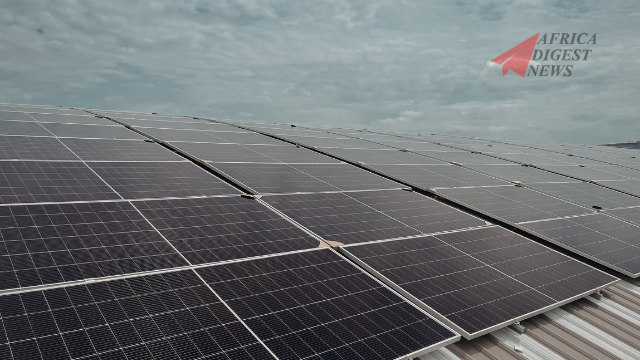
The GSC’s “Africa Market Outlook for Solar PV: 2026-2029” reveals that Africa is effectively running two energy transitions in parallel. One is a government-led transition, centered on grid-connected and utility-scale solar projects, predominantly financed through public and development funds.
The other is a privately financed transition, driven by the rapid deployment of rooftop, commercial, and distributed solar systems by households and businesses. While both are crucial, the financing frameworks have not evolved to keep pace with the latter, creating a significant gap.
Private clean energy investment in Africa has seen substantial growth, nearly doubling from approximately USD 17 billion in 2019 to USD 40 billion in 2024. Despite this increase, the structures of this financing remain poorly suited to the needs of distributed solar projects.
Read Also: Africa’s Solar Sector Surges 54% in 2025, Driven by Dual Transition
These projects typically require smaller ticket sizes, shorter repayment tenors, and crucially, local currency financing to mitigate foreign exchange risks for local developers and consumers. As a result, many consumer-led and commercial projects face higher financing costs or constrained access to capital, even amidst strong demand and improving technology economics.
The report underscores that this misalignment carries real risks. Without reform, it could slow deployment, raise system costs, and limit the economic value of solar, particularly for the millions who stand to benefit most from decentralized energy solutions.
The high stakes involve not just the pace of energy transition but also the equitable distribution of its benefits across the continent. The mismatch between the market reality where distributed capacity, estimated at 44% of new installations, is significantly underreported and existing financing models is a critical challenge that demands urgent attention.
To support the next phase of growth, the Global Solar Council advocates for several key reforms. These include developing finance models specifically tailored for distributed and consumer-led solar, unlocking investment in rooftop, commercial, and captive systems.
Furthermore, improved data collection and planning frameworks are essential to accurately reflect where and how solar is being deployed, ensuring grid and investment decisions keep pace with market evolution. Accelerated investment in storage, grids, and system flexibility is also recommended to maintain reliability and support rising industrial and commercial energy demand.
Realizing Africa’s full solar potential, projected to exceed 33 GW by 2029, will depend on aligning finance, planning, and regulation with market reality. This strategic imperative will enable solar and storage to deliver not only clean power but also enhanced reliability, economic productivity, and long-term energy security across the continent. The challenge now is to bridge the financing gap and ensure that Africa’s dual energy transition can flourish unimpeded.
By Thuita Gatero, Managing Editor, Africa Digest News. He specializes in conversations around data centers, AI, cloud infrastructure, and energy.