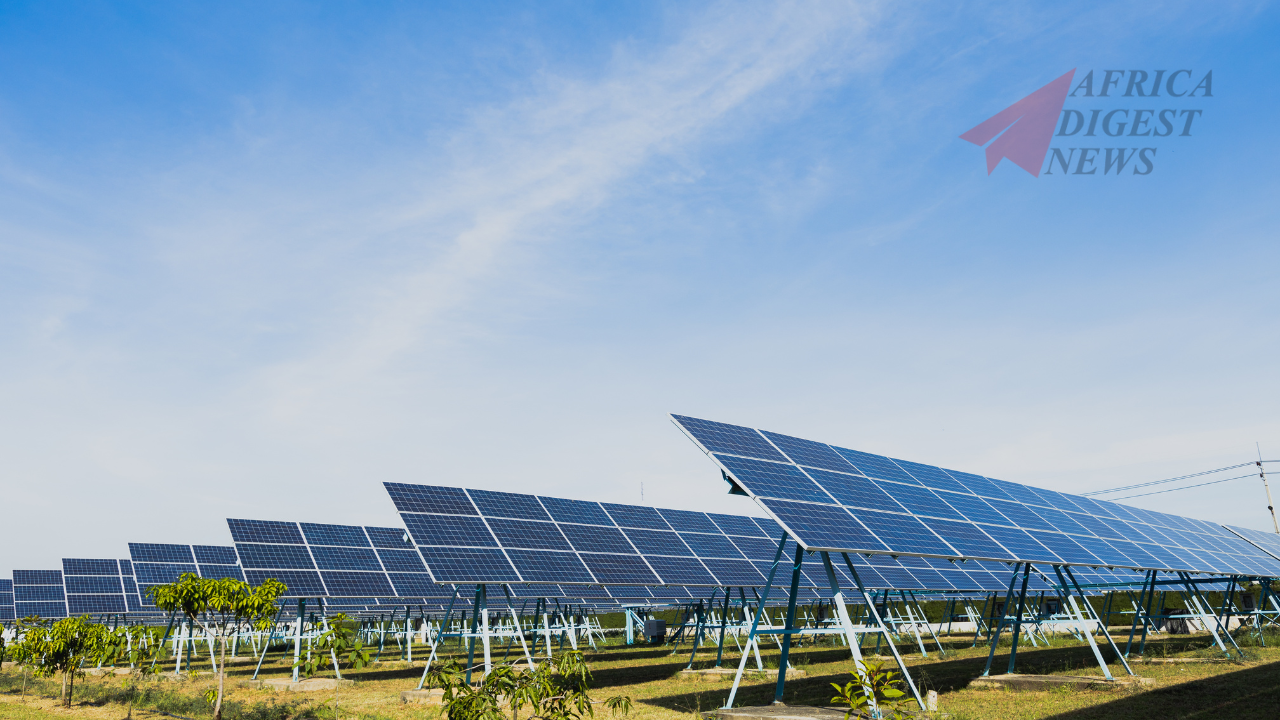
Africa’s renewable energy transition is diversifying with solar power emerging as a central pillar of the continent’s economic momentum. In 2025, Africa recorded its fastest year of solar growth, with installations surging by an impressive 54% year-on-year, underscoring the technology’s dual role as both an energy access solution and a potent engine for competitiveness and resilience.
This rapid expansion, detailed in a recent Global Solar Council report, signals a profound shift in how Africa is addressing its energy deficit and pursuing sustainable development.
The sheer scale of this growth is compelling. Africa installed approximately 4.5 GW of new solar capacity in 2025, a significant leap that reflects robust economic growth across the continent, with over 20 countries exceeding 5% growth.
While established markets like South Africa (1.6 GW), Nigeria (803 MW), Egypt (500 MW), and Algeria (400 MW) continue to lead, a crucial trend of diversification is taking hold.
Mid-sized and emerging markets are increasingly contributing substantial new capacity, with countries such as Morocco (204 MW), Zambia (139 MW), Tunisia (120 MW), Botswana (120 MW), Ghana (92 MW), and Chad (86 MW) demonstrating a broader market participation.
This expansion saw the number of African countries installing 100 MW or more of solar capacity double in 2025 compared to the previous year, reinforcing the widespread adoption of solar technology.
This diversification is critical for Africa’s energy security and economic development. Historically, energy infrastructure development has been concentrated, leaving vast swathes of the continent underserved.
The decentralized nature of solar power, however, allows for rapid deployment in remote and off-grid areas, directly addressing the energy access gap that affects over 600 million people.
Read Also: Algeria’s 1,480 MW Solar Boom: A Wake-Up Call for Africa’s Energy Ambitions
By bringing reliable electricity to communities previously reliant on expensive and polluting alternatives, solar power unlocks new opportunities for education, healthcare, and local economic activity, fundamentally transforming lives and livelihoods.
Beyond energy access, solar is proving to be a powerful driver of industrialization and economic growth. The falling costs of solar technology, coupled with rising demand for reliable power, make it an attractive investment for industries seeking to reduce operational expenses and enhance their competitiveness.
The Global Solar Council emphasizes the need to unlock private capital, improve system integration, and enable faster, more affordable, and inclusive solar deployment to sustain this trajectory.
This strategic focus is essential for ensuring that solar’s potential is fully realized, not just as a source of electricity, but as a foundational element of a modern, resilient economy.
The medium-term outlook for Africa’s solar sector is equally ambitious, with projections suggesting the continent could install over 31.5 GW of solar capacity by 2029.
This anticipated growth underscores the high stakes involved in nurturing this burgeoning industry. It requires continued policy support, innovative financing mechanisms, and a commitment to building robust grid infrastructure capable of integrating large-scale renewable energy.
Africa’s solar surge is more than an energy trend; it is a deliberate pathway towards energy sovereignty, economic empowerment, and a sustainable future, challenging the continent to leverage its abundant solar resources to redefine its place in the global energy landscape.
By Thuita Gatero, Managing Editor, Africa Digest News. He specializes in conversations around data centers, AI, cloud infrastructure, and energy.