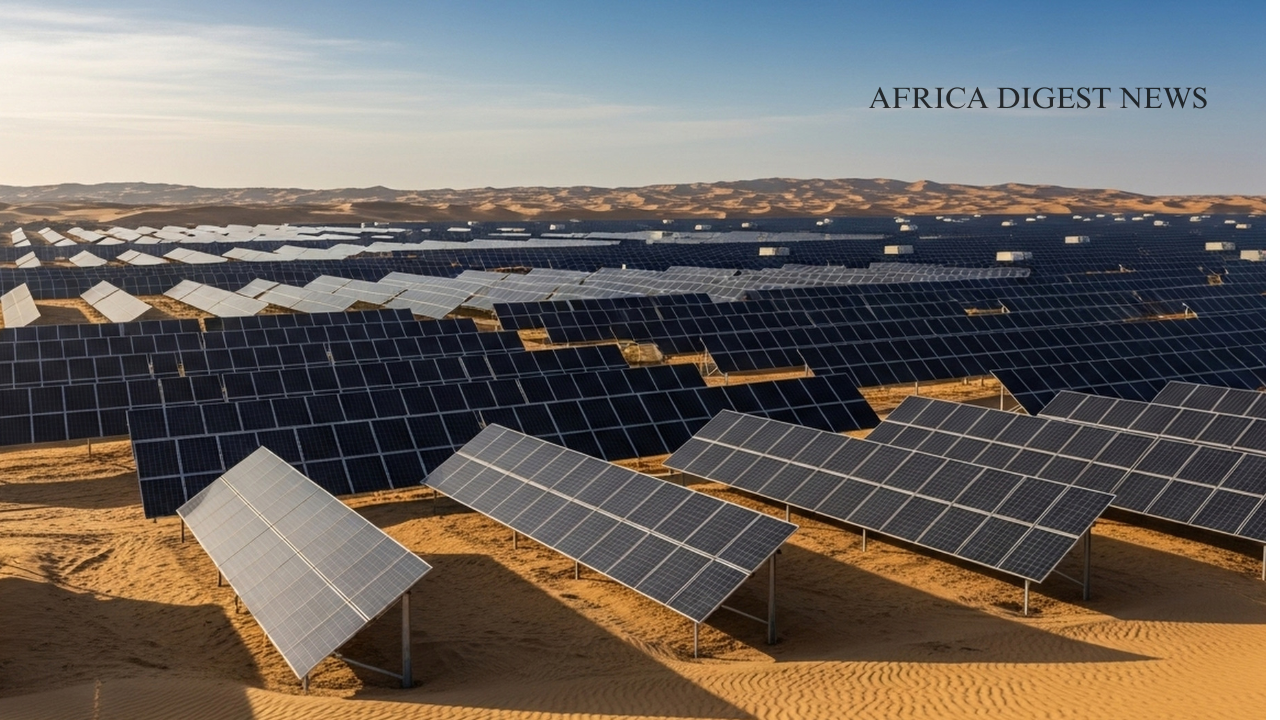
Algeria is moving from policy to hardware. By the summer of 2026, the country expects to commission nine photovoltaic solar power plants with a combined capacity of 1,480 MW. This is not a distant ambition; the first results are imminent.
Two 200 MW facilities located in El Ghrous (Biskra) and Tendla (El M’Ghair) are scheduled to begin operations by late January 2026.
These nine plants represent the immediate front of a larger strategy. They form the first phase of a plan to establish 3,200 MW of renewable capacity, serving as the foundation for a long-term goal of reaching 15,000 MW by 2030-35.
The Foundation of the Transition
To understand why this matters, look at the geography. Algeria possesses an annual average irradiation of 2,000 kWh/m2. For decades, this geographic advantage remained secondary to fossil fuel production.
The current shift aims to diversify the energy mix and secure a “green baseload” that reduces reliance on traditional thermal power.
Read Also: Is Eskom’s Power System Better Than Five Years Ago What the Data Shows
The Algeria Renewable Energy Program (AREP) provides the structure for this growth. It is not merely about installing panels; it is about creating a functional market for Independent Power Producers (IPPs).
By establishing clear legal and institutional frameworks, including Power Purchase Agreements (PPAs) and land agreements, the state is attempting to make solar energy a profitable venture for private investors.
Moving Beyond the Surface
The technical objective is clear: add 13.5 GW to 15 GW of solar capacity to the national grid over the next decade. However, the relational significance is deeper. Algeria is trying to prove that a major oil and gas producer can successfully transition its domestic energy source without destabilising its economy.
The strategy relies on three functional pillars:
1. Site Selection: Prioritising locations based on technical and financial feasibility.
2. Legal Clarity: Building templates for concession and interconnection agreements to remove friction for private capital.
3. Project Management: Using experienced procurement models to ensure these nine plants actually reach completion by the 2026 deadline.
The Stake for the Region
This is a test of authority for the Ministry of Energy and Renewable Energies. Khalil Hedna, the ministry’s spokesperson, has tied the department’s credibility to these specific deadlines.
If Algeria meets the summer 2026 target, it will validate the AREP framework and likely attract the further private investment needed to hit the 15,000 MW mark.
For the well-informed observer, the question is no longer whether Algeria has the sun to power its future, but whether its new legal and institutional frameworks are strong enough to support the weight of these multi-gigawatt goals.
The progress at El Ghrous and Tendla this January will be the first indicator of whether this strategy holds.
The information regarding the specific capacity goal of 13.5 GW by 2030 and the irradiation data is sourced from the African Development Bank’s AREP report. Information regarding the 2026 deadlines and the 15,000 MW goal is sourced from the Africa News Agency
By Thuita Gatero, Managing Editor, Africa Digest News. He specializes in conversations around data centers, AI, cloud infrastructure, and energy.