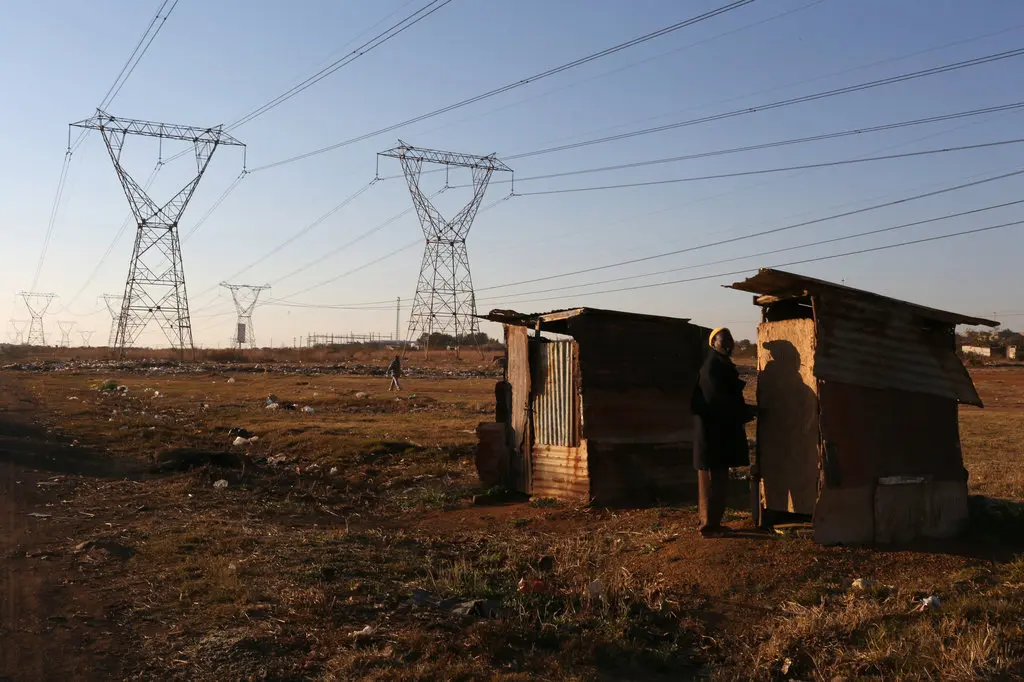
Africa’s energy transition could stall unless the region rapidly expands and strengthens its power-transmission networks, warns Keith Katyora, head of power systems at the Energy Council of South Africa, speaking on 16 October 2025. According to Ghanaian media reports, he emphasises that “power” has two distinct components, generation and distribution and that while Africa may not necessarily be doing badly in terms of generation, it is falling behind in the transmission component.
Katyora’s framing is helpful: generation (including renewables such as solar, wind and hydro) has been advancing across Africa, but distribution, the backbone that carries power from generation plants to consumers is under-invested.
Good generation capacity means little if you cannot deliver that electricity effectively and reliably to homes, businesses and industry.
According to the International Energy Agency (IEA) “World Energy Investment 2024” report, Africa’s grid suffers average line distribution losses of around 15% of electricity generated. In a broader study of sub-Saharan Africa (outside South Africa), losses were estimated at about 18% of grid-based electricity generated.
For example, Kenya’s system losses (transmission + distribution + non-technical) are estimated at ≈ 23% in 2023.
The IEA report shows that spending on African electricity grids (networks) accounts for less than 15% of total power investment in Africa, significantly below the global average of more than 40%. In other words: for every US$ 100 spent, about US$ 85 is going to generation and only US$ 15 to networks.
This is a clear structural bias in investment flows, and partly explains why, despite abundant sunlight, wind and hydro potential, large parts of the population remain in darkness.
In South Africa the state-utility Eskom estimates it will need around 14,200 km of additional transmission lines by 2035 to accommodate the rising renewable capacity pipeline.
Some of the key barriers include:
- Poor financial health of utilities limiting ability to invest in grid expansion or upgrade.
- Regulatory and institutional frameworks that prioritise generation incentives (especially renewables) but less so the networks needed to absorb and distribute that generation.
- Transmission projects tend to be large, capital-intensive, long-lead time, require land acquisition / rights of way / environmental permitting / cross-boundary coordination (for regional interconnections).
- Investor preference: generation assets often come with clearer revenue streams (e.g., power-purchase agreements) compared with transmission, which may have different business models / regulatory risk.
In South Africa, the government launched the Independent Transmission Programme (ITP) in 2024, a policy allowing private companies to build and operate parts of the national grid. This represents a shift away from purely state-owned utility monopoly models. The ITP model is promising and may be replicable, but the evidence base is relatively thin and taking off slowly.
When a power utility “runs at a loss”, it means its revenues (from tariffs, government subsidies, sales) are insufficient to cover its costs (fuel/input costs, operations & maintenance, debt service, depreciation). The consequence: it has limited capacity to invest in grid upgrades, transmission expansion, maintenance or innovation so networks degrade or don’t expand, creating a vicious cycle of poor reliability, higher losses and higher costs.
In countries like Kenya, you still see high retail tariffs for electricity despite large renewable potential partly because the utility must compensate for structural losses (technical/non-technical), under-investment, high cost of capital and risk premiums.
If the utility cannot recover cost through tariffs (or government subsidy), debt builds up; maintenance is deferred; grid reliability suffers; and investor confidence drops which means even less investment flows into transmission networks.
When generation capacity increases but the grid cannot absorb, transmit or distribute the power reliably:
- Some renewable generation has to be shut off.
- Reduced profitability for developers: Expected revenue is lower, meaning less bankable projects, less future investment.
- Lower system reliability: Consumers may experience outages or unstable voltage/frequency, which undermines economic growth.
- Stranded assets: Generation capacity built but effectively under-utilised because transmission bottlenecks or weak distribution.
- Higher cost per unit: Because losses are higher, fewer units get to consumers; the cost per delivered kWh goes up; utilities may charge more, reinforcing affordability issues.
Africa has reasonably strong growth in generation potential, especially renewables but unless transmission and distribution networks are expanded and modernised in tandem, the energy transition will stall or be undermined. With T&D losses consistently in the order of 15-20% (or more in some countries), a large share of generated electricity is essentially wasted before reaching users.
Policy reforms (like South Africa’s ITP) that open up transmission infrastructure to private investment are a step forward, but broader deployment is needed across countries.
For countries like Kenya and others across Africa, this means that the hope offered by abundant sunshine, wind and hydro resources will only be realised if the grid backbone is fixed. Otherwise, you build many generation plants and still have large populations in darkness, and high tariffs for those connected.