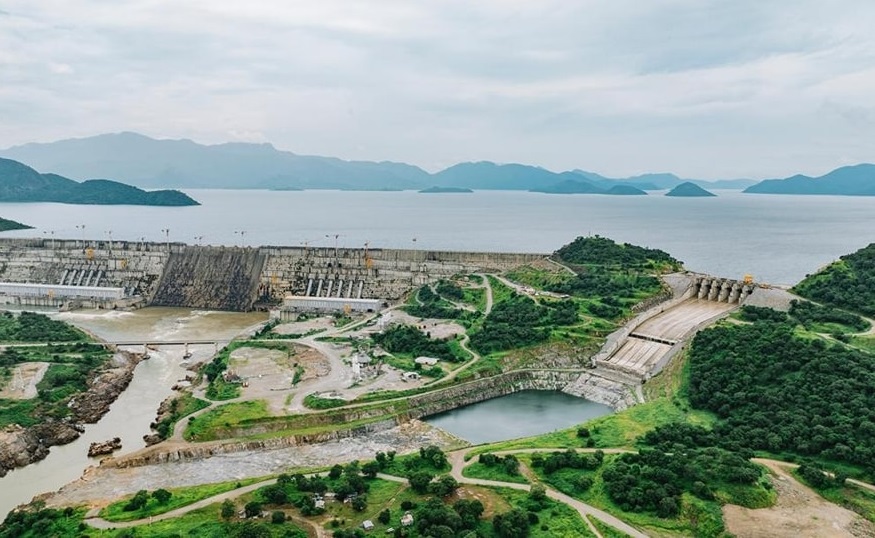
The rehabilitation of Kariba Dam, a critical hydropower asset shared by Zambia and Zimbabwe, is approaching its final stages, with the remaining spillway works targeted for completion by the end of 2026. The US$294.2 million Kariba Dam Rehabilitation Project is designed to improve the dam’s long-term safety and operational reliability after more than six decades of service. The Zambezi River Authority (ZRA), which manages the dam on behalf of the two countries, reported in September that the second phase of spillway refurbishment had reached 81% completion. (ZRA)
A major part of the work involves restoring the reliability of the dam’s six spillway sluice gates, which regulate the release of water from the reservoir. Over time, concrete expansion and a chemical process known as alkali-aggregate reaction made the gates more difficult to operate smoothly. The rehabilitation includes repairs to the spillway structures, replacement and installation of hoisting systems, and maintenance work intended to restore the gates’ functionality. A new gantry crane was commissioned on 27 August 2026, providing equipment needed for work on the spillway structure.
The project also includes reshaping the plunge pool below the dam and strengthening the ZRA’s technical capacity to manage the infrastructure. The plunge-pool works were completed and commissioned in September 2024, while the first phase of spillway refurbishment has reached its final stages. The programme is supported by international development partners, including the African Development Bank, the World Bank, the European Union and the Swedish government, alongside contributions from Zambia and Zimbabwe. Its overall objective is to reduce dam-safety risks and preserve the infrastructure that supports hydropower generation in both countries.
Read Also: Zambia’s 56 MW Solar Project Moves Into Construction After Securing $52 Million
Kariba’s importance extends beyond the two countries’ domestic electricity systems. The dam supplies power to Zambia and Zimbabwe and contributes to electricity trading through the Southern African Power Pool. Maintaining its operational safety is therefore relevant to regional electricity security, particularly as countries seek to meet growing demand while dealing with ageing infrastructure and climate-related pressures on water resources. The rehabilitation programme also includes an early-warning system intended to strengthen hydrological monitoring and emergency response for communities downstream, although the system was still in procurement in September.
Completing the rehabilitation will not, by itself, guarantee higher electricity generation. Kariba’s output remains dependent on reservoir levels, water inflows and the allocation of available water between Zambia and Zimbabwe. The immediate benefit of the project is improved safety and reliability of the dam’s infrastructure, including the ability to operate its spillway gates when required. With Phase II targeted for completion by the end of 2026, the next priority is to finish the remaining work and ensure the ZRA has the systems and technical capacity to maintain the dam over the long term.