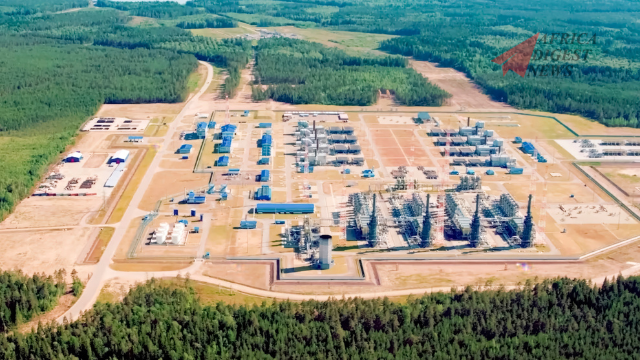
Mozambique’s colossal 13m t/yr LNG project in Afungi, a venture critical to the nation’s economic future, has officially declared a “full restart.” On January 29, President Daniel Chapo and TotalEnergies CEO Patrick Pouyanné convened in Afungi to formalize the resumption of activities, a move that follows the November lifting of force majeure, which had been in place since the devastating jihadist attacks of March 2021.
This announcement, while celebrated, is less a sudden revival and more a public acknowledgment of a process that has been quietly gaining momentum, underscoring the complex interplay of security, finance, and political will that defines such megaprojects in volatile regions.
The symbolic weight of the restart belies the fact that significant construction and engineering work had already ramped up in the preceding year. TotalEnergies’ own statement tacitly confirmed this, noting that 4,000 workers were already mobilized and the project had reached 40% completion, with first LNG still anticipated in 2029.
This steady progress, even before the official declaration, highlights the immense pressure and strategic importance attached to the Mozambique LNG project, not just for TotalEnergies, but for Mozambique’s aspirations as a global energy player.
Read Also: Algeria’s 1,480 MW Solar Boom: A Wake-Up Call for Africa’s Energy Ambitions
Beneath the surface of this renewed optimism, however, lie unresolved financial and political tensions. Notably absent from the restart announcement was any mention of the contentious $4.5 billion in force majeure-induced costs that investors claim Mozambique should bear.
The Mozambican government, in response, has initiated an audit of these claims, signaling a firm stance against uncritically accepting the financial burden of the delay. Furthermore, the consortium’s request for a decade-long extension to the MLNG license to compensate for the force majeure period has met with resistance, with Chapo’s government offering a more limited four-and-a-half-year extension.
These ongoing negotiations reveal the high-stakes financial dance between a sovereign nation eager for development and international energy giants safeguarding their investments.
The security dimension remains paramount. TotalEnergies’ announcement underscored Maputo’s confirmation of “all measures taken to address the security and the continued cooperation with Rwanda”. This refers to the pivotal agreement signed in August between President Chapo and Rwandan counterpart Paul Kagame, formalizing the deployment of 5,000 Rwandan Defence Force (RDF) troops in Cabo Delgado.
The RDF’s presence has been instrumental in stabilizing the region, creating the necessary conditions for the project’s resumption. This security partnership is a critical enabler, demonstrating that large-scale economic development in conflict-affected areas is inextricably linked to robust and sustained security interventions.
The Mozambique LNG project is a foundational element for Mozambique’s domestic energy strategy. Beyond global markets, it promises substantial gas volumes for regional exports and as feedstock for domestic gas-to-power (GTP) plants, which will, in turn, bolster local electricity production.
The project’s stakeholders, including Indian parastatals ONGC Videsh, Bharat Petroleum Corporation, and Oil India (collectively holding 30%), and Japan’s Mitsui (20%), reflect the broad international interest and the project’s potential to reshape regional energy dynamics.
By Thuita Gatero, Managing Editor, Africa Digest News. He specializes in conversations around data centers, AI, cloud infrastructure, and energy.


