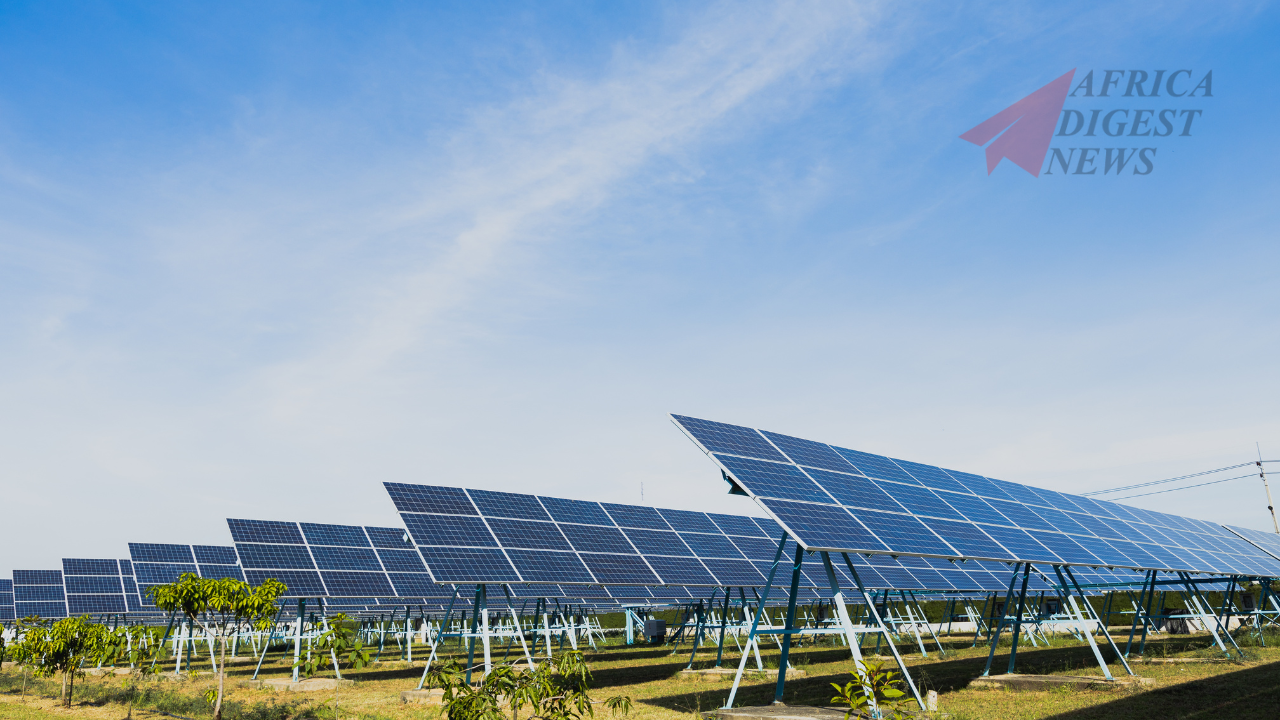
South Africa has added a major new asset to its power system after the 273-megawatt Grootfontein solar photovoltaic project reached commercial operation in the Western Cape.
The facility, developed by Norway’s Scatec ASA in partnership with South African investors, is the first project from the fifth bid window of the Renewable Energy Independent Power Producer Procurement Programme (REIPPPP) to become fully operational. Located about 150 kilometres north-east of Cape Town, the Grootfontein cluster is now the largest co-located solar PV facility in the province.
Its commissioning comes at a critical point for the country’s electricity system. Supply constraints, ageing coal plants, and rising demand have kept pressure on the grid, forcing reliance on costly diesel generation. Each new utility-scale renewable project therefore carries system-level consequences beyond its headline capacity.
Once fully operational, Grootfontein is expected to generate about 700 gigawatt-hours of electricity per year, enough to supply more than 180,000 households. Developers estimate annual carbon dioxide reductions of roughly 630,000 tonnes, easing pressure on a grid still dominated by coal.
The project also carries weight for the wider renewable programme. Bid Window 5, launched in 2021, faced prolonged delays as developers navigated higher equipment costs, supply chain disruptions, and limited grid access. Grootfontein’s completion shows that large projects can still move from award to operation under these constraints, provided financing and execution hold.
Electricity from the plant is sold to Eskom under a 20-year power purchase agreement, a structure that has underpinned South Africa’s renewable procurement since 2011. Long-term contracts remain central to attracting private capital, and the programme has now procured close to nine gigawatts of renewable capacity across multiple rounds.
Read Also: Which Country Has the Most Wind Power per Capita
Ownership reflects the localisation requirements built into the REIPPPP. Scatec holds 51 percent of the project, Black Economic Empowerment firm H1 Holdings owns 46.5 percent, and the Grootfontein Local Community Trust holds the remaining 2.5 percent. This structure gives nearby communities a direct financial stake through dividend flows over the project’s life.
Grid capacity, however, remains the binding constraint. South Africa’s transmission network was designed around coal plants in Mpumalanga, far from the strongest solar and wind resources in the Northern and Western Cape. Eskom estimates that roughly R400 billion will be needed to add more than 14,000 kilometres of transmission lines over the next decade, alongside substations and storage.
Without that expansion, new generation risks being stranded despite strong investor interest. Recent solar projects in South Africa have delivered electricity at costs of around 3.6 US cents per kilowatt-hour, reinforcing solar’s role as one of the lowest-cost supply options available.
Grootfontein will not solve the country’s power crisis on its own. But each project that reaches operation reduces dependence on emergency generation and failing coal units. In that sense, its value lies not only in megawatts added, but in proof that the procurement system can still deliver when execution matters most.
By Thuita Gatero, Managing Editor, Africa Digest News. He specializes in conversations around data centers, AI, cloud infrastructure, and energy.