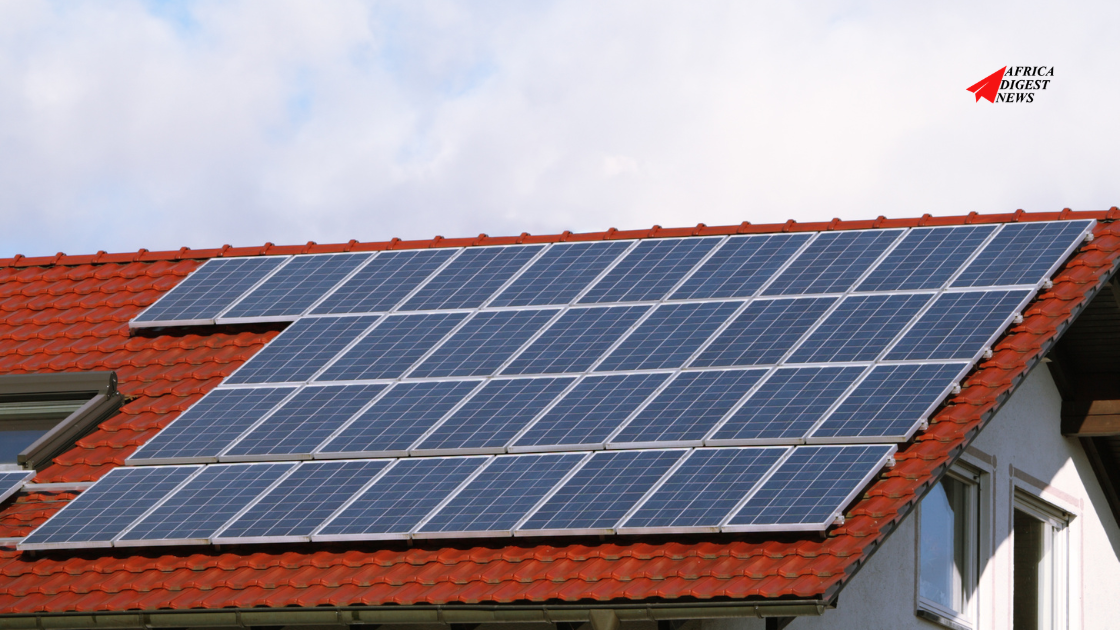
Mulilo Energy has achieved financial close on its 219 MWDC Orkney Solar PV Facility in South Africa’s North West Province, another signal that private renewable-energy projects are moving from announcement to execution in Africa’s largest electricity market.
Located about 11 km south-west of Orkney town, the project has a contracted export capacity of 150 MWAC and will sell electricity to customers through a power purchase agreement with Etana Energy.
Mulilo Energy has achieved financial close on its 219 MWDC Orkney Solar PV Facility in South Africa’s North West Province, another signal that private renewable-energy projects are moving from announcement to execution in Africa’s largest electricity market.
Located about 11 km south-west of Orkney town, the project has a contracted export capacity of 150 MWAC and will sell electricity to customers through a power purchase agreement with Etana Energy.
Once operational, the plant is expected to generate roughly 478 GWh of electricity per year, enough to power about 210,000 households while avoiding more than 500,000 tonnes of CO₂ emissions annually.
What “Financial Close” Actually Means
Financial close is the moment when:
- All lenders sign agreements
- Equity investors commit funds
- Contracts are finalized
- Construction can begin
Before financial close, a project is just a plan. After financial close, it becomes infrastructure. This is important because Africa has thousands of megawatts announced but far fewer built. Reaching financial close means Mulilo has crossed the biggest hurdle: funding.
The Orkney project was backed by investors including Copenhagen Infrastructure Partners, Norfund, and banks such as Absa Bank and Standard Bank.
Why This Project Matters for South Africa
South Africa has one of the most advanced renewable markets in Africa, but also one of its biggest power crises. Load-shedding has forced industries, mines, and households to look for alternatives.
Projects like Orkney Solar are part of a growing private-sector response. Instead of waiting for state utility Eskom, companies are building renewable plants and selling power through traders like Etana Energy. This model is changing how electricity markets work in Africa.
Understanding the Numbers: MWDC vs MWAC
MWDC (Direct Current capacity)
Total solar panel output under ideal conditions.
MWAC (Alternating Current export capacity)
What the grid actually receives.
Because of inverter limits and system losses, MWAC is usually lower. So Orkney’s 219 MWDC becomes 150 MWAC delivered to the grid.
Read Also: Why Africa’s Renewable Energy Projects Struggle to Get Off the Ground
Why Battery-Ready Solar Matters
The Orkney facility is designed to be battery-storage ready.
That means future batteries can:
- Store midday solar
- Release power at night
- Reduce grid instability
Solar + storage is becoming Africa’s next big infrastructure shift. Without storage, solar alone cannot solve evening demand peaks.
The Bigger Trend: Private Renewable Energy in Africa
The project also fits into Mulilo’s plan to deliver 1 GW of new generation every year. Across Africa, large electricity users mines, data centres, factories are signing renewable PPAs to secure stable power and reduce costs.
Why Location Matters: North West Province
The Orkney project will connect to the Jersey Distribution Substation through a 24-km transmission line, helping integrate new generation into the regional grid.
Transmission capacity is often the bottleneck in African power systems. Building generation without grid upgrades creates stranded power. Mulilo’s project includes both.
Are Projects Like This Enough to Fix Load-Shedding? Not alone.
South Africa needs:
- Transmission expansion
- Storage projects
- Gas peaker plants
- Grid modernization
But private solar is now filling a critical gap. Every 200 MW project reduces pressure on the system. Africa doesn’t lack solar potential. It lacks bankable projects that reach execution. Orkney Solar is one more project crossing that line.
By Thuita Gatero, Managing Editor, Africa Digest News. He specializes in conversations around data centers, AI, cloud infrastructure, and energy.