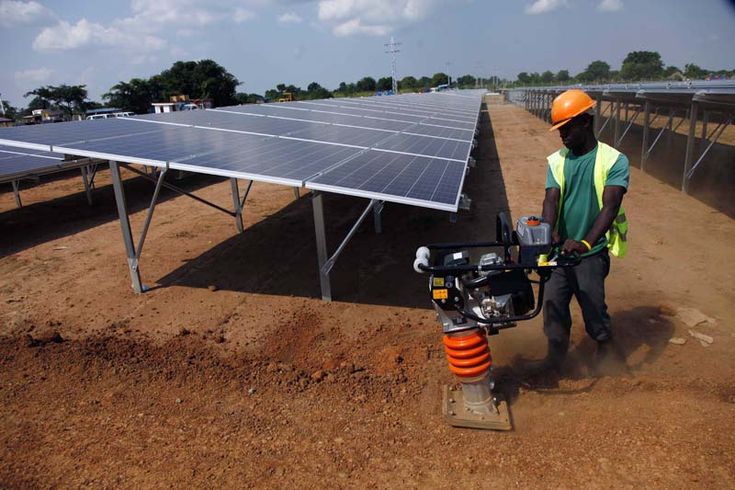
Uganda has just put a 24 MWp solar power plant into commercial operation in West Nile, bringing utility-scale private solar generation to a region that has historically had far less large-scale power infrastructure. Developed by Dubai-based AMEA Power at Uleppi in Madi Okollo District, the Ituka Solar PV Project is the first solar independent power producer (IPP) in West Nile and the largest IPP by installed capacity in the region. The significance is bigger than the 24 MW. Uganda is beginning to push new generation closer to parts of the country where electricity demand, reliability and industrial activity are expected to grow.
The project is designed to generate about 53,940 MWh of electricity a year, with the power now being delivered to Uganda’s national grid through the Uganda Electricity Transmission Company Limited (UETCL). That required more than simply installing solar panels. A 25 MVA, 132/33 kV substation was energized in July, allowing the plant to complete testing and connect to the grid. This is an important distinction for Uganda’s renewable build-out: adding generation only creates economic value when the electricity can actually move into the system and reach customers.
West Nile’s challenge is the combination of generation, transmission and demand. Adding a utility-scale plant in the region gives the grid another source of power while supporting areas where electricity consumption can increase as businesses and industries expand. Solar is particularly useful because it can be deployed relatively quickly compared with large conventional generation projects. But the longer-term test will be whether transmission infrastructure and new industrial demand grow alongside generation, rather than leaving new plants competing for limited grid capacity.
Read Also: Can Namibia Turn Green Hydrogen Into Real Industrial Growth
For AMEA Power, Ituka is also an entry point rather than an isolated project. The company already has other renewable projects under development in Uganda, including larger solar and storage opportunities. That matters because private developers tend to follow markets where one project can establish a commercial and regulatory pathway for the next. Once the grid connection, offtake structure and operating model have been demonstrated, subsequent projects can become easier to develop and finance. West Nile could therefore become a new part of Uganda’s renewable investment map rather than a one-project exception.
Reliable electricity can become an input into agro-processing, manufacturing, commercial activity and other businesses that cannot operate efficiently without it. That is the real reason regional solar projects matter: Africa’s power problem is not solved by adding megawatts to a national spreadsheet. It is solved when new generation reaches the places where people and businesses can turn electricity into economic activity.