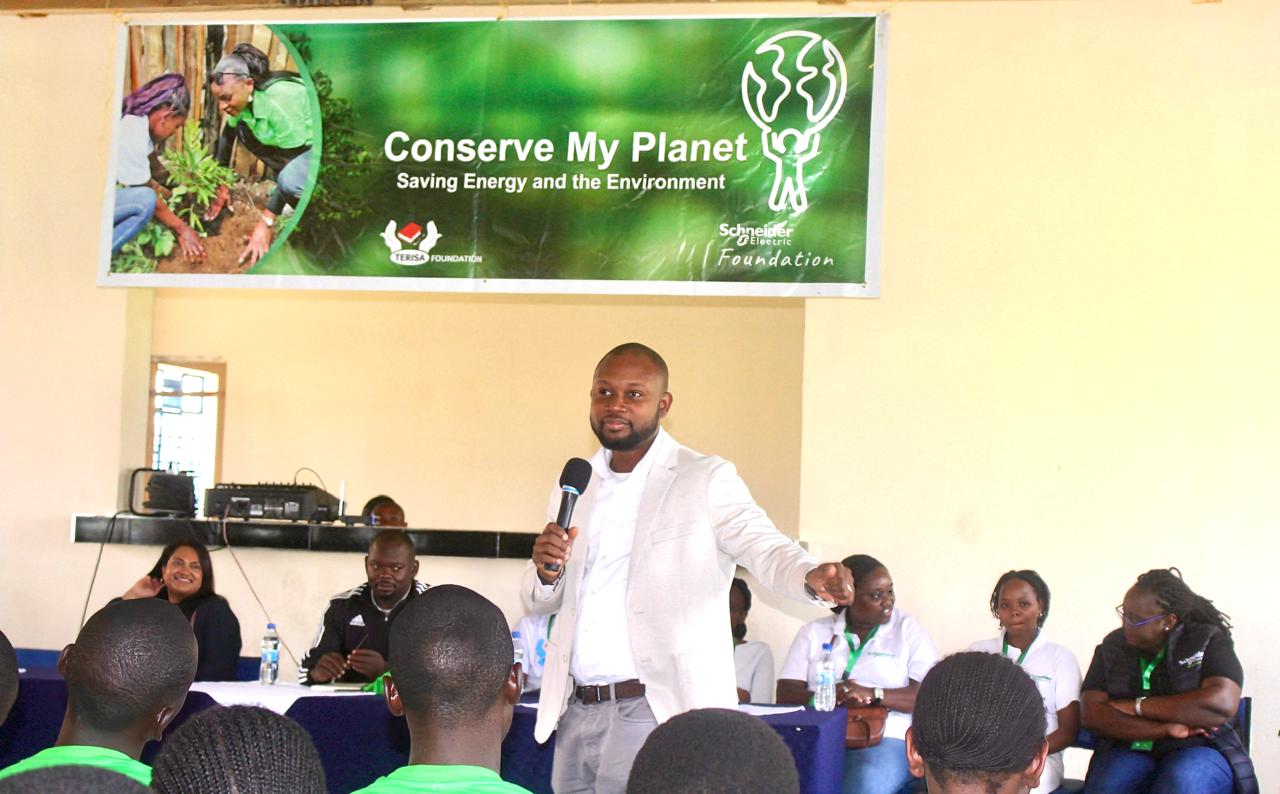
Nairobi (Kenya), 2026 –Schneider Electric, the global energy technology leader, has officially commenced Phase Two of its Conserve My Planet (CMP) program in Kenya, extending the initiative’s impact to a new cohort of students in Machakos County. Building on the strong foundation established during the inaugural rollout, the program continues to strengthen environmental education and youth empowerment in local schools.
The second cohort officially commenced at Kinanie High School, where an additional 723 students have joined the initiative. A key highlight of this phase is the incorporation of UN‑Habitat’s PAAPAM initiative, which broadens the Safe Walking and Cycling component featured in the CMP learning booklet.
This integration enhances the program by fostering safe mobility, environmental responsibility, and sustainable urban living, equipping learners with practical knowledge that links daily lifestyle choices to broader climate and energy outcomes.
Speaking during the launch in Kinaine, Ifeanyi Odoh, Schneider Electric Country President East Africa said “Phase 2 of Conserve My Planet represents an exciting evolution of our commitment to empowering young people with the knowledge and confidence to take meaningful climate action. The enthusiasm we’ve seen from students reassures us that Kenya’s youth are ready to lead the transition toward safer, more sustainable and energy‑conscious communities. We’re proud to support their journey as changemakers who can influence both present and future generations.”
Originally launched in Kenya in 2025 as part of Schneider Electric’s global Youth Impact Through Learning Initiative, the program is designed to empower high school students with both theoretical and practical understanding of sustainability. The initiative introduces learners to concepts such as energy efficiency, renewable energy, waste management and responsible environmental practices, while encouraging them to take leadership roles within their schools.
Phase 2 also benefits from insights gained during the successful first implementation at St. Augustine Secondary School in Mlolongo, where 2,907 students participated. These learnings have strengthened the curriculum, improved student engagement methods, and deepened collaboration with school and community stakeholders.
Implemented locally by the Theresia & Fidelis Foundation, the program continues to provide young people with practical tools to understand and respond to climate‑related challenges affecting their communities. The enhanced curriculum encourages hands‑on learning through environmental audits, innovation challenges, community activities, and exposure visits.
The addition of the PAAPAM component further enriches the student experience by underscoring the importance of sustainable mobility and advocacy within growing urban areas, reinforcing the relationship between climate action, energy conservation, and everyday behavior.
Terri Nthanga, Founder, Teresia & Fidelis Foundation also noted that “Seeing this program grow and and even attract new partners like the UN Habitat affirms the power of investing in sustainable education at the community level. Young people are incredibly capable when given the right tools and platforms. With the strengthened curriculum and the addition of the UN Habitat PAAPAM initiative, we are equipping students to not only understand sustainability, but to live it, lead it, and inspire others around them.”
In Kenya, CMP is set to run over a two‑year period, ultimately reaching approximately 3,500 students across Machakos County.
By expanding into its second phase, the program aims to deepen its impact and inspire even more students to take active leadership in shaping a sustainable, energy‑conscious future.