Tunisia is stepping up efforts to accelerate its clean energy transition after issuing 187 new authorizations for solar electricity projects, signalling renewed momentum in the country’s attempt to expand renewable capacity and reduce dependence on fossil fuels.
The approvals, representing a combined capacity of 286 megawatts, were granted under the government’s fifth authorization round for solar generation projects. Officials say the move reflects growing participation from private investors and reinforces Tunisia’s strategy to scale decentralized electricity production across the country.
The development comes as Tunisia works toward an ambitious national target: generating 30% of its electricity from renewable sources by 2030, equivalent to roughly 4,800 megawatts of installed clean energy capacity.
However, despite progress in policy implementation, energy analysts say Tunisia still faces structural challenges that could slow the pace of deployment unless investment barriers are addressed. The latest approvals were reviewed during a sector engagement meeting led by Wael Chouchane, Secretary of State in charge of energy transition, alongside representatives from Confederation of Tunisian Citizen Enterprises.
Participants highlighted the authorization regime as one of the most important mechanisms currently supporting renewable energy expansion. Unlike concession-based projects, authorization frameworks allow faster entry for smaller-scale investors and distributed solar developers, helping diversify Tunisia’s electricity supply base.
Officials also emphasized that this mechanism works alongside other policy tools such as self-generation schemes and concession-based utility-scale projects to accelerate renewable deployment across multiple market segments. Private sector participation, according to government representatives, remains central to Tunisia’s clean energy roadmap.
Chouchane noted that companies operating across the renewable energy value chain are playing an increasingly strategic role in supporting national electrification and energy efficiency programmes.
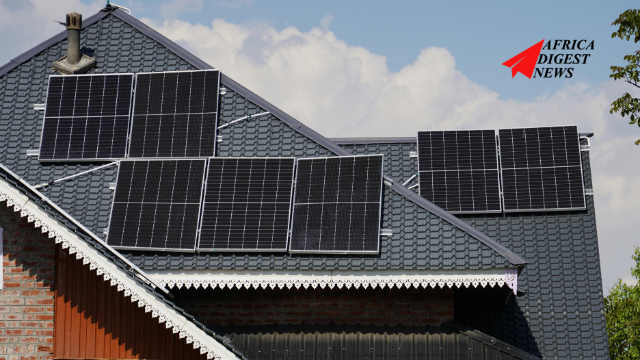
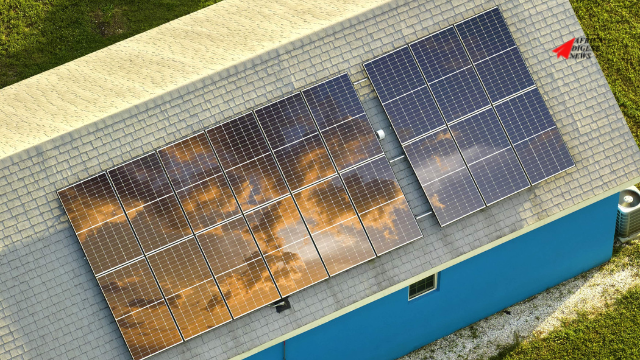
Alongside industrial-scale solar approvals, Tunisia is expanding household participation through programmes such as PROSOL Elec and PROSOL Elec Economique, which support rooftop solar adoption among households, including middle-income consumers.
These initiatives are designed to strengthen distributed generation capacity while reducing pressure on the national electricity grid. By enabling households to generate part of their own electricity, policymakers aim to lower demand growth while accelerating renewable penetration in urban areas.
Distributed solar is increasingly seen as one of Tunisia’s most practical short-term solutions for addressing electricity supply constraints while supporting climate commitments.
Read Also: Africa Accelerates Solar Adoption as Diesel Dependence Declines
Despite recent approvals and policy momentum, Tunisia’s renewable energy rollout remains significantly below long-term expectations. The country has so far installed approximately 700 megawatts of renewable electricity capacity, most of it from solar energy. This remains far short of the levels required to meet its 2030 objectives.
Energy sector observers note that closing this gap will require sustained investment flows, faster project implementation timelines, and stronger coordination between regulators and developers. One of the most significant structural barriers to Tunisia’s energy transition remains the country’s electricity subsidy framework.
Government support for conventional electricity generation reached approximately $2.6 billion in 2022, continuing to place pressure on public finances while reducing the relative competitiveness of renewable alternatives.
Analysts argue that subsidy reform could play a decisive role in accelerating the shift toward clean energy by improving price signals for investors and encouraging greater private sector participation in renewable generation projects.
At the same time, Tunisia continues to face an electricity supply deficit that increases urgency around expanding domestic generation capacity. Tunisia’s latest authorization round signals that policy momentum is building in the renewable energy sector, particularly through decentralized solar deployment and private sector engagement.
However, reaching the country’s 2030 renewable energy targets will depend on whether recent approvals translate into operational projects at scale. If supported by continued regulatory reforms and investment-friendly frameworks, Tunisia has the potential to emerge as one of North Africa’s more dynamic renewable energy markets over the next decade.
By Thuita Gatero, Managing Editor, Africa Digest News. He specializes in conversations around data centers, AI, cloud infrastructure, and energy.