The continent has abundant sunlight, large hydro resources, natural gas reserves, and growing energy demand. Yet millions of homes and businesses remain disconnected from stable electricity systems because projects fail long before construction begins.
Developers struggle to secure affordable capital. Commercial banks view infrastructure lending as risky. Governments face debt pressure. International financing institutions move slowly and often prioritize policy conditions over execution speed.
This financing gap has delayed energy expansion across much of the continent. Nigeria is now attempting to address part of that problem through the Green Finance Investment Facility, a new platform designed to mobilize $188 million for distributed renewable energy systems across the country.
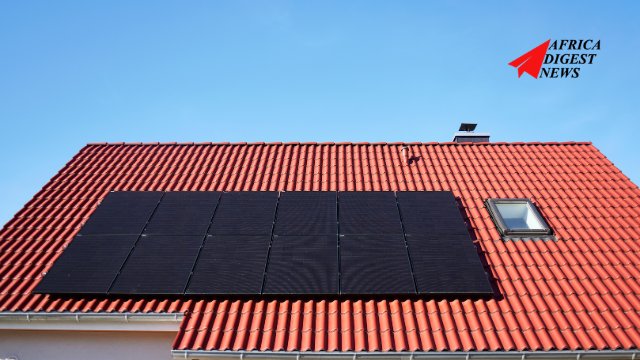
The initiative aims to finance roughly 191 megawatts of solar capacity targeting households, businesses, and underserved communities. At first glance, the numbers appear modest relative to Nigeria’s scale.
But the significance lies in the structure behind the project. The facility combines sovereign energy programs, development finance support, private-sector investment, and commercial lending into one financing system. The goal is to reduce investment risk while creating a repeatable framework for future renewable energy deployment.
That matters because one of Africa’s largest infrastructure weaknesses is fragmentation. Projects often depend on isolated funding arrangements negotiated individually between governments, donors, and lenders. This slows execution and increases financing costs. Investors hesitate because revenue structures remain uncertain. Banks hesitate because long-term risk exposure is difficult to price.
The result is paralysis. Nigeria’s approach suggests that some policymakers are beginning to understand that infrastructure financing requires systems, not isolated announcements.
Distributed renewable energy also changes the economics of electrification itself. Large centralized grids require massive upfront spending on transmission infrastructure. Mini-grids and localized solar systems reduce some of these costs by generating electricity near the point of consumption.
This is particularly important in countries where national grids already struggle with transmission losses, instability, and insufficient generation capacity.
Nigeria’s electricity system has faced these challenges for years. Businesses and households continue to spend heavily on diesel generators because grid supply remains unreliable. That dependency carries economic consequences.
Read Also: Angola’s Solar Expansion Is About More Than Electricity
Generators increase production costs. Small businesses operate below capacity. Manufacturers struggle to compete internationally. Fuel imports place pressure on foreign exchange reserves. Reliable electricity affects nearly every layer of economic productivity.
The Green Finance Investment Facility also signals another important shift: African financial institutions are beginning to participate more directly in infrastructure development. For decades, many large-scale energy projects depended heavily on foreign financing institutions. While external funding remains important, overdependence creates vulnerability. Countries become exposed to shifting geopolitical interests, currency pressure, and external lending conditions.
Domestic participation changes part of that equation. If African banks, pension funds, and institutional investors begin financing energy systems at scale, the continent gains greater control over its infrastructure trajectory.
That transition will not happen quickly. The financing gap remains enormous. Regulatory risks persist. Currency instability continues to affect investor confidence across several African markets.
But Nigeria’s current effort points toward a broader realization taking shape across the continent: Africa’s energy future will not be built through donor rhetoric alone. It will require financial systems capable of funding infrastructure at industrial scale.
By Thuita Gatero, Managing Editor, Africa Digest News. He specializes in conversations around AI and energy.