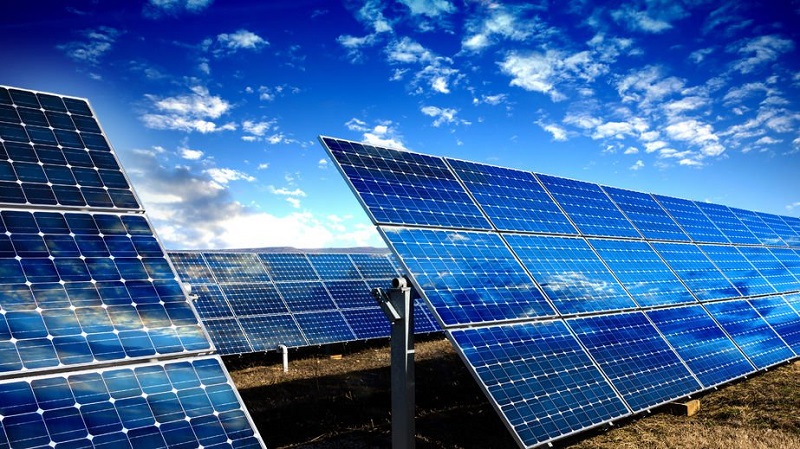
The Emerging Africa & Asia Infrastructure Fund (EAAIF) has provided a USD 30 million senior secured corporate loan to Hassan Allam Utilities to support the Minya solar and battery storage project in Egypt, now described as one of Africa’s largest combined solar-plus-storage developments.
The Minya project is being co-developed with Infinity Power and is generally reported as:
- Around 1,000 MW (1 GW) of solar capacity, with some sources citing up to 1,200 MWp.
- 660 MWh of battery energy storage in most recent reports, though some earlier documentation refers to 600 MWh.
- Located in Egypt’s Minya Governorate, with commercial operation targeted for the third quarter of 2027.
Ownership is reported as 51% Infinity Power Holding and 49% HAU Energy (Hassan Allam Utilities).
EAAIF, a Private Infrastructure Development Group (PIDG) company managed by Ninety One, is the sole senior lender with a primary claim on the project, which is designed to de-risk a large greenfield asset and allow a local sponsor to lead development.
This loan builds on a previous USD 40 million project development facility that EAAIF provided Hassan Allam Utilities in late 2024, supporting 2.3 GW of Egyptian renewable energy projects including:
- The 1,100 MW Suez wind project co-developed with ACWA Power,
- 1.2 GW of solar at Benban and Wahat,
- 720 MWh of associated battery storage.
Separately, Hassan Allam Construction and Sterling and Wilson Renewable Energy secured a USD 560 million EPC contract for the West Minya Solar Power Project, which is closely aligned with the same development and includes:
- 1,000 MW of solar PV,
- 600 MWh battery storage,
- Full grid interconnection and transmission works.
This integrated financing and construction package is intended to strengthen Egypt’s energy resilience and expand its utility-scale renewable capacity in line with the country’s broader energy transition goals.
PIDG and Ninety One are not directly building renewables themselves; they operate through a specialist finance vehicle—EAAIF—to provide debt and enable private capital for large-scale renewable infrastructure in Africa and Asia.
PIDG (Private Infrastructure Development Group) is a multilateral development group owned by several development finance institutions (including the UK’s BII, AfDB, and others). Its mandate is to catalyse private investment in infrastructure in low- and lower-middle-income countries, with climate and sustainable development at the core of its strategy.
Ninety One is a global investment firm that manages PIDG’s infrastructure funds. It does not own the projects; instead, it designs, sources, and manages the investment portfolio for funds like EAAIF, applying private-sector discipline while preserving development impact.
PIDG’s key instrument for African and Asian renewables is the Emerging Africa & Asia Infrastructure Fund (EAAIF), a blended-finance debt fund managed by Ninety One. Its role includes:
- Providing senior and mezzanine debt to large renewable projects (solar, wind, hydro, and increasingly storage) in low-income countries across Africa and Asia.
- Acting as risk-mitigating, development-backed capital that can support local or regional champions (e.g., Hassan Allam Utilities, Blueleaf Energy) and enable them to raise additional commercial finance.
- Focusing on utility-scale, high-impact projects that strengthen grids, improve energy access, and support decarbonisation, rather than small distributed systems.
Recent EAAIF deals (managed by Ninety One for PIDG) show how this works in practice:
- Egypt Minya solar + storage: USD 30 million senior secured loan to Hassan Allam Utilities for a ~1 GW solar and 660 MWh battery project, with commercial operation targeted in 2027.
- Egypt Suez wind and other projects: A USD 40 million project development facility to support 2.3 GW of renewables in Egypt, including the 1.1 GW Suez wind project, 1.2 GW of solar at Benban and Wahat, and 720 MWh of storage.
- Côte d’Ivoire hydro: EAIF (a predecessor PIDG fund now folded into EAAIF activities) provided €25 million to Ivoire Hydro Energy for a 44 MW hydro plant, illustrating the same model applied to hydro in West Africa.
These investments align with PIDG’s strategic focus on climate action and sustainable development, and they are intended to create models for other emerging economies seeking to decarbonise while creating green jobs.