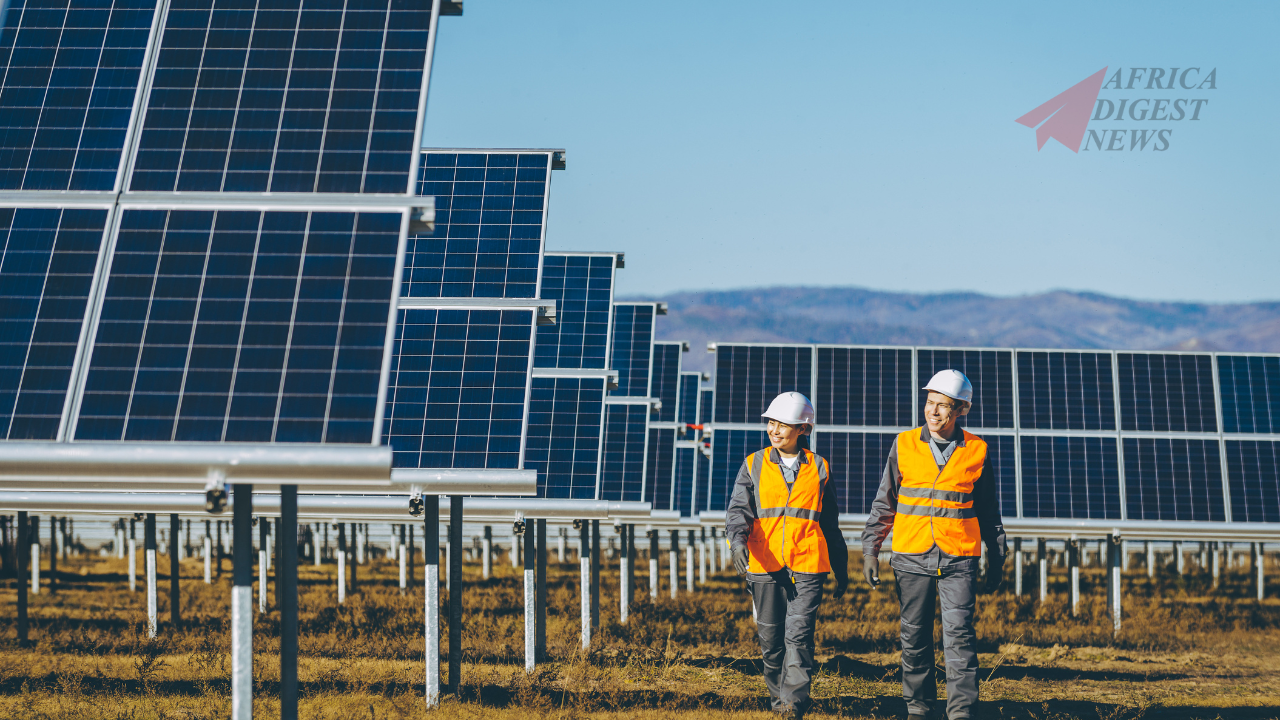
Norway’s export credit agency GIEK has provided a guarantee of up to NOK 150 million, about R261 million, for Scatec’s Thakadu Solar project. A guarantee can absorb part of that risk, giving lenders greater confidence and potentially reducing the cost of borrowing. In Thakadu’s case, the Norwegian guarantee is intended to strengthen the financing package and help Scatec secure the remaining debt and equity needed to reach financial close.
That matters because South Africa is trying to move from renewable-energy procurement to actual construction at much larger scale. Thakadu is part of Bid Window 7 of the Renewable Energy Independent Power Producer Procurement Programme, where Scatec was awarded 540 MW of solar and storage across several projects. The challenge now is no longer simply identifying good renewable sites or awarding capacity. Projects have to survive the much less visible stage between an award and financial close. This is where financing conditions, credit risk and guarantees can determine whether megawatts on a government procurement list become physical power plants.
Read Also: What’s Really Driving Africa’s Solar Expansion
Norway’s role also illustrates how international climate finance increasingly works. Governments and development institutions do not necessarily need to provide all the capital themselves. They can use guarantees as credit enhancement, taking a limited amount of risk to make much larger pools of commercial capital more willing to participate. A NOK 150 million guarantee is therefore not the same thing as Norway financing a 254 MW plant. Its value is in what it can unlock around it, particularly if commercial lenders become comfortable committing the much larger sums required for construction.
The country can have excellent irradiation, experienced developers and a mature procurement programme while still facing a financing gap created by perceived risk. If guarantees repeatedly become necessary to get projects over the line, the question is whether South Africa can gradually reduce those risks enough for projects to finance themselves on commercial terms. Until then, the country’s solar transition will depend not only on how cheaply it can generate electricity, but on who is willing to stand behind the money needed to build it.