Mali has ratified a 36.07 billion CFA franc ($60 million) financing agreement with the Islamic Development Bank (IsDB) to stabilise and reinforce electricity supply to its capital, Bamako.
The agreement was formally approved by the Council of Ministers on December 31, 2025, clearing the way for implementation of a major transmission project at the heart of the city’s power system.
Ratification was required to activate disbursement and move the project from financing commitment to execution. The agreement, signed in September 2024, could not advance to procurement or construction without formal government approval.
With Bamako facing recurring supply disruptions and growing demand, the government moved to unlock funding for infrastructure that directly addresses grid bottlenecks rather than adding generation that the existing network cannot reliably absorb.
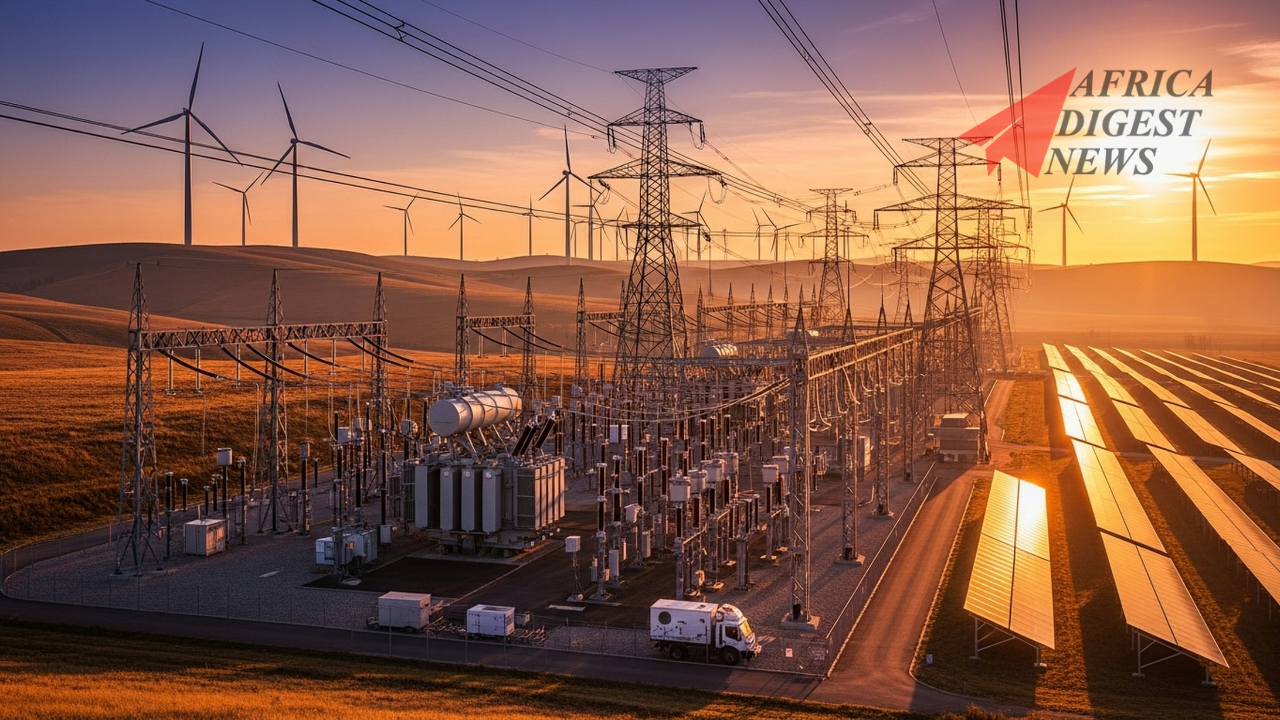
The 225-kilovolt (kV) Northern Loop is a high-voltage transmission ring designed to reinforce Bamako’s electrical backbone. At this voltage level, power can be transported efficiently over long distances with lower losses, making it suitable for moving bulk electricity from regional sources into dense urban load centres.
Rather than generating new power, the project focuses on how electricity reaches the city, a critical constraint in Mali’s power system.
Bamako’s grid has long been constrained by limited transmission capacity, aging substations, and weak redundancy. Much of the city’s supply depends on power imported through regional interconnections, particularly from hydropower plants in the Senegal River basin. When transmission links are saturated or fail, even available regional power cannot reach end users.
The Northern Loop addresses this by:
- Increasing the carrying capacity of the transmission network
- Creating multiple pathways for electricity to flow into the city
- Reducing the risk of widespread outages caused by single-point failures
In grid terms, it moves Bamako away from a radial, fragile configuration toward a looped network, which is inherently more resilient.
What the Project Includes
Under the Northern Loop plan:
- New 225 kV transmission lines will be built around the northern perimeter of the capital
- Existing substations will be expanded to handle higher loads
- New substations will be constructed at strategic points to distribute power more evenly
Operational oversight has been assigned to Energie du Mali (EDM-SA), the national utility, which will manage execution and integration into the existing network.
The IsDB financing is structured as an installment sale, in line with Islamic finance principles, and is earmarked strictly for transmission infrastructure.
Read Also: Madagascar’s Afripower Begins Utility‑Scale Solar at Mandroseza as Fossil Fuel Costs Bite
This reflects a strategic diagnosis: Mali’s power challenge is no longer only about producing electricity, but about moving it reliably.
Without stronger transmission, additional generation whether domestic or imported, would worsen congestion and instability rather than improve supply.
The Northern Loop strengthens Mali’s position within West Africa’s interconnected power systems, including links supported by the African Development Bank and other multilateral partners.
These projects aim to integrate Mali more deeply into regional electricity markets, allowing the country to draw power when domestic supply falls short and export surplus when available.
For Bamako, this means better access to regional hydropower and reduced exposure to local generation shocks.
What Comes Next
With ratification complete, the government can now:
- Launch calls for tenders
- Commission detailed technical and environmental studies
- Prepare for construction to begin
The project marks a shift in Mali’s energy strategy from emergency supply responses toward structural grid reinforcement.
Bamako’s electricity problems are not unique in the region, but the response is telling:
- Transmission is being treated as strategic infrastructure, not a secondary concern
- Regional power trade is being prioritised over isolated solutions
- Reliability is being addressed at the system level, not plant by plant
If executed as planned, the Northern Loop will not add a single megawatt of generation. Instead, it will determine whether existing and future power can actually reach the people who need it, a distinction that increasingly defines energy outcomes across West Africa.
By Thuita Gatero, Managing Editor, Africa Digest News. He specializes in conversations around data centers, AI, cloud infrastructure, and energy.