In Kenya, the journey towards energy independence often begins with a fundamental question: should you invest in a portable power station (PPS) or a full, installed solar system?
The market is rife with terms like “solar kits,” “generators,” and “inverters,” creating a confusing landscape for consumers.
This article cuts through the jargon to clarify which solution genuinely fits your needs, budget, and lifestyle in 2026. Understanding the core differences is crucial to making an informed decision and avoiding costly mistakes.
Portable Power Stations (PPS), often referred to as solar generators, are essentially large, rechargeable batteries equipped with AC outlets, DC ports, and USB chargers. They integrate an inverter, charge controller, and battery into a single, compact unit. Their primary appeal lies in their plug-and-play simplicity and mobility.
You can easily move them between rooms, take them camping, or use them in different locations without any installation hassle. For renters, or those needing backup for specific appliances like a Wi-Fi router, TV, or a mini-fridge, a PPS is an excellent, immediate solution. They require no complex wiring, and their upfront cost is significantly lower than a full solar system.
However, the convenience of PPS comes with limitations. While capacities are growing, most portable power stations offer a relatively limited energy storage capacity (typically less than 5kWh) compared to a full solar system.
This means they are best suited for powering essential appliances for a few hours or days, rather than an entire household for extended periods. The cost per Watt-hour (Wh) is also generally higher for a PPS than for a custom-installed system, and they are not easily scalable if your power needs grow significantly over time.
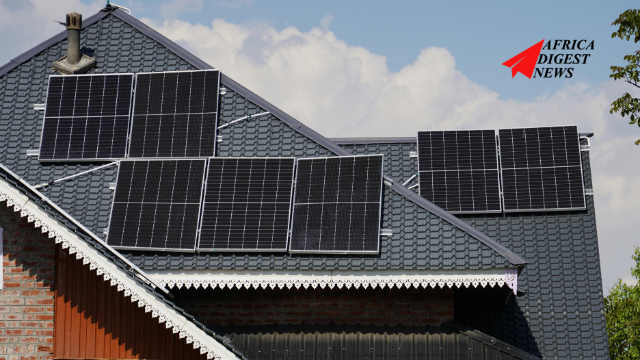
Full Solar Systems, on the other hand, involve a more permanent and comprehensive installation. These typically include solar panels mounted on a roof, a dedicated inverter, a charge controller, and a bank of batteries (often larger and more robust than those in a PPS).
The initial upfront cost is considerably higher, and professional installation is required, making them a significant investment. However, for homeowners or businesses with substantial and long-term power needs, a full solar system offers unparalleled benefits.
Read Also: Can a Solar Generator Run a Fridge, TV, and WiFi in Kenya? (Real Tests & Answers)
These systems are highly scalable, allowing you to add more panels and batteries as your energy consumption increases. They can power an entire home, including heavy appliances like water heaters, pumps, and even electric cookers, offering true energy independence and significantly reducing or eliminating electricity bills.
A well-installed full solar system also adds considerable value to your property. While not portable, their fixed nature ensures a consistent and robust power supply, making them ideal for those seeking to completely detach from or significantly reduce reliance on the national grid.
So, which one do you actually need? If you are a renter, frequently move, or primarily need backup for a few essential devices during short outages, a portable power station is your practical and cost-effective choice.
If you own your property, have significant and growing power demands, and are looking for a long-term, scalable solution for comprehensive energy independence, a full solar system is the superior investment. The key is to assess your current and future power requirements, your living situation, and your budget to make the choice that truly empowers you.
By Thuita Gatero, Managing Editor, Africa Digest News. He specializes in conversations around data centers, AI, cloud infrastructure, and energy.