In the burgeoning African energy landscape, the narrative often simplifies solar power to a mere cost-saving alternative. While fundamentally true, a sophisticated understanding of solar economics requires a deeper dive than the superficial claim of “solar is cheaper.”
For businesses and discerning homeowners, the decision to invest in solar hinges on a rigorous financial analysis, primarily centered around the Levelized Cost of Energy (LCOE) solar Africa vs diesel over a substantial period, typically a decade.
The LCOE represents the average revenue per unit of electricity generated that would be required to recover the costs of building and operating a generating plant over an assumed financial life and duty cycle.
This calculation is significantly more complex than in developed markets, influenced by a unique set of variables. Key factors include battery degradation, which can substantially impact long-term efficiency and replacement costs; foreign exchange (FX) exposure, as many components are imported and subject to currency fluctuations; import duties, which vary by country and can inflate initial capital expenditure; ongoing maintenance costs, often higher due to environmental conditions and logistical challenges; and financing costs, which can be prohibitive in markets with higher interest rates or perceived investment risks.
To truly assess the solar ROI Africa, a comprehensive comparison must be made against existing energy sources. Utility grid tariffs in countries like Kenya, Nigeria, and South Africa present a fluctuating benchmark, often subject to government subsidies, infrastructure limitations, and unpredictable increases.
For many businesses, the primary alternative is diesel self-generation, a costly and environmentally impactful option. While diesel offers immediate power, its LCOE is heavily influenced by volatile fuel prices, maintenance of generators, and the logistical challenges of fuel supply.
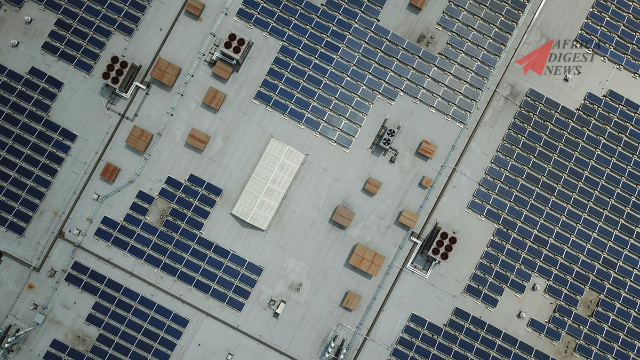
Commercial rooftop solar, when properly sized and implemented, offers a compelling alternative, but its economic viability is intricately tied to the aforementioned factors.
Read Also: Casava and Rivy Launch Nigeria’s First Green Microinsurance for Solar SMEs
Consider a commercial entity in Nairobi, Lagos, or Johannesburg evaluating a 10-year energy strategy. Their analysis would meticulously compare the LCOE of a new solar installation against their current expenditure on grid electricity and backup diesel generation.
This isn’t merely about the upfront cost of panels; it’s about the total cost of ownership, factoring in the lifespan of components, efficiency losses over time, and the financial instruments used to fund the project.
Low initial price for solar equipment might be offset by poor battery performance in 35°C+ environments, unreliable warranties, or unforeseen import duty hikes. The goal is to identify the solution that provides the lowest levelized cost of energy Africa over the long term, offering predictable energy costs and a tangible return on investment.
By providing this granular, financially-driven perspective, we aim to equip decision-makers with the tools to navigate the complexities of solar investment in Africa.
By Thuita Gatero, Managing Editor, Africa Digest News. He specializes in conversations around data centers, AI, cloud infrastructure, and energy.