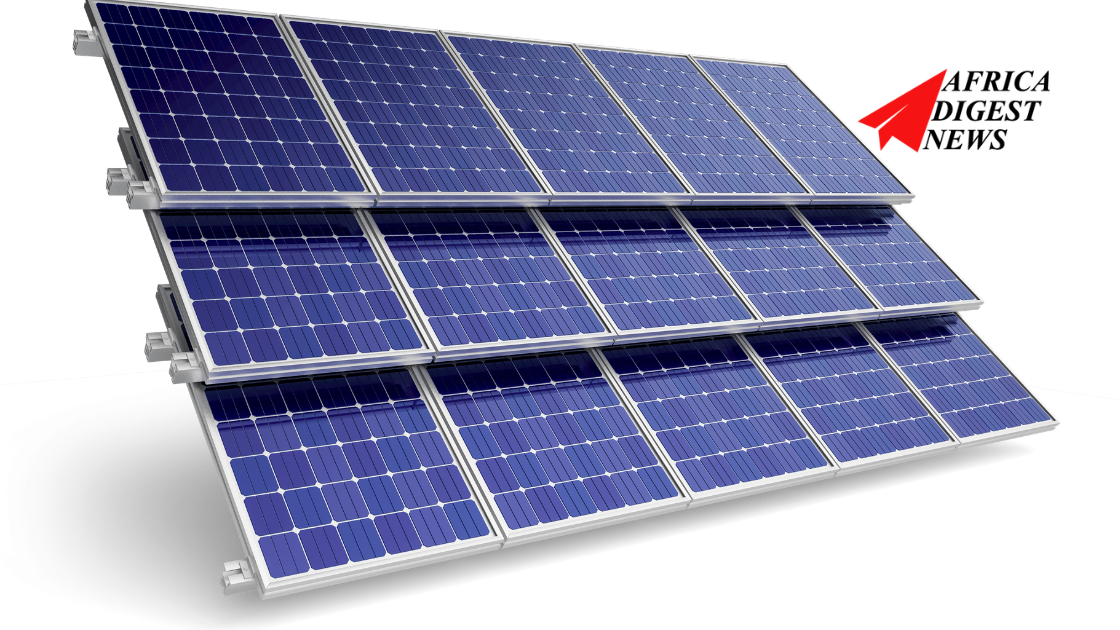
Global renewable-energy investment remained remarkably resilient in the first half of 2026, reaching about US$327.5 billion, according to BloombergNEF data cited by Green Building Africa. But beneath that relatively stable headline figure, the composition of investment is changing. Capital is increasingly moving toward projects that can do more than simply generate electricity. The clearest example is co-located solar and battery storage, which attracted a record US$25 billion during the first half of the year almost twice the amount recorded in the previous six months and roughly three times the level of H1 2025.
That shift reflects a problem investors have become increasingly unwilling to ignore: solar power is cheap, but sunlight is not available on demand. Standalone utility-scale solar projects are facing growing concerns around grid congestion, changing policies and uncertainty over future electricity revenues. Adding batteries changes the proposition. Instead of selling electricity only when the sun is shining, developers can store excess generation and release it when power is more valuable or when the grid needs it. The project becomes not just a generator of electricity, but a more flexible piece of energy infrastructure.
Solar itself is hardly losing momentum. Investment in solar reached a record US$45.8 billion in H1 2026, up 41% year-on-year, while wind investment more than doubled to US$13.8 billion. What appears to be changing is the type of renewable project investors want to own. The market is moving from the simple question of “How much electricity can this plant generate?” toward “How useful is that electricity when the grid actually needs it?” That is an important distinction as renewable penetration rises and electricity systems require increasingly sophisticated ways to balance supply and demand.
Read Also: Kenya’s Electricity Imports Are Becoming Increasingly Dependent on Ethiopia
Africa is becoming an important part of this story. The continent is expected to install roughly 17 GW of solar in 2026, a record level, as businesses and households respond to expensive and unreliable conventional power. In markets where diesel generators remain an essential source of backup electricity, solar paired with batteries can become more than a climate investment, it can be an economic decision. Instead of paying continuously for diesel, businesses can increasingly use the sun to generate power and batteries to carry that power into the hours when it is needed most. The opportunity therefore extends beyond massive utility projects into rooftops, commercial facilities, industrial sites and distributed energy systems.
But the investment numbers should not obscure the harder problem: Africa still has a financing gap. Building solar panels is only one part of an energy transition that also requires batteries, transmission networks, efficient buildings, industrial equipment and access to affordable capital. Development financiers such as Swedfund are therefore stepping into areas where commercial finance remains cautious, including energy efficiency and green buildings. The bigger story is not simply that renewable energy is attracting hundreds of billions of dollars globally. It is that investors are becoming more selective about what kind of renewable infrastructure creates dependable economic value and for Africa, the opportunity is to ensure that the next wave of solar investment is paired with storage, industry and productive use rather than simply adding more megawatts to the grid.