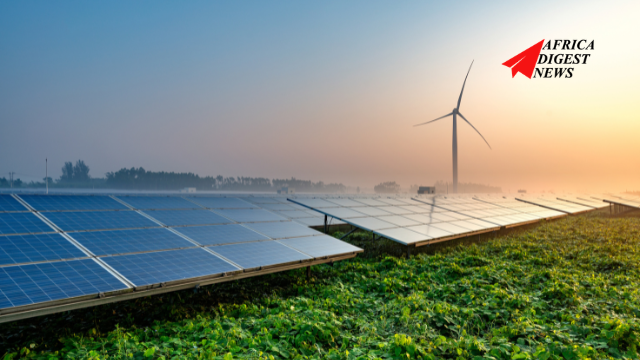
French independent power producer Qair has secured about €30 million in senior debt for two solar-plus-storage projects near N’Djamena, moving Chad’s planned renewable generation closer to construction. The Gassi and Lamadji plants will combine 30 MWp of solar PV with 8 MW/8 MWh of battery storage and are expected to generate about 65 GWh of electricity annually. The projects are designed to supply the capital’s grid while reducing reliance on diesel-based generation.
The debt comprises roughly €15 million from the African Development Bank and another €15 million from Proparco. The loans form the core of a wider €37.9 million financing package assembled for the projects. The plants are being developed under a framework agreement with the Republic of Chad and are backed by a 20-year power purchase agreement with national utility Tchadelec, with the projects connecting to the 90 kV N’Djamena loop.
The wider financing package adds several layers of risk protection around the senior debt. It includes a €6 million reimbursable grant from the AfDB-managed Sustainable Energy Fund for Africa and €1.5 million in supplementary Proparco/AFD funding. An €8 million partial risk guarantee, jointly backed by the African Development Fund and the Green Climate Fund, supports specified payment obligations under the PPA through a letter of credit for Tchadelec.
Read Also: Why Egypt Is Linking Its Wind Boom to a Turbine Manufacturing Industry
The structure reflects the financing conditions for renewable projects in frontier markets such as Chad, where lenders must account for off-taker payment risk alongside the normal construction and operating risks of a power project. Rather than relying solely on commercial debt, the transaction combines development-finance lending with concessional funding and guarantees. The aim is to make the project financeable while establishing a structure that can potentially be applied to other renewable projects in the Sahel.
The plants form part of the African Development Bank’s Desert to Power programme, which targets up to 10 GW of solar capacity across the Sahel, and contribute to the broader Mission 300 objective of expanding electricity access across Africa. For Chad, the immediate addition will be 30 MWp of solar and battery storage to the N’Djamena system. For Qair and its financing partners, the project also provides a reference point for deploying solar-plus-storage in markets where access to conventional project finance remains constrained.


