The rapid expansion of Africa’s solar market is not just a story of increasing installations; it is also a narrative about the companies shaping the technological and business contours of this transformation.
While local installers and developers are crucial on the ground, a handful of international technology suppliers are providing the core components batteries and inverters, that define the performance, reliability, and cost of solar systems across the continent. Among these, CATL, Hyperstrong, and Felicity Solar represent three distinct but equally important approaches to driving the market forward.
The Industrial Giants: CATL and Hyperstrong
At the highest level of the market, utility-scale projects and large commercial installations, the partnership between Contemporary Amperex Technology Co., Limited (CATL) and Beijing HyperStrong Technology Co., Ltd. (Hyperstrong) is a formidable force.
CATL is a global titan in the battery industry, renowned for its advanced Lithium Iron Phosphate (LFP) cells, which have become the benchmark for safety and longevity in stationary storage. Their influence is felt through supply agreements that underpin massive energy storage projects worldwide.
Hyperstrong, in contrast, is a master integrator. They design and deploy large-scale Battery Energy Storage Systems (BESS), and their expertise lies in packaging CATL’s cells into sophisticated, turnkey solutions.
Their recent ten-year strategic agreement, which includes a commitment for Hyperstrong to procure no less than 200 GWh of battery cells from CATL between 2026 and 2028, signals a deep, long-term collaboration aimed at dominating the global energy storage market.
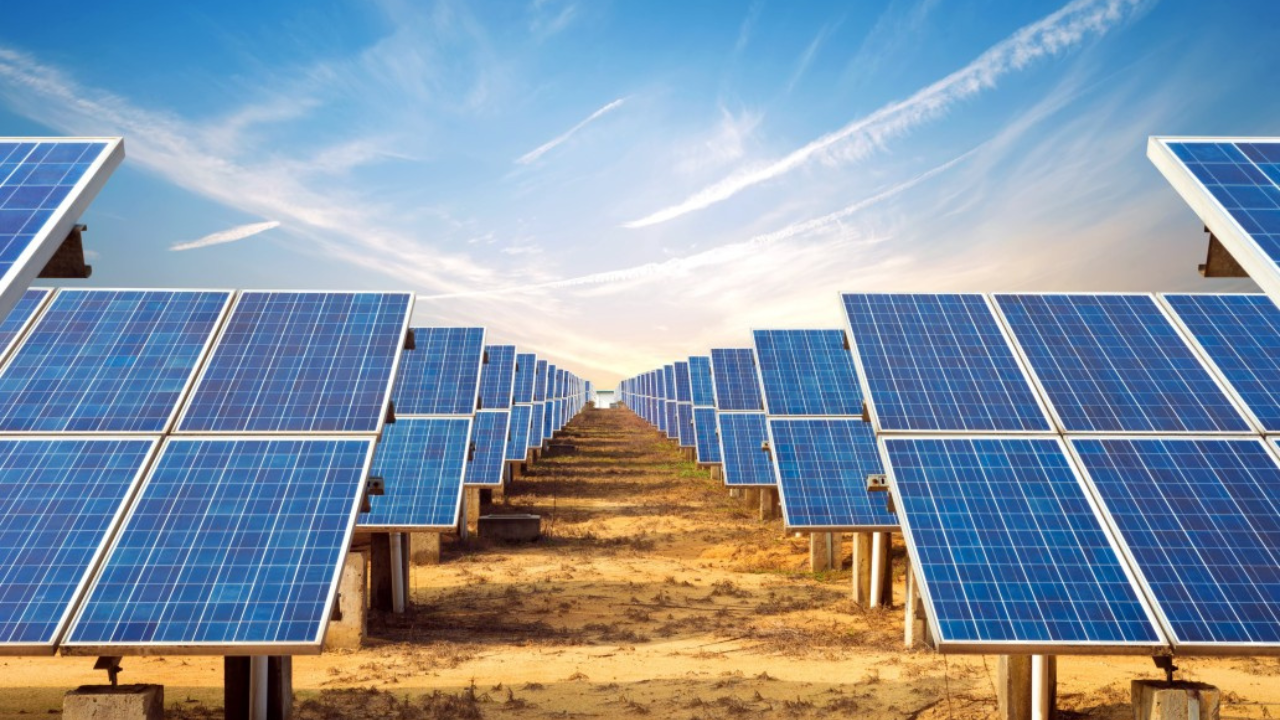
For Africa, this partnership is significant. As countries like South Africa, Egypt, and Algeria add hundreds of megawatts of solar capacity, the need for grid-scale storage to ensure stability and manage intermittency becomes paramount.
Hyperstrong, powered by CATL’s technology, is providing the liquid-cooled, containerized BESS solutions like the “EnerOne” and “EnerC” systems that are essential for these large projects.
Their focus is not just on supplying hardware but on creating integrated platforms for project development, investment, and operation. This high-level, capital-intensive approach is critical for building the backbone of a modern, renewable-powered grid in Africa.
The Market Enabler: Felicity Solar
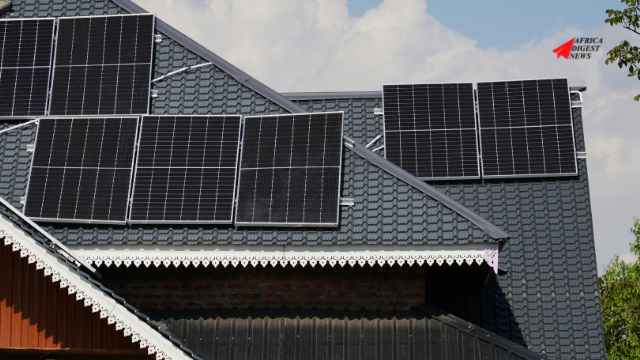
If CATL and Hyperstrong represent the top-down, industrial-scale approach, then Felicity Solar embodies the bottom-up, distributed energy revolution. With a strong and visible presence in West Africa, particularly Nigeria, Felicity Solar has become a household name in the residential and small-to-medium enterprise (SME) markets. Their success is built on providing affordable, reliable, and accessible energy solutions.
Felicity Solar’s portfolio of LFP batteries and hybrid inverters is tailored to the needs of homes and businesses seeking energy independence from unreliable grids and expensive diesel generators.
They have excelled at building a robust distribution network and a brand that resonates with end-users. Their products are not aimed at multi-megawatt grid stabilization but at powering individual houses, shops, and small factories.
This focus on the distributed market is a vital part of Africa’s energy transition, as a significant portion of new solar capacity, 44% in 2025 is from rooftop and other distributed systems.
Read Also: Top 10 African Countries Leading in Solar Adoption (and what it means for suppliers)
Felicity Solar’s innovation lies less in groundbreaking cell chemistry and more in its business model and market penetration. By making solar and storage systems readily available and affordable, they are empowering a new class of energy consumers and producers.
They are a key driver of the privately financed, consumer-led energy transition that is running in parallel to the government-led, utility-scale buildout.
A Multi-Layered Market
The strategies of these three companies highlight the multi-layered nature of Africa’s solar market. There is no single path to electrifying the continent.
The industrial might of CATL and Hyperstrong is essential for the large-scale infrastructure projects that will form the foundation of national grids.
At the same time, the market-enabling work of companies like Felicity Solar is just as critical for bringing reliable power directly to the people and businesses who need it most.
Together, they represent a powerful combination of technological innovation and market-driven distribution.
As Africa’s energy demand continues to grow, the interplay between these industrial giants and nimble market enablers will determine the pace and direction of the continent’s journey towards a sustainable energy future.
By Thuita Gatero, Managing Editor, Africa Digest News. He specializes in conversations around data centers, AI, cloud infrastructure, and energy.