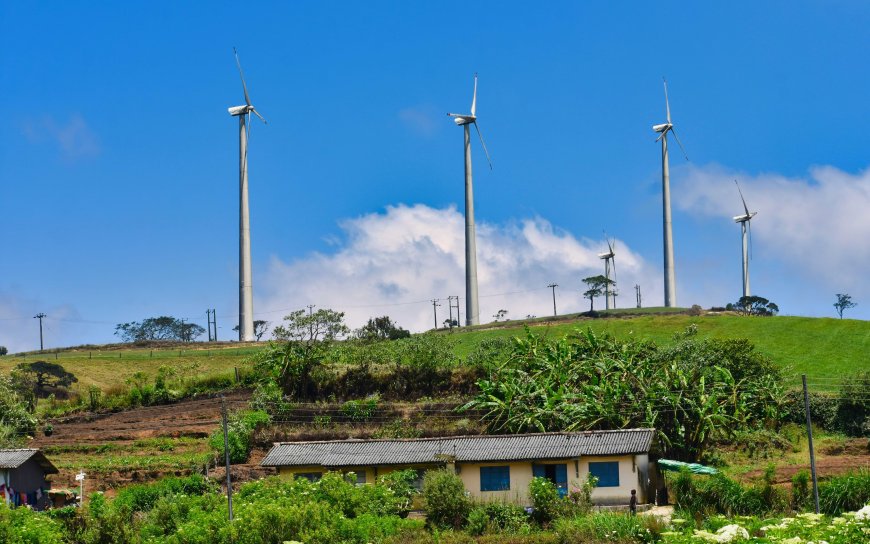
Chinese investment in Africa reached a record $33.5 billion during the first half of 2026, marking the highest six-month total ever recorded and underscoring China’s growing role in financing the continent’s energy and industrial transformation. Much of the capital has flowed into renewable energy, electricity infrastructure, mining, and manufacturing projects, with countries such as Egypt and Ethiopia attracting some of the largest commitments. The surge reflects a broader shift in China’s engagement with Africa. While earlier investment cycles were heavily concentrated on resource extraction and transport infrastructure, recent capital deployment is increasingly targeting the infrastructure needed to power industrial growth. Utility-scale renewable energy plants, electricity transmission networks, substations, battery storage systems, and industrial parks are becoming central features of Chinese-backed projects across the continent.
For Africa’s energy sector, the trend is significant. Expanding electricity access and supporting industrialization require more than new power plants. Countries also need transmission lines, grid modernization, storage capacity, and manufacturing infrastructure capable of supporting growing electricity demand. Chinese engineering firms, equipment manufacturers, and financiers are now involved across much of that value chain, making them important partners in many national energy strategies. Renewable energy has become one of the clearest areas of cooperation. Chinese companies are supplying solar panels, battery technologies, grid equipment, and engineering services for projects ranging from utility-scale solar farms to hydropower developments and transmission corridors. Their participation is helping African countries accelerate renewable deployment while addressing longstanding infrastructure deficits.
The investment surge also reflects growing confidence in Africa’s long-term energy market. Rapid population growth, rising electricity demand, expanding manufacturing, and government commitments to cleaner energy have created significant opportunities for investors willing to finance long-term infrastructure. Large-scale power projects, in particular, continue to attract capital because they underpin broader economic development. However, record investment figures do not automatically translate into broad-based economic benefits. Development economists have long argued that the quality of investment matters as much as the volume. The key questions are whether projects generate local employment, strengthen domestic supply chains, transfer technical knowledge, and improve the long-term resilience of national power systems.
Read Also: Egypt and UK Expand Renewable Energy Partnership to Support Grid Modernization
There are also ongoing debates around financing structures, procurement practices, and the balance between imported and locally sourced equipment. While Chinese-backed infrastructure has delivered critical assets across many African countries, policymakers increasingly emphasize the importance of ensuring that investment contributes to local industrial development rather than functioning as isolated infrastructure projects. This is particularly relevant as African governments pursue industrialization alongside the energy transition. Reliable electricity alone is not enough to drive economic transformation. Countries also need factories, skilled labor, domestic engineering capacity, and businesses capable of participating in energy value chains. Investment that supports these wider objectives is likely to generate stronger long-term economic returns.
The record inflows suggest that China will remain one of Africa’s most influential infrastructure investors for years to come. Yet the next phase of the relationship will likely be judged less by the amount of capital deployed than by the lasting economic value it creates. As Africa’s renewable energy market continues to expand, the challenge is no longer simply attracting investment. It is ensuring that capital strengthens national power systems, builds domestic industrial capacity, and leaves countries with more resilient and competitive energy economies long after construction is complete.