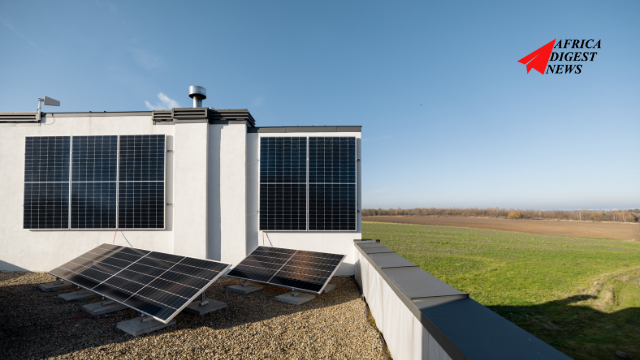
Côte d’Ivoire’s push to expand renewable energy is moving from policy commitments to infrastructure development, with financing for the 50 MWp Kong Solaire project in the country’s north marking another step in that transition. Dutch development bank FMO has committed up to €55.5 million in long-term financing for the project, which is being developed near the town of Kong by Ivorian developer Africa Via, pan-African group AXIAN and the Private Infrastructure Development Group (PIDG) through its project development arm, InfraCo.
Construction is already under way, with commissioning expected in 2028. Once operational, the plant is projected to generate approximately 96 GWh of electricity annually, supplying the national grid under a 25-year power purchase agreement with state-owned utility CI-ENERGIES.
The financing structure matters because utility-scale renewable energy projects require more than capital to purchase solar panels and build infrastructure. Developers need financing that matches the long development periods and operating lives of power plants, alongside credible arrangements for selling the electricity produced. FMO’s financing package has a 20-year tenor and covers the project’s long-term funding requirements, including a separate facility for transmission infrastructure.
This is particularly relevant in emerging markets, where domestic commercial lenders may struggle to offer financing with comparable tenors. FMO’s project disclosures identify the availability of long-term funding as a factor enabling Kong Solaire to supply electricity at an attractive tariff. The arrangement addresses one of the structural constraints facing private power developers: securing financing that remains viable over the life of the asset.
Kong Solaire also fits into a wider expansion of Côte d’Ivoire’s solar generation capacity. The country has been pursuing a target of raising renewables to 45% of its energy mix by 2030, while continuing to expand electricity generation and grid infrastructure. Solar development is already progressing beyond Kong. The 52 MW Boundiali solar plant entered operation in 2024, followed by the commissioning of the 52 MW Ferké solar plant in 2026.
Additional projects, including solar facilities at M’Bengué and Bondoukou, are also in development. According to the Africa Solar Industry Association figures cited by pv magazine, Côte d’Ivoire had approximately 723.4 MW of operational solar capacity, with another 144.1 MW under construction. These figures include projects beyond the large utility-scale plants, illustrating how the country’s solar market extends across different types of electricity generation.
However, adding generation capacity is only part of the challenge. Solar power is variable, and its contribution to a reliable electricity system depends on transmission capacity, grid management, demand patterns and the availability of other generation sources when sunlight declines. Kong Solaire’s expected annual output of 96 GWh and estimated avoidance of 54,000 tonnes of carbon dioxide emissions demonstrate its potential contribution, but these remain projections until the facility is operational. Its transmission infrastructure is therefore as important as the generating plant itself. The project also has implications beyond Côte d’Ivoire: PIDG says electricity from the facility will reach grid-connected customers in neighbouring West African countries through regional interconnections. Realising that wider benefit will depend on the capacity and functioning of the interconnected electricity networks.
Read Also: Egypt’s Solar Pipeline Expands With Financing for 1.1 GW Power Project
The larger significance of Kong Solaire lies in whether its financing and development model can be replicated. Côte d’Ivoire needs sustained investment in generation, transmission and distribution to expand electricity access while accommodating growing household and industrial demand. Long-term development finance can help make projects bankable, while partnerships between local developers, regional investors and infrastructure institutions can distribute the expertise and risks involved. But one financed project does not establish a scalable market on its own.
The test will be whether subsequent projects can reach financial close, connect to the grid on schedule and deliver electricity at competitive prices. If that happens, Kong Solaire could become more than another solar plant in northern Côte d’Ivoire: it could help demonstrate how long-term financing and private-sector participation can support the country’s broader electricity expansion.