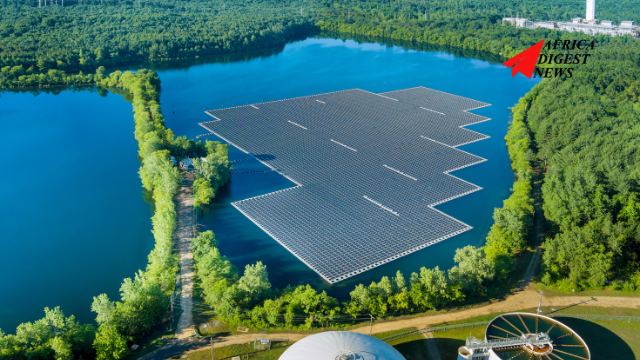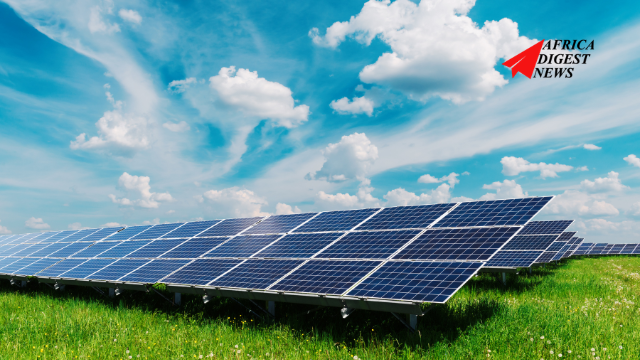
Egypt’s renewable energy pipeline is advancing with up to US$566 million in debt financing for a 1.2 GW solar power plant and a 600 MWh battery energy storage system in Minya. The project, developed by Nefer Menya for Renewable Energy, is expected to become the largest solar power plant in Egypt and Africa, adding substantial generation capacity while using battery storage to extend the availability of solar electricity into evening peak-demand hours. European Bank for Reconstruction and Development (EBRD)
The EBRD is arranging up to US$265 million of the financing package. This includes a US$160 million loan from the bank’s own resources, US$75 million mobilised through Bank of Jordan and up to US$30 million in concessional financing from the Clean Technology Fund under its Global Energy Storage Program. Germany’s development finance institution DEG, the Dutch Entrepreneurial Development Bank (FMO) and France’s Proparco are participating in the wider financing package, bringing total planned debt financing to as much as US$566 million. The project’s sponsors are Infinity Power and HAU Energy, the renewable energy development platform associated with Hassan Allam Utilities.
The plant will combine large-scale solar generation with a battery system designed to store electricity produced during daylight hours and release it when solar output declines after sunset. This addresses a central challenge for power systems adding significant solar capacity: generation is concentrated during the day, while electricity demand can remain high or peak in the evening. The 600 MWh storage system will not provide continuous output throughout the night, but it can shift a portion of daytime generation into periods when the grid needs additional supply, helping improve flexibility and reliability.
Electricity from the project will be sold to the Egyptian Electricity Transmission Company under a 25-year power purchase agreement. According to the EBRD, the plant is expected to supply enough electricity to power more than 1.4 million homes and avoid over 1.5 million tonnes of carbon dioxide emissions annually. These are projected outcomes once the facility is operating, rather than benefits already being delivered. The long-term power purchase agreement provides a contracted buyer for the electricity, an important feature in financing large infrastructure projects that require substantial upfront capital.
Read Also: DRC, Rwanda and Burundi Face Further Delays to Planned 206 MW Hydropower Plant
The investment also supports Egypt’s Nexus of Water, Food and Energy initiative, launched at COP27. Its energy pillar aims to facilitate 10 GW of new private-sector renewable energy capacity while reducing 5 GW of inefficient fossil-fuel capacity. Egypt has set a target of generating 42% of its electricity from renewable sources by 2030, making the delivery of large projects, alongside grid investment and storage, important to its plans. The Clean Technology Fund will also support technical training programmes in Minya focused on green skills for young people entering the labour market, extending part of the financing initiative into workforce development.
For Egypt, the project illustrates how the next phase of solar expansion is increasingly being built around more than panels and generation capacity. Storage, long-term electricity contracts and financing from development institutions are being combined to help integrate variable renewable power into the grid. The key test will be execution: completing construction, connecting the facility to the transmission network and delivering the expected output. If brought into operation as planned, Nefer Minya will add a major new source of renewable electricity while helping demonstrate how battery storage can support the integration of utility-scale solar into Egypt’s power system.