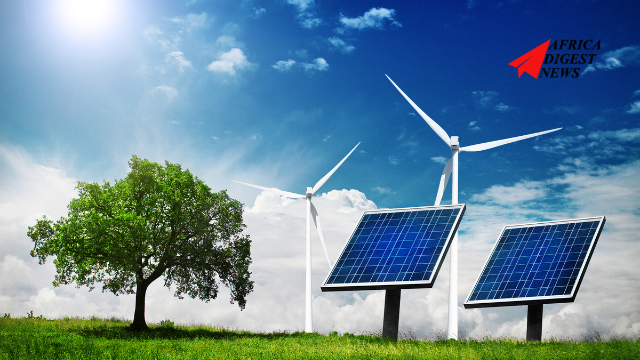
Africa’s solar energy sector is experiencing unprecedented growth, with installations rising by 54% in 2025 alone.
This expansion is driven by a wave of technological advancements in solar panels, battery storage, and inverters that are reshaping the continent’s energy landscape.
These innovations address the unique challenges and opportunities present in African markets, from extreme climates to the critical need for reliable, decentralized power.
1. TOPCon (Tunnel Oxide Passivated Contact) Cells
TOPCon technology is rapidly becoming the industry standard, supplanting older PERC (Passivated Emitter Rear Contact) cells. These new generation cells boast efficiencies exceeding 24%, offering a significant boost in power output from a smaller footprint.
For African markets, where land use and system cost are critical considerations, higher efficiency means more energy generated per square meter and a faster return on investment.
Manufacturers like Jinko Solar are at the forefront, with their Tiger Neo series demonstrating the commercial viability and performance of TOPCon technology.
2. HJT (Heterojunction Technology)
Heterojunction Technology (HJT) panels combine the benefits of crystalline silicon with amorphous thin-film layers, resulting in superior performance, especially in high-temperature environments.
Africa’s often intense solar radiation can reduce the efficiency of conventional panels. HJT cells exhibit a lower temperature coefficient, meaning their efficiency degrades less under heat, making them particularly well-suited for the continent’s climate and ensuring consistent energy production throughout the day.
3. Hybrid Inverters with AI Load Balancing
Modern hybrid inverters are intelligent energy management hubs. These devices seamlessly integrate power from solar panels, battery storage, and the grid or generators, optimizing energy flow based on real-time demand and supply.
The incorporation of artificial intelligence (AI) allows for predictive load balancing, anticipating energy needs and adjusting power sources accordingly. This capability is crucial for maintaining stable power in regions with unreliable grid infrastructure, a common scenario across many African nations.
4. Sodium-Ion Batteries
While lithium-ion batteries have dominated the energy storage market, sodium-ion batteries are emerging as a compelling alternative. Sodium is far more abundant and less expensive than lithium, which translates to lower manufacturing costs. Crucially for Africa, sodium-ion batteries often demonstrate better thermal stability and safety characteristics, particularly in hot climates, reducing the risk of thermal runaway.
As production scales, these batteries are poised to offer a more affordable and robust storage solution for both grid-scale and off-grid applications.
5. LFP (Lithium Iron Phosphate) Chemistry
Within the lithium-ion family, Lithium Iron Phosphate (LFP) batteries have become the preferred chemistry for stationary energy storage due to their exceptional longevity and safety.
LFP batteries can endure significantly more charge-discharge cycles, often exceeding 6,000 compared to other lithium-ion chemistries, translating to a longer operational lifespan and lower total cost of ownership.
This durability is a key advantage for solar installations in Africa, where reliable, long-term storage is essential for energy independence and grid stability.
6. Bifacial Panels with Trackers
Bifacial solar panels capture sunlight from both their front and rear sides, significantly increasing energy yield. When combined with single-axis or dual-axis trackers that follow the sun’s path, these systems can boost energy production by 20-30%.
In Africa’s arid and semi-arid regions, where ground surfaces are often light-colored and reflective (e.g., sand), bifacial technology can effectively harness reflected light, maximizing the output from each panel. This is particularly beneficial for large-scale solar farms.
7. Micro-Inverters for Commercial & Industrial (C&I) Applications
Micro-inverters convert DC power from individual solar panels to AC power directly at the panel level. This contrasts with string inverters, which handle multiple panels.
For Commercial & Industrial (C&I) installations, micro-inverters offer several advantages: individual panel monitoring allows for precise performance tracking and fault detection, while their inherent design provides enhanced safety features like rapid shutdown, which is critical for fire safety and maintenance.
This modularity also means that shading on one panel does not significantly impact the output of others, optimizing overall system performance.
8. Liquid-Cooled BESS (Battery Energy Storage Systems)
Large-scale Battery Energy Storage Systems (BESS) are vital for stabilizing grids and supporting renewable energy integration. In Africa’s hot climates, managing the temperature of these large battery arrays is paramount for performance and safety.
Read Also: Top 10 African Countries Leading in Solar Adoption (and what it means for suppliers)
Liquid-cooled BESS, championed by companies like CATL and Hyperstrong, circulate coolant through the battery modules to maintain optimal operating temperatures. This advanced thermal management prevents overheating, extends battery life, and ensures consistent power delivery, making it an essential technology for utility-scale projects across the continent.
9. Perovskite Tandem Cells
Perovskite solar cells represent a cutting-edge development in photovoltaics. While still largely in the research and pilot deployment phases, perovskite tandem cells, which combine perovskite with traditional silicon, hold the promise of ultra-high efficiencies, potentially exceeding 30%.
Their flexibility and transparency could open new applications, such as integration into building materials or portable devices. As research progresses, these cells could offer a future pathway to even more compact and powerful solar solutions for Africa.
10. EV-to-Grid (V2G) Integration
Electric Vehicle (EV) adoption is growing globally, and Africa is no exception. EV-to-Grid (V2G) technology allows electric vehicles to not only draw power from the grid but also feed electricity back into it.
For off-grid communities and mini-grids in Africa, V2G integration could transform EVs into mobile battery storage units, providing crucial buffer capacity and enhancing grid stability.
This dual functionality can help manage peak demand, store excess solar generation, and offer a flexible energy resource, further decentralizing and democratizing energy access.
These ten technologies are not merely incremental improvements; they represent fundamental shifts that are making solar power more efficient, affordable, and resilient in Africa.
As the continent continues its rapid energy transition, these innovations will play a central role in achieving widespread energy access and sustainable development.
By Thuita Gatero, Managing Editor, Africa Digest News. He specializes in conversations around data centers, AI, cloud infrastructure, and energy.