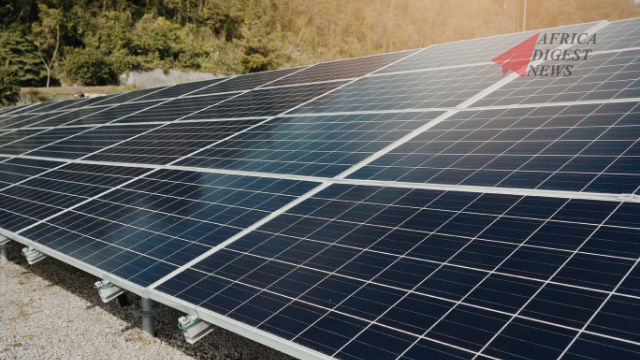
CrossBoundary Energy has commissioned a 233 MWp solar and 526 MWh battery storage facility at the Kamoa-Kakula copper mine in the Democratic Republic of Congo, delivering 30 MW of continuous renewable power to one of Africa’s largest mining operations. The project, located near Kolwezi in Lualaba province, is designed to provide the mine with firm renewable electricity rather than relying on solar only during daylight hours.
The facility reached commercial operation on 12 August 2026, about 16 months after CrossBoundary and Kamoa Copper signed their power purchase agreement in April 2025. The system combines the 233 MWp solar plant with a 123 MVA/526 MWh battery energy storage system, allowing excess solar generated during the day to be stored and dispatched when sunlight is unavailable or when the mine requires additional power.
That configuration is what makes the project notable. By pairing substantially oversized solar capacity with battery storage, the facility can deliver a contracted 30 MW of continuous renewable power, effectively creating what CrossBoundary describes as “baseload” solar. The approach offers a potential solution for mines and other energy-intensive industries that need reliable electricity around the clock but want to reduce their dependence on diesel generation and conventional grid power.
Read Also: Afripower Starts 40MWp Solar Project in Madagascar to Cut Reliance on HFO Power
The project is also only part of Kamoa-Kakula’s wider renewable-energy programme. Two solar facilities at the mine are expected to reach a combined 433 MW of peak solar capacity and 1,107 MWh of battery storage, providing about 60 MW of continuous baseload renewable power. The mine is also targeting around 120 MW of solar baseload capacity by the end of 2027, further increasing the role of renewables in its power supply.
The significance extends beyond one copper mine. Mining operations require dependable electricity 24 hours a day, making intermittency one of the biggest barriers to large-scale solar adoption. Kamoa-Kakula demonstrates how large solar arrays and battery storage can be combined to turn intermittent generation into firm industrial power, offering a model that could be replicated across Africa as mines seek to lower energy costs, reduce diesel consumption and cut emissions.


