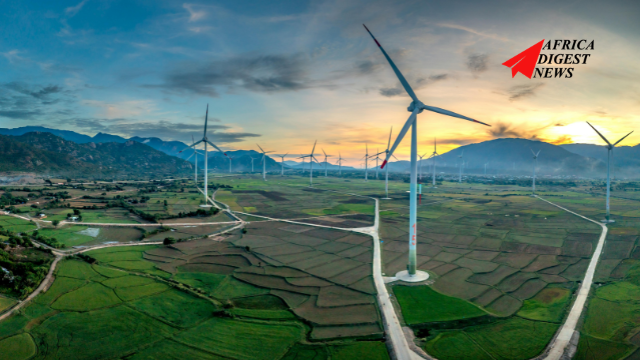
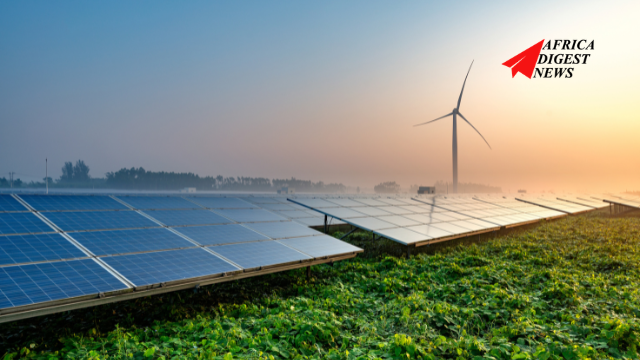
Wind energy converts one of Africa’s most abundant natural resources into electricity without consuming fuel. That is why wind energy has become an economic decision.
What Is Wind Energy?
Wind energy is electricity generated by converting the kinetic energy of moving air into electrical power. As wind passes across turbine blades, it causes the rotor to spin. The rotor turns a shaft connected to a generator, which converts mechanical movement into electricity before feeding it into the transmission network.
The principle is remarkably simple.
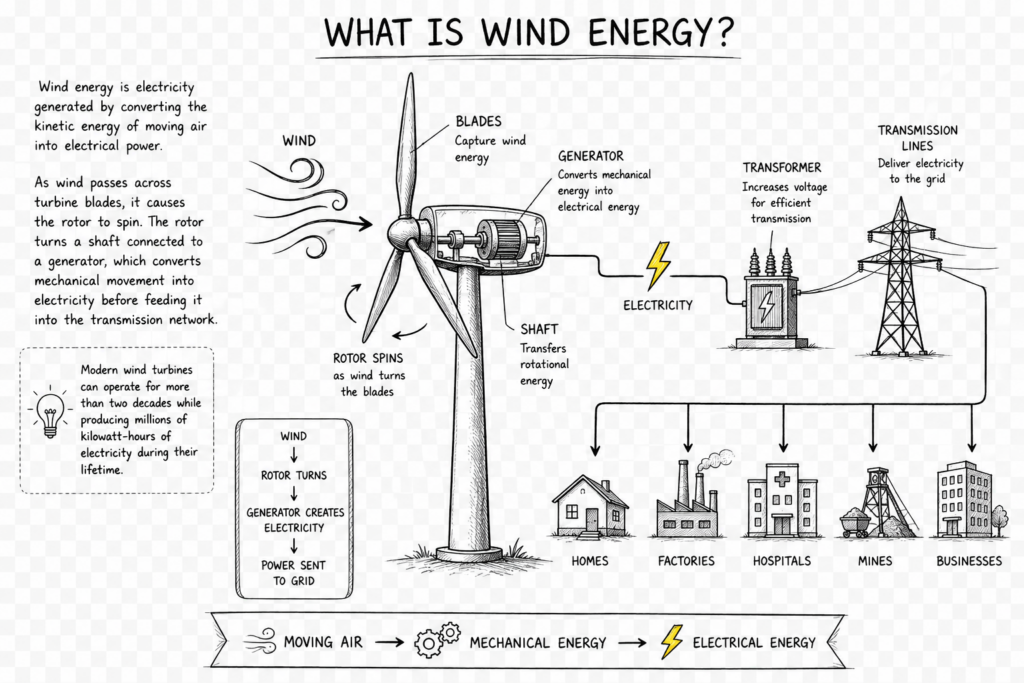
Moving air becomes rotating blades. Rotating blades become electrical energy. That electricity powers homes, factories, hospitals, mines and businesses.
Modern wind turbines can operate for more than two decades while producing millions of kilowatt-hours of electricity during their lifetime.
Why Africa Is Built for Wind Energy
Africa possesses some of the world’s strongest untapped wind resources.
Long coastlines, elevated plateaus, mountain passes and open plains create consistent wind conditions across many regions. Countries including Kenya, South Africa, Egypt, Morocco, Namibia and Ethiopia have already demonstrated that utility-scale wind projects can supply large amounts of reliable electricity.
Kenya’s Lake Turkana Wind Power project remains one of the largest wind farms on the continent, while South Africa continues expanding its wind fleet through competitive renewable energy procurement programmes.
Wind energy is moving from isolated projects to national energy strategies.
Why Wind Energy Matters More Than Ever
Electricity demand across Africa continues to grow as populations expand, manufacturing increases and digital infrastructure spreads across the continent. Every new industrial park, mine, logistics hub and technology campus requires dependable power.
Building that capacity entirely from imported fossil fuels creates long-term exposure to volatile fuel prices.
Read Also: Cost of Solar for a Hospital in Kenya (2026 Guide)
Wind power removes that dependency. Once construction is complete, the primary fuel is free. Operating costs remain relatively stable because there is no coal, diesel or natural gas to purchase every month.
This makes wind energy attractive for governments seeking energy security and businesses seeking predictable operating costs. Globally, wind power continues to expand at record pace, with installed capacity exceeding 1,299 GW after another record year for new installations in 2025.
Where Wind Energy Works Best
Not every location is suitable for wind generation. Successful projects begin with one question: Does the site have consistent wind throughout the year?
Developers answer this through wind resource assessments that collect data over extended periods before construction begins.
The strongest locations often include:
- Coastal regions
- Mountain ridges
- Open plains
- High-altitude plateaus
- Offshore locations
Selecting the right site has a greater influence on project success than choosing between turbine manufacturers. A well-positioned turbine can generate substantially more electricity than an identical turbine installed in a poor location.
Challenges That Still Need Solving
Wind energy is not a perfect technology. Large projects require significant upfront investment. Transmission lines must connect wind farms to population centres.
Electricity grids must balance changing wind conditions with other generation sources. Environmental assessments are also essential to minimise impacts on wildlife and surrounding communities.
These are engineering and planning challenges—not reasons to avoid wind power. Countries that invest in modern grids, storage technologies and diversified energy systems consistently overcome them.
The Future of Wind Energy in Africa
The next decade will determine which African economies become regional manufacturing and industrial leaders.
Reliable electricity will separate them. Wind energy will not replace every other source of power, nor should it. Strong energy systems combine multiple technologies that complement one another.
Wind, solar, hydropower, geothermal and battery storage each solve different parts of the electricity challenge. Together they build a stronger grid than any single technology can deliver alone.
Africa possesses the land, the wind resource and the growing demand needed to expand wind generation significantly. The remaining question is no longer whether the continent has enough wind.
It is whether governments, investors and utilities can build infrastructure quickly enough to capture the opportunity. For countries determined to strengthen energy security, attract investment and support long-term industrial growth, wind energy has already moved from possibility to necessity.