Kenya sits on one of the world’s most valuable energy assets. It is underground. Geothermal energy is often described as heat from the earth. That is technically correct, but incomplete.
Geothermal energy is a heat management business. The earth constantly produces heat from radioactive decay occurring deep beneath its surface. In some places, particularly along tectonic boundaries, that heat moves closer to the surface. The East African Rift System is one of those places.
How Electricity is Produced
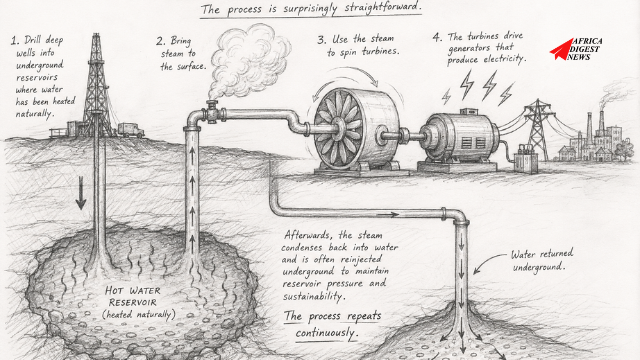
The process is surprisingly straightforward.
Step one. Drill deep wells into underground reservoirs where water has been heated naturally.
Step two. Bring steam to the surface.
Step three. Use the steam to spin turbines.
Step four. The turbines drive generators that produce electricity.
Afterwards, the steam condenses back into water and is often reinjected underground to maintain reservoir pressure and sustainability. The process repeats continuously.
Why Geothermal Matters in Africa
Solar only works when sunlight is available. Wind depends on weather patterns. Hydropower depends on rainfall. Geothermal is different. It operates continuously. This makes it one of the few renewable energy sources capable of providing baseload power.
Why Kenya Leads
Kenya generates a significant portion of its electricity from geothermal resources concentrated around the Rift Valley. Areas such as Olkaria have become internationally recognised geothermal hubs. Other African countries with geothermal potential include:
- Ethiopia
- Djibouti
- Tanzania
- Rwanda
- Uganda
Most of this potential remains undeveloped. The challenge is capital. Drilling geothermal wells is expensive and risky. A single unsuccessful well can cost millions of dollars. That financial risk explains why geothermal projects often depend on government support and development finance institutions.
As Africa industrialises, stable electricity will become increasingly valuable. Geothermal may become one of East Africa’s biggest strategic advantages. Because unlike sunlight or wind, the resource never stops existing.