By Thuita Gatero, Managing Editor, Africa Digest News. He specializes in conversations around data centers, AI, cloud infrastructure, and energy.
For more than a decade, South Africans have lived with a word that defines the nation’s energy anxiety, load-shedding. Rolling blackouts, sometimes lasting up to sixteen hours a day.
The culprit? An ageing fleet of coal plants, built in another era, that never received the upgrades demanded by a growing, power-hungry population.
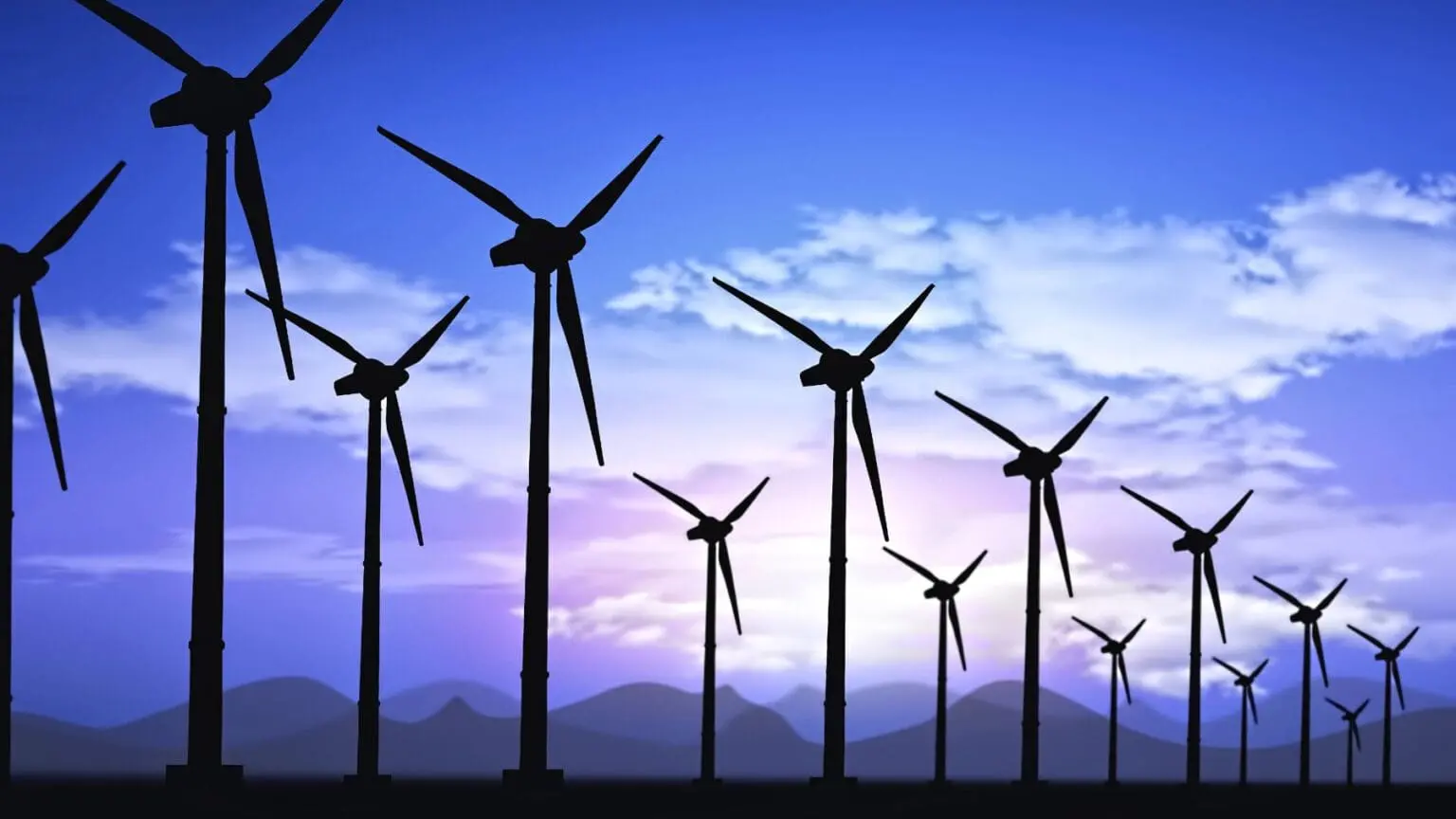
Now, there’s a new name on the horizon: Carissa, the record-sized wind farm just approved by the South African government. Built by Hive Hydrogen near Beaufort West in the Western Cape, the Carissa Wind Energy Facility will host 154 turbines capable of producing up to 1,000 megawatts enough, on paper, to light more than half a million homes.
But it raises an obvious question: if one Carissa can make such a difference, how many of them would it take to power all of South Africa?
What “Permitted” Really Means
“Permitted” does not mean operational. It means the project has crossed a series of bureaucratic hurdles: environmental assessments, grid-connection approval, land use clearance, and a green light from the Department of Forestry, Fisheries and the Environment (DFFE).
Carissa received that approval under what is called a Strategic Infrastructure Project (SIP) status essentially, an express lane for projects deemed nationally urgent. It is a sign of how desperate the government has become to plug the holes in the national grid.
South Africa currently operates about 37 wind farms generating roughly 3.5 gigawatts (GW) of capacity. That sounds impressive until you compare it with national demand: peak consumption sits around 33.5 GW, and total annual electricity use exceeds 219 terawatt-hours (TWh). In other words, wind contributes less than 5% of the country’s total power supply.
If each Carissa-sized facility adds 1 GW of capacity, South Africa would, in theory, need around 33 of them to match its peak electricity demand.
But because the wind does not blow all the time, the capacity factor, how much energy a wind farm actually produces on average sits closer to 35%. Adjust for that, and the country would need closer to 100 Carissas to run purely on wind.
Realistically, even 70 to 80 Carissas could power the nation on average across the year, but only if backed by large-scale battery storage and transmission upgrades.
Across the continent, Africa’s wind potential is staggering an estimated 33,000 GW, according to the Global Wind Energy Council. Yet, as of 2025, the entire continent has barely scratched the surface: about 9 GW installed in total.
The leaders are Egypt, Morocco, Kenya, and South Africa, together accounting for almost 90% of Africa’s wind capacity.
Why Permitting Is the Bottleneck
For every Carissa that gets a permit, there are dozens of stalled projects waiting for approvals. Environmental impact studies can take years, and grid capacity near windy regions like the Northern and Western Cape is limited.
That is why the Carissa approval matters, it signals that government regulators are finally willing to accelerate large-scale renewable projects rather than bury them in paperwork.
Carissa alone will not end load-shedding, but it’s a signal, a megawatt-sized vote of confidence in South Africa’s renewable future.
If the country were to approve and build even a dozen more projects of similar scale, the impact on the national grid would be visible within years: fewer blackouts, lower emissions, and a gradual shift away from coal’s economic stranglehold.
It may take a hundred Carissas to power the whole country, but it only takes one to prove that the wind can, finally, begin to turn.