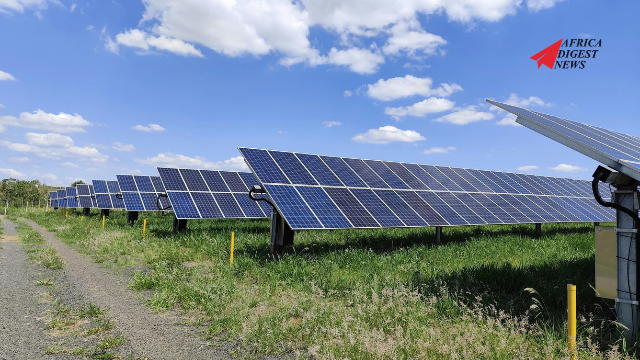
Solarcentury Africa has started full commercial operations at the 34.5 MWp second phase of its Mailo solar photovoltaic plant in Zambia, bringing the site’s operational capacity to 59.5 MWp. The company announced on 21 October that Mailo 2 had completed construction and grid compliance testing and was now dispatching electricity. The milestone advances the development of the planned 118 MWp Mailo solar project, with a further phase still under development.
Mailo 2 was completed in under 12 months, with equity investment from Solarcentury Africa’s parent company, BB Energy, and debt financing from Standard Bank South Africa. Alensy Energy Solutions served as the engineering, procurement and construction contractor. The companies did not disclose the value of the financing package or the expected annual electricity output from the second phase. The project’s commissioning follows the first 25 MWp phase, which began operating in July 2025.
The Mailo development is notable for its merchant power model. Rather than relying solely on a long-term power purchase agreement with a single utility, the first phase sells electricity through the Southern African Power Pool (SAPP), the regional electricity trading platform. Mailo 2 now adds capacity to the project’s ability to supply electricity to SAPP offtakers. The model creates opportunities to sell power to buyers across the regional market, although commercial returns depend on available demand, trading prices and transmission capacity.
Read Also: Côte d’Ivoire’s Kong Solaire Project Secures €50 Million Financing Agreement
The expansion comes as Zambia seeks to diversify its electricity supply and reduce its exposure to hydropower variability. Solar generation can provide additional electricity during daylight hours, but its contribution depends on the timing of demand and the ability of the grid and regional trading system to absorb and deliver output. Cross-border trading can widen the pool of potential buyers, but actual deliveries remain subject to transmission availability and market conditions.
Mailo forms part of Solarcentury Africa’s wider portfolio of approximately 350 MW of solar projects in Zambia at different stages of operation, construction and development. The company’s next planned phase at Mailo is expected to add another 59 MWp, taking the development to approximately 118 MWp once completed. That third phase remains under development, so the full planned capacity should not be counted as operational today. The commissioning of Mailo 2 therefore marks a concrete increase in available solar capacity while leaving further expansion dependent on delivery of the remaining project stages.