South Africa’s Renewable Energy Independent Power Producer Procurement Programme (REIPPPP) shows that “bankable” power purchase agreements (PPAs) are created by design. The programme has delivered more than 6.6 GW through 144 independent power producers (IPPs), proving that private capital will flow even where sovereign strength is limited—provided the contracts align payment security, risk allocation, and enforceability with investor needs.
At the simplest level, early REIPPPP success came from three interlocking features. First, payment security: a ring‑fined Payment Security Mechanism (PSM) supported by the National Treasury ensured Eskom’s payment obligations were insulated from its distressed balance sheet. That mechanism cut counterparty and sovereign risk for lenders. Second, risk allocation: the PPAs set out clear, balanced responsibilities for IPPs, Eskom, and government, including explicit change‑in‑law, curtailment, and termination provisions.
Third, standardisation: a single transparent PPA template and a predictable bidding process reduced negotiation times and legal uncertainty. Together, these elements made projects attractive to international banks, development finance institutions, and private investors—even before South Africa regained an investment‑grade sovereign rating.
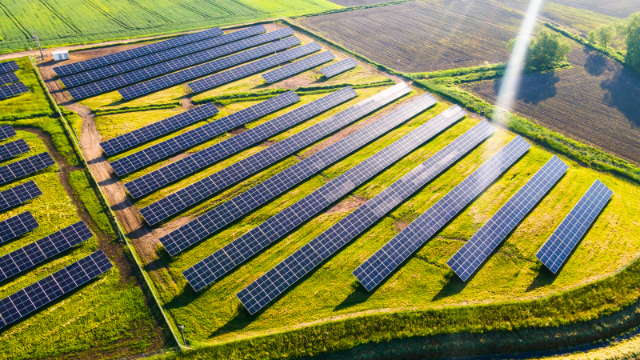
The experience of refinancing in REIPPPP offers a practical demonstration of what “bankable” means in contract terms. The CPV Power Plant 1 (44 MWp concentrated solar PV) near Touwsrivier was initially financed with a JSE‑listed bond and enjoyed a Moody’s project bond rating.
In 2021 the project was refinanced into a limited‑recourse project finance structure with lenders such as Investec, Rand Merchant Bank, Stanlib, Mergence, and Aluwani. The 20‑year PPA with Eskom remained intact; the wholesale tariff adjustment that followed was the product of refinancing economics, not a renegotiation of the PPA’s core protections.
That outcome underscores a key point: robust payment security and enforceable contract terms allowed capital structures to evolve without disrupting the underlying commercial agreement.
The Department of Mineral Resources and Energy’s refinancing initiative, launched in 2019, invited the 64 IPPs from the first three and a half bid windows to participate. Thirteen projects have refinanced so far, delivering nominal consumer savings of about R3.5 billion.
Crucially, these refinancings relied on the original PPA architecture, payment guarantees, clear risk allocation, and enforceability were already in place so lenders could provide lower‑cost capital without reopening the core contractual deal.
Why this matters beyond South Africa is straightforward. Solar irradiance and wind regimes matter, but they don’t create projects on their own: institutions and contracts do. The REIPPPP template offers a transferable blueprint for other African markets—Nigeria, Kenya, DRC, Tanzania and beyond. Countries that adopt ring‑funded payment security, balanced risk allocation, and standardised PPAs can attract more private capital and scale reliably. Those that don’t risk stalling at pilot projects, stranded assets, and higher costs.
For investors, the takeaway is practical: treat “bankability” as a contract checklist, payment security, risk allocation, enforceability—rather than a marketing label. Insist on these elements to secure lower‑cost financing. For corporate buyers, view energy procurement as a system to secure, not merely a line item to cut; back PPA structures that mirror REIPPPP’s protections.
For policymakers, this is the core policy task: renewable targets are meaningless without the contractual architecture to deliver them. Ring‑fund payment security, standardise contracts, and enshrine balanced risk allocation as infrastructure reforms—not optional add‑ons.
REIPPPP’s lesson is clear: bankability is an engineered property of contract structure. When payment security, balanced risk, and enforceable rules are in place, markets move from tentative pilots to capital‑ready, gigawatt‑scale deployment.