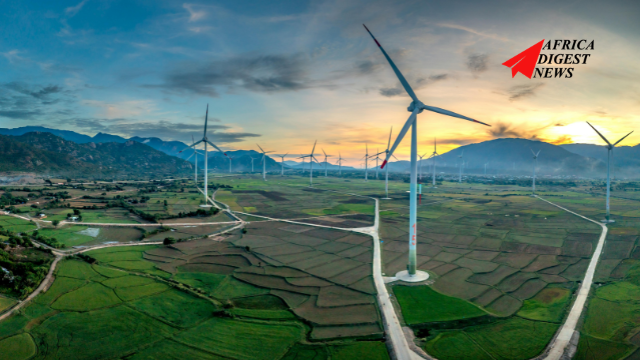
Kenya Power is warning that the rapid growth of solar and wind power is creating a new challenge for the country’s electricity system: keeping the grid stable is becoming more expensive. The warning comes as variable renewable energy (VRE) takes a larger share of Kenya’s power system, increasing the amount of generation that can fluctuate depending on sunshine and wind conditions. Kenya Power says wind and solar now account for more than 20% of the grid’s firm capacity, above the roughly 15% level it cites as a manageable benchmark for variable generation. During some daytime periods, the contribution can rise to 34–36%. That creates a problem that goes beyond the price of renewable electricity itself.
Solar and wind plants do not produce electricity at a constant rate. Solar output can fall rapidly when clouds move across a region and drops to zero after sunset. Wind generation can also change as wind speeds fluctuate. The grid, however, must continuously balance electricity supply and demand. When renewable output suddenly falls, Kenya Power needs other generators to increase production quickly. When renewable output suddenly rises, other plants may need to reduce their output. That balancing requires flexible generation, reserves and system-control services. Without them, sudden changes in supply can put pressure on grid frequency and reliability. The economics become more complicated where renewable projects operate under take-or-pay power purchase agreements. Under such arrangements, Kenya Power may have contractual obligations to pay for electricity from a generator even when the system cannot absorb all of that output at a particular moment. At the same time, the utility may need to bring other generation online to maintain system stability. In effect, the system can face two costs: Pay for the renewable capacity + pay for the flexibility needed to manage it.
Kenya Power Managing Director Joseph Siror has argued that the true cost of variable renewable energy therefore goes beyond the headline price of electricity in a PPA. The cost of the balancing services required to integrate that electricity also has to be considered. This is an important distinction in Kenya’s energy transition. Wind and solar can have relatively low generation costs because they have no fuel costs. But the electricity system does not pay only for energy. It also needs capacity, reserves, flexibility, transmission infrastructure and balancing services. A solar plant may produce very cheap electricity at midday, for example, but the grid still needs sufficient capacity to meet demand after sunset.
Similarly, a sudden reduction in wind generation does not reduce electricity demand. Another generator has to fill the gap. This is why the cost of integrating renewables can increase as their share of the system rises. Kenya already generates a large share of its electricity from renewable sources, particularly geothermal and hydro. The newer challenge is the rapid expansion of variable renewable generation. Large wind projects such as the Lake Turkana wind farm, utility-scale solar and the growing number of grid-connected commercial and industrial solar systems are changing the shape of electricity supply.
Read Also : How Rooftop Solar Is Cutting Into Kenya Power’s Most Valuable Customers
The issue is therefore no longer simply whether Kenya can generate more renewable electricity. It is increasingly about when that electricity is available and how the rest of the system responds when it changes. Kenya Power is consequently pushing for a more balanced generation mix. The utility has pointed to geothermal, hydro and electricity imports as sources of more predictable capacity that can complement variable solar and wind generation. It is also tightening the terms of new PPAs as it seeks electricity that is not only cheap but also more flexible and better aligned with the needs of the grid. That could change the way renewable projects compete for future contracts. The lowest headline tariff may no longer be enough. Projects that can provide predictable output, storage or other flexibility could become increasingly valuable.
Battery storage is one of the technologies that could help resolve the problem. Instead of allowing excess solar electricity to disappear when generation exceeds demand, batteries can store it and release it when production falls. That could allow Kenya to capture more renewable energy while reducing the amount of conventional generation needed to respond to sudden changes. Better forecasting, demand management and properly designed ancillary-service markets could also reduce balancing costs. The wider shift is therefore from paying only for kilowatt-hours towards paying for the different services required to operate a renewable-heavy electricity system.
Kenya’s experience highlights a broader reality of renewable-energy expansion. Adding solar and wind capacity is relatively straightforward. Integrating large amounts of variable electricity into the grid is the harder part. The country now has to build the infrastructure and market mechanisms that allow renewable energy to work alongside firm generation, storage and flexible demand. That does not mean Kenya needs less renewable energy. It means the next phase of the transition will have to focus as much on grid flexibility as generation capacity.


