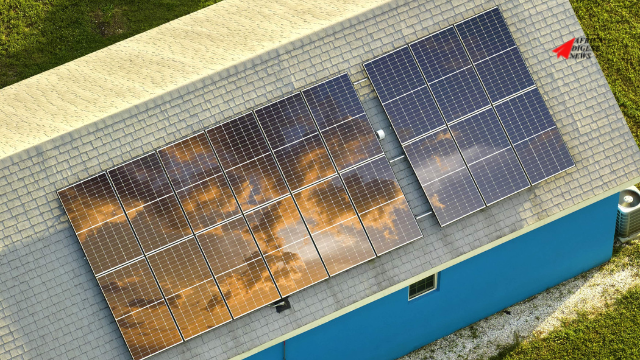
Sawa Energy has secured a $10 million debt facility from Oikocredit and the Global Climate Partnership Fund to deploy 35 MW of solar and battery storage across roughly 250 commercial and industrial sites in East Africa over the next three years.
The announcement arrives at a time when electricity reliability is becoming one of the largest operating risks facing businesses across the region. For many firms, energy planning is no longer about tariffs alone. It is about control.
Distributed solar with battery storage allows companies to secure part of their electricity supply without committing upfront capital. Sawa Energy installs and operates systems under long-term service agreements, shifting solar adoption from a capital expenditure decision to an operating expense decision.
That shift matters for finance teams managing production risk. Instead of waiting for grid improvements, companies are beginning to build their own reliability into operations.The planned rollout of 35 MW across 250 sites represents more than added generation capacity. It reflects how energy stability is moving closer to where it is used.
Utility-scale projects still dominate national planning conversations. But distributed installations are expanding quietly across factories, campuses, logistics hubs, hotels, and processing facilities. Each installation reduces exposure to outages and diesel fallback costs.
Sawa Energy has already deployed more than 65 installations across Rwanda and Uganda, serving manufacturing, hospitality, education, mining, and commercial property clients. Expansion into additional East and Southern African markets suggests demand for privately secured electricity is growing across multiple sectors at once.
Read Also: Green Bonds and the Democratization of African Energy Investment
Development finance institutions are often early participants in infrastructure markets where private lenders remain cautious. Facilities like this help companies expand deployment pipelines while signalling to commercial investors that distributed energy portfolios are becoming financeable at scale.
That signalling effect can be as important as the capital itself. For businesses operating in environments where outages interrupt production schedules and diesel prices remain volatile, solar paired with storage is becoming part of operational planning rather than environmental positioning.
This does not replace national grids. It changes how companies relate to them. Across East Africa, electricity has traditionally been treated as something businesses receive. Increasingly, it is becoming something they secure.
By Thuita Gatero, Managing Editor, Africa Digest News. He specializes in conversations around data centers, AI, cloud infrastructure, and energy.