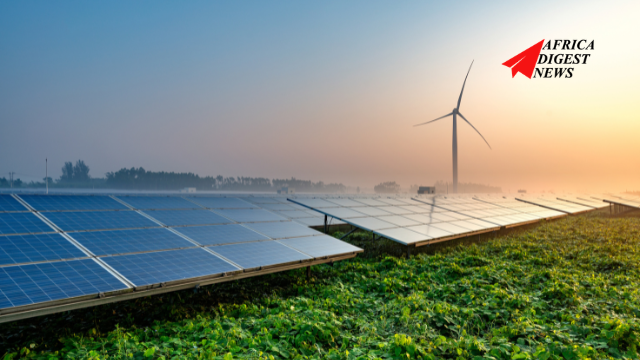
South Africa has cleared four solar photovoltaic projects under Bid Window 7 of the Renewable Energy Independent Power Producer Procurement Programme (REIPPPP). The four projects total 890 MW and are worth about ZAR 16 billion (about $955 million). They are located in the Free State and North West provinces. The government has reallocated unused onshore wind capacity to these solar projects. This is not a pilot. It is a construction pipeline with private investors, contracts, and jobs.
The 890 MW allocation consists of:
- 240 MW Rondebosch Solar Park (Free State), developed by Red Rocket South Africa
- 240 MW Springhaas Solar Facility 1 (Free State), Red Rocket
- 170 MW Springhaas Solar Facility 6 (Free State), Red Rocket
- 240 MW Corona Solar Project (North West), developed by ENGIE
The total investment from these four projects is ZAR 16 billion. The developers have committed to creating 4,134 job opportunities during construction and operations. They have also pledged to allocate 41% of total project costs to local content. This is not a list of concepts. It is a set of contracts with clear capacity, clear investors, and clear economic targets. The four projects are part of a larger REIPPPP Bid Window 7 pipeline. The total solar PV allocation under BW7 has been increased to 3.94 GW across 18 IPP projects. An additional 1.61 GW is already under construction and expected to be commissioned in 2026 and 2027. This means that South Africa is not just announcing capacity. It is building capacity at scale.
The reallocation of unused wind capacity to solar is a functional signal. It shows that the government is using the REIPPPP framework flexibly to keep the pipeline full. If wind does not secure its share, solar takes it. This reduces the risk of stranded capacity and speeds up the build cycle. The result is more solar capacity in the grid, faster, with the same contractual and financial framework. South Africa’s energy problem is not a lack of solar potential. It is a lack of capacity that actually comes online. The REIPPPP programme has already delivered multiple gigawatts, but the grid is still under pressure. The four new projects are a direct response to this: they add 890 MW of new solar that will feed into the national grid and reduce reliance on coal.
The model also changes the relationship between public and private power. The government sets the rules and the allocation. Private IPPs bring the capital, the technology, and the execution. The REIPPPP framework is a repeatable model that can be used for more projects, more capacity, and more jobs. The key is to keep the pipeline full and the rules stable.
Solar is variable. It produces when the sun shines and stops when it does not. This creates:
- Rapid ramps up in the morning and ramps down in the evening
- Output drops when clouds pass
- Zero output at night
The grid must manage these ramps. If the system does not have enough flexible generation (hydro, gas, or storage) to follow the ramps, it can face frequency instability or even outages. In South Africa, the 3.94 GW of solar will be concentrated in certain regions (e.g., Free State and North West). This means that the local grid must be able to absorb large injections without overloading lines or causing voltage issues. Without proper system studies and grid reinforcement, the variability can stress the network.
Traditional power plants (coal, gas, hydro) provide spinning inertia. This inertia acts as a buffer when there is a sudden change in load or generation. Solar, as inverter‑based generation, does not provide this natural inertia. It must be programmed to behave like a conventional generator. When solar penetration is high, the system can become more sensitive to faults. If a fault occurs, the lack of inertia can cause frequency to drop faster. The grid operator must then rely on fast‑acting reserves and inverter controls to keep frequency stable. This is a technical challenge that must be managed through system studies and control settings.
Voltage and Reactive Power
Solar inverters can provide reactive power to support voltage. However, if they are not configured correctly or if the local grid is weak, adding large amounts of solar can cause voltage swings. This can lead to:
- Overvoltage during low‑load periods
- Under‑voltage during high‑load periods
- Tripping of solar plants if voltage limits are exceeded
The grid must be reinforced and the inverters must be programmed to manage reactive power. This requires detailed planning and coordination between the IPPs and the grid operator.
Dispatch, Storage, and Hybridisation
The 3.94 GW solar pipeline is a step toward the target of 10 GW solar capacity in South Africa. However, to manage stability, the grid needs more than solar. It needs:
- Flexible generation (hydro, gas, or imports) to follow ramps
- Storage (battery or pumped hydro) to smooth output and provide reserve
- Hybrid projects that combine solar with wind or storage to reduce variability
The REIPPPP programme is designed to allow for hybrid projects and storage. If the 3.94 GW is deployed as part of a balanced mix, the grid stability impact can be managed. If it is deployed as “solar only” without storage or flexible generation, the risk increases.
System Planning and Grid Reinforcement
The key to managing the impact of 3.94 GW solar is system planning. The grid operator must:
- Conduct load flow studies to see how the new solar will affect the network
- Run dynamic stability studies to see how the system will respond to faults
- Plan transmission upgrades to handle the new injections
Without these studies and upgrades, the risk is that solar will be curtailed or that the grid will face instability. The REIPPPP programme has already driven multiple gigawatts, but the grid is still under pressure. The 3.94 GW is a test of whether the system can handle large volumes of solar without outages.
The 3.94 GW of solar will:
- Reduce reliance on coal and lower emissions
- Provide more power during the day, when demand is high
- Reduce load shedding if the grid is managed well
But it will also:
- Increase variability and require more flexible generation
- Reduce system inertia and increase the risk of frequency issues
- Require investment in transmission and storage to manage voltage and ramping
If the system is planned and managed correctly, the 3.94 GW can be integrated without causing outages. If not, the grid will face instability and the projects will be curtailed. The difference is not in the solar itself. It is in how the grid is prepared.