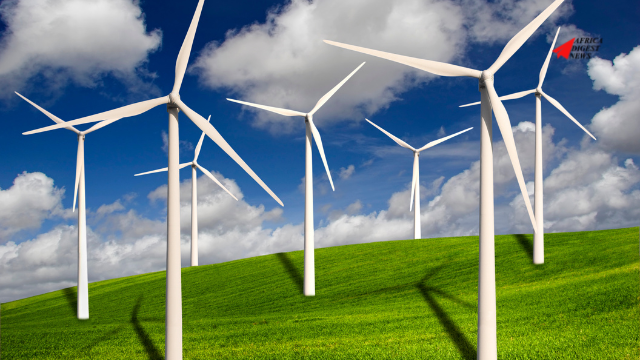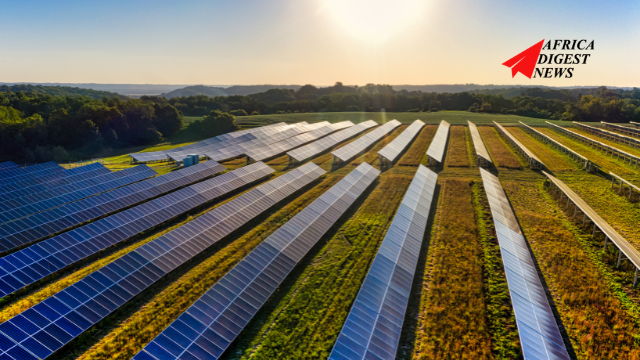
Africa needs more renewable energy. But new research from Kenya and South Africa is raising a difficult question about who actually benefits when large-scale wind and solar projects arrive. The study, led by Lars Buur of Roskilde University and colleagues, examines how communities hosting utility-scale renewable-energy projects experience the transition. Its findings suggest that while projects can bring jobs, infrastructure and investment, communities can also lose access to land and livelihoods without receiving benefits that adequately reflect those losses.
The issue is particularly important as private capital flows into Africa’s clean-energy sector at increasing scale. The researchers estimate that around $40 billion a year is now flowing into renewable-energy investments across sub-Saharan Africa. The question, they argue, is how the value created by that investment is shared with the communities that host it.
The difference between “buying in” and “buying out”
The study identifies two broad approaches to community participation in renewable-energy projects. The first is what the researchers describe as “buying in.” Under this model, communities can become long-term participants in projects through mechanisms such as co-ownership, revenue sharing, community trusts and long-term land leases. The objective is to give communities an economic stake in the projects operating on their land. The second approach is “buying out.” Here, communities may receive compensation, social infrastructure or other benefits in exchange for giving up access to land. But they have little continuing participation in the project’s revenues or decision-making.
The distinction is significant because renewable-energy projects can operate for decades. A community may surrender land at the beginning of a project, while financial benefits may only arrive later and may be considerably smaller than the value of the land and livelihoods affected. The researchers also caution that projects presented as inclusive can still become effectively exclusionary if communities have little influence over what constitutes a fair agreement.
South Africa has one of Africa’s most established renewable-energy procurement frameworks through the Renewable Energy Independent Power Producer Procurement Programme, or REIPPPP. The programme includes requirements intended to ensure that communities benefit from renewable-energy development. These include local ownership, employment, socioeconomic development and other forms of community participation. But the study finds a gap between these formal requirements and outcomes experienced by some communities.
In the Northern Cape, where large-scale solar and wind projects have proliferated, communities have in some cases received limited or delayed benefits. Jobs, dividends and infrastructure are commonly presented as evidence of local economic development. But these benefits may not correspond to the priorities of communities that lose access to land. In some cases, communities have received facilities such as community halls or social infrastructure selected by developers, even though residents may have preferred other forms of compensation or development. The timing of benefits is another problem. Financial returns to communities can take years to materialise, particularly where benefits depend on a project reaching commercial operation. For households that have already lost access to land or grazing areas, that delay can create a significant gap between the cost imposed on the community and the benefits it receives.
Kenya has positioned itself as a major renewable-energy market, with significant investment in wind, solar and geothermal power. But large projects have also generated disputes over land acquisition, compensation and community participation. The Lake Turkana Wind Power project is one of the country’s most prominent examples. The project became an important part of Kenya’s renewable-energy infrastructure, but its development was accompanied by disputes involving land rights and consultation, particularly affecting pastoralist communities.
The wider lesson is that the national value of a renewable-energy project does not automatically translate into equivalent local benefits. A project can add hundreds of megawatts to the national grid while fundamentally changing how communities use the land around it. For pastoralist and agro-pastoralist communities, land is not simply an asset that can be valued through a financial payment. It can provide grazing, water access, mobility and cultural value. That creates a fundamental challenge for conventional compensation models.
One of the study’s central arguments is that renewable-energy developers often measure community benefits using indicators that are easy to quantify. Jobs created, infrastructure built, dividends paid, money invested. But these measures do not necessarily capture the full economic and social value of land. A temporary construction job, for example, does not necessarily replace the long-term economic value of access to grazing land.
Likewise, a community building does not necessarily compensate households for losing access to land they depend on for their livelihoods. This becomes particularly important in areas where communities rely on collective or customary land-use systems. The value of land may extend beyond direct income. It can determine where livestock move, where water is accessed and how communities maintain their livelihoods. A compensation package that ignores those functions can therefore look generous on paper while producing limited benefits in practice.
Kenya does not have a comprehensive statutory benefit-sharing framework covering wind, solar and transmission projects in the way communities might need. Instead, benefits can be negotiated through land leases, project-specific agreements, licence conditions and voluntary corporate social responsibility programmes.
That can make community benefits inconsistent. What one community receives may depend heavily on the negotiating power of local representatives, the structure of the project and the willingness of the developer to provide additional benefits. The result is a system where communities can have very different experiences of renewable-energy development. Some may negotiate better land terms or community investments. Others may receive relatively limited benefits while giving up access to economically important land.
Africa needs renewable energy at scale. Millions of people still lack reliable access to electricity, while governments are under pressure to expand generation capacity and reduce dependence on fossil fuels. That makes private investment essential. But the study suggests that how projects are structured could determine whether that investment produces lasting local support or creates new conflicts. Poorly designed benefit-sharing arrangements can create mistrust between developers and communities. That can contribute to disputes, delays and higher project costs.
Read Also: Why Commissioned Capacity Matters More Than Nameplate Capacity
More inclusive arrangements, by contrast, can give communities a financial interest in the success of the projects operating on their land. The researchers therefore argue for approaches that move beyond one-off compensation and developer-led corporate social responsibility. Communities should have greater influence over benefit-sharing arrangements and, where appropriate, opportunities for ownership or long-term participation in project revenues.
The more difficult question is who gets to share in the economic value created by that solar. A renewable-energy project can reduce emissions, increase electricity supply and attract investment while still leaving the community hosting it feeling that it has lost more than it gained. That is the tension at the centre of Africa’s clean-energy expansion. The transition will require enormous amounts of land, capital and infrastructure. If communities are treated primarily as obstacles to be compensated, opposition and conflict could become a recurring feature of renewable-energy development.
If they are treated as long-term economic partners, the projects could create benefits that extend well beyond electricity generation. For Africa’s renewable-energy boom to become a genuinely inclusive transition, the communities hosting these projects may need to be more than recipients of compensation. They may need to become participants in the value being created on their land.