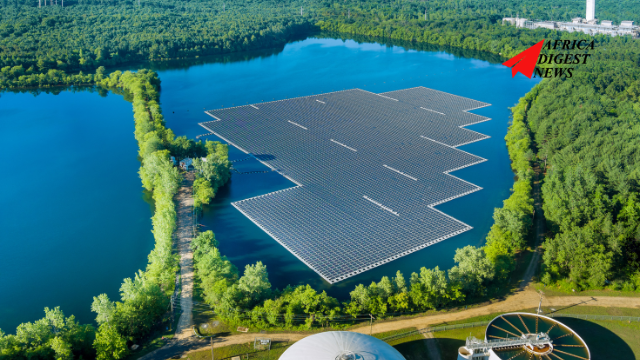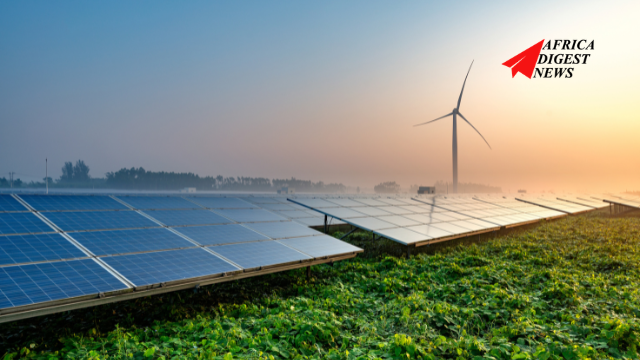
Chinese companies are increasingly building the machinery behind Egypt’s renewable energy expansion, from solar cells and batteries to wind turbines, inverters, grid equipment and utility-scale power plants. That makes the relationship bigger than a collection of renewable energy projects. It is becoming a supply chain. Egypt has set a target of getting 45% of its electricity from renewable sources, creating a large market for the equipment needed to generate, store and transmit that power. Chinese companies are moving into that market at almost every stage. In solar, Chinese firms have been involved in some of Egypt’s biggest projects, including the Benban Solar Park in Aswan and the Kom Ombo solar project.
The Obelisk solar-plus-storage project, commissioned in 2026, uses Chinese companies for its energy storage and power management systems and is designed to supply electricity to about 1.6 million households. Then there is the planned 1.7 GW Minya solar project, which will be paired with 4 GWh of battery storage. Chinese technology is again central to the storage component. But the more consequential shift is happening outside the power plants. Egypt is becoming a manufacturing base for the equipment those plants need.
In the Suez Canal Economic Zone, Chinese companies are establishing factories for solar cells, modules, batteries and inverters. GCL is developing a 5 GW solar-cell manufacturing complex. Cornex is investing in a 5 GWh battery-storage factory. TBEA is involved in grid-connection equipment and Egypt’s first solar-inverter factory. JA Solar is investing more than $210 million in a facility capable of producing 2 GW of solar cells and modules. Sungrow is developing a 10 GWh battery-storage manufacturing plant at El-Sokhna. And the push extends to wind. Sany Renewable Energy has signed a memorandum covering a 2 GW wind project in the Gulf of Suez alongside plans for Egypt’s first wind-turbine manufacturing plant, with annual production capacity of 2 GW. Envision Energy is supplying turbines for the 500 MW Amunet II wind project. The pattern is difficult to miss. Egypt wants renewable electricity.
Read Also: Why Commissioned Capacity Matters More Than Nameplate Capacity
Chinese companies are supplying the technology. And increasingly, they are manufacturing that technology inside Egypt. That matters because renewable energy is not simply about installing solar panels or wind turbines. It requires an industrial ecosystem capable of producing equipment, storing electricity, connecting projects to the grid and maintaining the infrastructure over decades. Egypt is therefore offering Chinese manufacturers something more valuable than individual project contracts: a large domestic market, a strategic manufacturing location and access to the wider African market.
The Suez Canal makes that proposition even more attractive. Factories located around the canal can serve Egypt while positioning manufacturers close to markets across Africa, the Middle East and beyond. For Egypt, the attraction is equally clear. Local manufacturing could reduce dependence on imported equipment, create industrial jobs, attract foreign investment and give the country more control over the infrastructure required for its energy transition. The result is a different kind of renewable-energy partnership. China is increasingly helping Egypt build the industrial infrastructure required to generate it at scale.