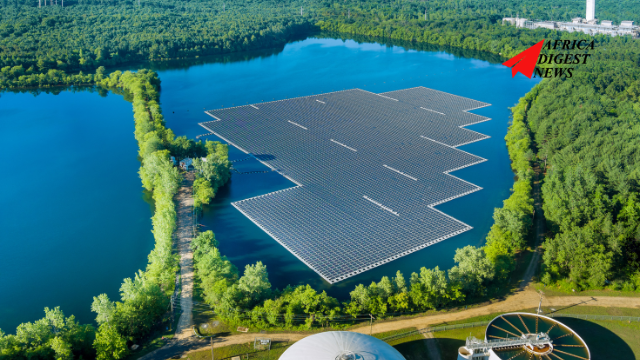
Zimbabwe’s proposed Kariba Floating Solar Project is moving closer to financial close, bringing one of Africa’s most ambitious floating solar developments a step nearer to construction. Planned as a 600 MW project to be developed in phases, it has already secured US$4.4 million in project preparation support from Afreximbank, with discussions continuing around a much larger financing package.
This is an attempt to solve one of Zimbabwe’s biggest energy challenges, overdependence on hydropower. Kariba Dam supplies a significant share of the country’s electricity, but recurring droughts and declining reservoir levels have repeatedly reduced generation, contributing to load shedding and electricity shortages. Floating solar offers a way to diversify generation while making better use of the country’s existing energy infrastructure. Unlike conventional solar farms, floating photovoltaic systems are installed directly on the surface of reservoirs. That means they require little additional land, can share existing transmission infrastructure with hydropower facilities, and create opportunities for hybrid operation.

At Kariba, that hybrid model is where the real value lies. During daylight hours, solar panels generate electricity, reducing the need to release water through the dam’s turbines. The conserved water can then be used later in the day when solar production falls and electricity demand remains high.
In effect, the reservoir becomes a form of natural energy storage. The project also offers another operational advantage. Floating solar panels shade portions of the reservoir, reducing water evaporation. While the planned solar array will cover only a small fraction of Lake Kariba, even modest reductions in evaporation can improve long-term water management in a system increasingly affected by climate variability.
This makes the project more than an additional 600 MW of renewable capacity. It is an efficiency upgrade for one of Africa’s largest hydropower assets. The financing structure is equally significant. Large renewable energy projects increasingly depend on phased development, blended finance and strong institutional support. Afreximbank’s involvement during the preparation stage signals growing confidence that complex renewable infrastructure in African markets can attract commercial capital when projects are properly structured.
Read Also: Grid Gap in Focus as Southern African Utility Leaders Join AEW Power Africa Today
If Kariba reaches financial close, it will become one of the continent’s largest floating solar developments and could establish a new benchmark for hybrid solar-hydro systems across Africa. Countries with large reservoirs including Zambia, Ghana, Uganda and Ethiopia face many of the same challenges around hydropower variability and growing electricity demand. Kariba could provide a model for improving generation without constructing entirely new dams or transmission corridors.
The significance of the project therefore extends well beyond Zimbabwe. It demonstrates how renewable energy can complement existing infrastructure rather than replace it, using solar generation to strengthen hydropower performance, improve water management and increase overall system resilience.


