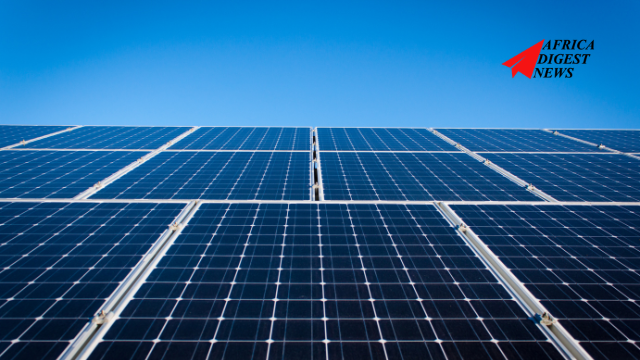
Afripower is positioning itself in South Africa’s solar market primarily as a local developer and EPC partner for distributed, behind-the-meter energy projects, rather than large utility-scale solar farms. The company works with technology suppliers including Chint New Energy, the manufacturer behind the Astronergy solar module brand, to deliver turnkey solar systems for commercial and industrial customers.
One example is the 101.25kW rooftop solar PV installation at Saverite Mart in Mboza, KwaZulu-Natal. Afripower is listed as the project owner, while Chint supplied the Astronergy modules. Afripower’s role covers local project development, system design, installation and commissioning, allowing the international equipment supplier to provide the technology while the local developer manages delivery and customer integration.
The model is particularly suited to South Africa’s commercial customers, which face high electricity costs and the need for greater supply reliability. The Mboza project is reported to have cut the supermarket’s electricity bill by more than 70%, with an estimated payback period of about 2.5 years, demonstrating the potential economics of relatively small rooftop systems for community retail businesses.
Read Also: Meren Energy Stake in Africa Energy Falls Below 10% After Share Sale and Dilution
Afripower’s focus on distributed generation also reflects the changing constraints in South Africa’s electricity market. While load-shedding has historically driven demand for private generation, limited grid capacity is increasingly becoming a constraint on new renewable projects. Behind-the-meter systems allow businesses to generate electricity closer to where it is consumed without depending on additional transmission infrastructure.
The South African approach complements Afripower’s larger renewable and hybrid developments elsewhere in Africa, including its 40MWp Moramanga solar project in Madagascar. Rather than relying on one project scale, the company is applying different models to different markets—utility-scale and hybrid generation where large infrastructure is viable, and smaller C&I solar and storage systems where businesses need faster, decentralised solutions.