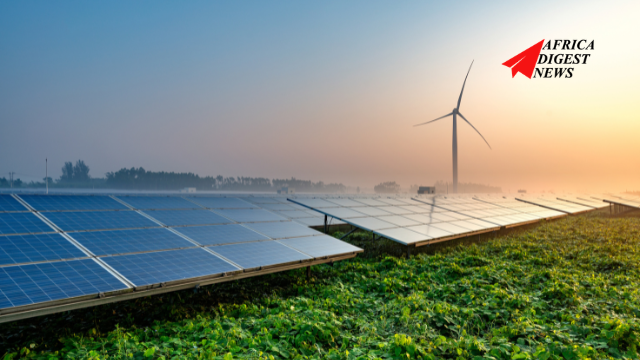
Egypt is increasingly treating the green transition as more than a question of replacing fossil fuels with renewable energy. The country is combining renewable power, green hydrogen and water security into a broader investment strategy, using its strong solar and wind resources to support both climate mitigation and adaptation. Wind capacity alone increased by 16.3% in 2024, rising from 1,890 MW to 2,199 MW, while the government aims for renewables to account for more than 42% of electricity generation by 2030 and more than 60% by 2040.
Investment is also moving towards much larger projects. Egypt has attracted Gulf, European and other international capital into its wind and solar corridors, while companies such as Scatec are planning billions of dollars in renewable-energy and green-transition investments. These projects increasingly extend beyond electricity generation into battery storage, green hydrogen and renewable-powered industrial infrastructure, particularly around the Suez Canal Economic Zone, where Egypt is seeking to establish itself as a major clean-energy and export hub.
Water is an equally important part of the strategy. Egypt faces severe water constraints, making desalination, wastewater treatment, recycling and more efficient irrigation increasingly important. The country is developing treatment and reuse projects with combined annual capacity of billions of cubic metres, while an AfDB-backed programme is preparing five renewable-powered desalination plants capable of producing 525,000 cubic metres of water per day. The objective is to use cleaner energy to address one of the country’s most pressing adaptation challenges.
Read Also: DRC Mine Turns Solar Into 24/7 Power With a Giant Battery
This approach is also extending beyond Egypt’s borders. The country has installed 28 solar-powered groundwater drinking-water stations in South Sudan, linking renewable energy with basic water access and regional cooperation. At home, Egypt is also directing 55% of its FY2025/26 public investment programme towards green projects, up from 15% five years earlier, showing that the transition is increasingly being incorporated into public investment rather than treated solely as a collection of individual energy projects.
Egypt’s significance for the rest of Africa, therefore, may lie less in any single solar or wind project and more in the way it is connecting different pieces of the green economy. Renewable energy can power desalination; water infrastructure can support agriculture; green hydrogen can create new industrial and export opportunities; and large public-private projects can bring international capital into the system. The emerging Egyptian model suggests that Africa’s green transition could increasingly be about building interconnected energy, water and industrial systems, rather than simply adding more renewable megawatts.