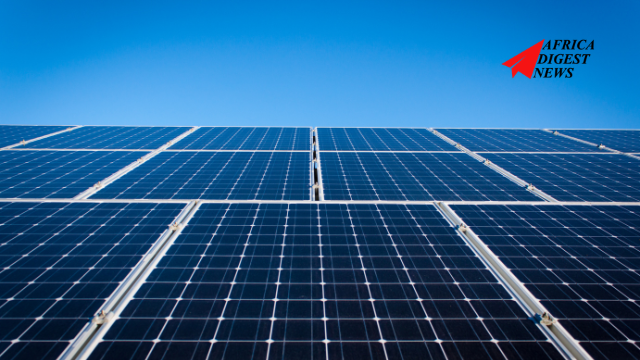
Nigeria’s solar mini-grid market is getting a financing boost as Camco Financial Services provides senior debt through its Renewable Energy Performance Platform 2 (REPP 2) to Nigerian developer Prado Power. The financing will support five solar mini-grids across Benue and Nasarawa states, adding about 1.84 MWp of solar capacity and 5.2 MWh of battery storage for households, businesses and community facilities in areas underserved by the national grid.
The projects illustrate a problem that continues to limit distributed energy across Africa: having viable solar projects does not necessarily mean having enough financing to build them. Mini-grids can provide reliable electricity to communities that depend on diesel generators or have little grid access, but developers often struggle to secure affordable debt for construction. REPP 2 is designed to address that gap by providing debt financing to small-scale renewable projects at late development or construction stages.
REPP 2 is backed by the Green Climate Fund and operates as a blended-finance platform targeting renewable energy projects in sub-Saharan Africa. Its financing can complement developer equity and other forms of support, allowing projects that might otherwise remain at pilot stage to move toward construction. In Prado Power’s case, the five projects create a multi-site portfolio rather than treating each mini-grid as an isolated demonstration, providing a potential model for scaling distributed solar across underserved communities.
Read Also: Why Egypt Is Linking Its Wind Boom to a Turbine Manufacturing Industry
The financing also extends beyond electricity access. Through REPP 2’s technical assistance facility, Camco is working with Prado Power and Farm Warehouse on pilots that combine mini-grid electricity with productive-use equipment for women in Benue State. The approach includes applications such as agro-processing and cold storage alongside access to inputs, microcredit and insurance, linking reliable electricity to the ability of local businesses to generate income rather than treating power access as an end in itself.
Nigeria’s mini-grid opportunity is therefore becoming a test of whether climate finance can move beyond funding individual projects and help create repeatable infrastructure businesses. Solar panels and batteries provide the technology, but debt, risk-sharing and project preparation determine whether developers can build at scale. If structures such as REPP 2 can consistently bridge that financing gap, Nigeria’s distributed solar market could move from a collection of pilots toward larger portfolios serving communities and businesses that the conventional grid has struggled to reach.


