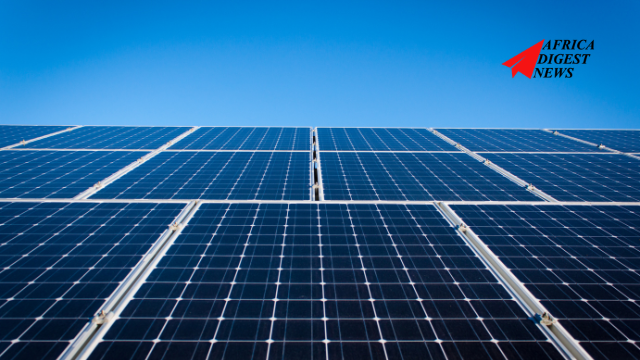
Institutional lenders assess risks in frontier energy markets by layering analysis of country, project, and partner risks, using both quantitative metrics and qualitative judgement, then structuring financing and risk-mitigation instruments to bring those risks into an acceptable range.
1. Country and macro-level assessment
Lenders first screen the country context, because most energy risks are amplified or constrained by macro conditions:
- Credit ratings and sovereign risk: They look at sovereign credit ratings, debt sustainability, external balances, and any history of default or restructuring. These form a baseline for risk appetite and pricing.
- Political and regulatory stability: They assess political cycles, policy continuity, and the risk of abrupt regulatory changes (e.g., changes to tariffs, licensing, or renewable support schemes).
- Currency and convertibility risk: For frontier markets, lenders focus on:
- Availability of foreign exchange and history of convertibility.
- Risk of devaluation or capital controls that could impair repayment in foreign currency.
This shapes whether they demand local-currency financing, hedging, or guarantees.
- Legal and enforcement framework: They examine contract law, power purchase agreement (PPA) enforceability, dispute resolution mechanisms, and the credibility of courts or arbitration. Weak enforcement increases perceived risk and cost of capital.
2. Power sector and market structure
Within the country, lenders evaluate the energy system itself:
- Utility/counterparty risk: For utility-scale projects, the main counterparty is often the central utility or state-owned generator. Lenders assess:
- Financial health of the utility (balance sheet, liquidity, arrears).
- History of PPA payments, tariff adequacy, and payment delays.
- Governance and potential for political interference in tariffs or payments.
- Tariff design and predictability: They analyze:
- Whether tariffs are cost-reflective and adjustable.
- Length and structure of PPAs (fixed vs indexed, step-ups, take-or-pay clauses).
- Risk of political tariff suppression or renegotiation.
- System integration and grid risk: They consider:
- Grid capacity, stability, and congestion at the project site.
- Risk of delays in connection or curtailment due to grid constraints.
- For storage or hybrid projects, how they fit into dispatch and market rules.
3. Project and technology risk
For each energy project, lenders conduct detailed technical and financial risk analysis:
- Resource risk: For solar, wind, and hydro, they review:
- Historical and modeled resource data (e.g. solar irradiance, wind speeds, hydro inflows).
- Uncertainty ranges and conservatism in capacity factor assumptions.
- Technology and performance risk: They evaluate:
- Equipment quality, warranties, and manufacturer track records.
- Technology maturity and O&M arrangements.
- Risk of underperformance, early failures, or obsolescence.
- Construction and completion risk: They examine:
- Experience of the EPC contractor and contractor’s balance sheet.
- Construction schedule realism, contingency, and cost escalation risk.
- Alignment of milestones with financing conditions (e.g., completion guarantees, LCs).
- Revenue and merchant risk: For projects with partial merchant exposure or market-based tariffs, they assess:
- Price volatility and correlation with demand.
- Risk of negative pricing or low-price periods.
- Hedging strategies or revenue floors.
4. Counterparty and sponsor risk
Lenders also focus on the entities behind the project:
- Sponsor strength: They look at:
- Track record in similar markets and technologies.
- Balance sheet, liquidity, and ability to support equity calls or performance guarantees.
- Governance and conflict-of-interest risks.
- Operator and O&M risk: They assess:
- Operator expertise and performance incentives in O&M contracts.
- Risk of operational failures, safety incidents, or regulatory breaches.
5. ESG, climate, and social risk
Institutional lenders increasingly integrate ESG into their risk frameworks:
- Environmental and social compliance: They review:
- Environmental impact assessments, social impact assessments, and stakeholder engagement.
- Risk of community opposition, land disputes, or delays from permitting.
- Climate risk: They consider:
- Physical climate risks (e.g. extreme weather, hydro variability).
- How the project aligns with the country’s climate strategy and international climate finance criteria.
- Reputational risk: Projects with high social or environmental controversy can trigger reputational damage, which lenders factor into their risk appetite.
6. Quantitative modelling and stress testing
Lenders use financial models to translate these risks into numbers:
- Debt service coverage: They calculate:
- Debt Service Coverage Ratio (DSCR) under base case and stress cases.
- Loan Life Coverage Ratio (LLCR) and other metrics.
- Scenario analysis: They test:
- Lower capacity factors, higher O&M costs, tariff delays, FX shocks.
- Interest rate spikes and refinancing risk.
- Credit metrics: They derive:
- Probability of default (PD) and loss given default (LGD) estimates.
- Internal risk ratings that feed into pricing and capital allocation.
This helps them decide whether a project meets their internal risk thresholds and what price (interest rate, fees) and structure are needed.
7. Use of risk-mitigation instruments
When risks are material, lenders often require or encourage risk mitigation:
- Guarantees: From DFIs, multilaterals, or sovereigns covering:
- PPA payment defaults.
- FX convertibility and transfer risk.
- Political risk (expropriation, breach of contract, war/civil disturbance).
- Insurance: For construction, delay in start-up, and operational risks.
- Structuring tools:
- Reserves accounts, escrow arrangements, and payment waterfalls.
- Step-in rights, direct agreements with authorities, and assignment of PPA.
- Currency hedging or local-currency financing where possible.
Read Also: How AfDB Is Using Policy-Based Finance to Support Kenya’s Reform Agenda
8. Risk proxies and behavioural factors
In frontier markets, lenders sometimes rely on broader proxies:
- Country risk ratings, headlines, and lack of track record: These can lead to conservative assumptions even for well-structured projects, because data is scarce and reputational risk is high.
- Peer experience and market intelligence: They weigh:
- Lessons from similar projects in the same country or region.
- Relationships with local banks, DFIs, and developers who have deeper market knowledge.
9. Portfolio-level risk management
Finally, institutional lenders view frontier energy exposure as part of a broader portfolio:
- Diversification: They limit exposure to any single country, sector, or counterparty to avoid concentration risk.
- Risk capital allocation: They may allocate a specific portion of their portfolio to frontier markets, with higher risk tolerance and pricing, but capped overall exposure.
- Monitoring and engagement: They track:
- Project performance, regulatory developments, and counterparty financials.
- Early warning indicators that could trigger remedial actions or restructuring.
In practice, frontier energy projects are only financed when the combination of strong project economics, experienced sponsors, solid PPAs, and credible risk-mitigation instruments brings the residual risk into a range that matches the lender’s return appetite and internal risk limits.
Partial risk guarantees (PRGs) are a targeted blended-finance tool that helps attract commercial debt by shielding lenders from specific non-market risks especially those tied to government or sovereign performance while leaving the borrower and commercial lenders exposed to normal commercial risks.