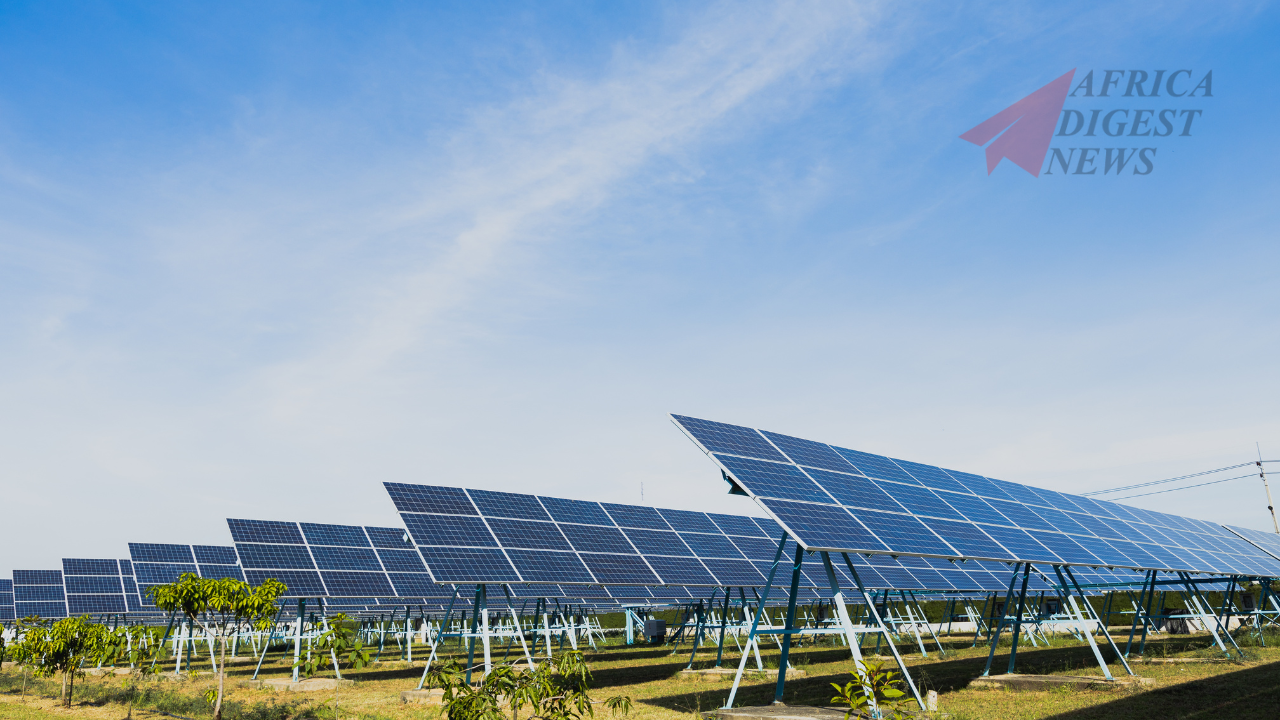
South Africa is deepening its energy partnership with China at a pivotal moment in its power transition. As Eskom launches Eskom Green, a dedicated renewable energy business, the country is expanding cooperation with Chinese partners on solar, wind, battery storage, and grid infrastructure to accelerate the shift toward cleaner electricity. The collaboration extends beyond project financing. Recent agreements between the two countries have focused on renewable energy investment, transmission upgrades, high-voltage direct current (HVDC) technology, microgrids, emergency power support, and the localisation of clean-energy manufacturing. Together, these initiatives aim to strengthen South Africa’s electricity system while supporting long-term industrial development.
The timing is significant because Eskom Green has been created to lead the utility’s renewable energy strategy. The new division will focus on developing utility-scale solar and wind projects, expanding battery storage, and supplying renewable electricity to commercial and industrial customers through mechanisms such as wheeling. Its broader objective is to help deliver approximately 40 GW of renewable generation by 2040, reducing South Africa’s dependence on coal while improving energy security. China is expected to play an important role in that transition. Chinese companies are already major suppliers of solar panels, wind turbines, battery systems, and grid equipment used across South Africa’s renewable sector. Expanding cooperation gives South Africa access not only to technology and manufacturing capacity but also to project development expertise and investment capital needed for large-scale deployment.
The partnership also addresses one of the country’s biggest challenges: modernising the electricity grid. Building renewable generation alone is not enough if transmission infrastructure cannot connect new projects to demand centres. Investment in transmission, grid reinforcement, and storage is therefore becoming just as important as investment in solar and wind farms themselves. China’s experience in large-scale grid construction and HVDC technology makes it a strategic partner in this area. Beyond infrastructure, the relationship has an industrial dimension. South Africa is seeking to increase local manufacturing and develop domestic clean-energy supply chains rather than relying entirely on imported equipment. If localisation commitments materialise, the partnership could support job creation, technology transfer, and the growth of a domestic renewable energy industry alongside new generation capacity.
Read Also: Why Kenya’s Rift Valley Transmission Line Matters for the Country’s Renewable Energy Future
The commercial implications are equally important. By combining Chinese technology and investment with Eskom Green’s role in renewable procurement and commercial power markets, South Africa aims to deliver cleaner electricity while keeping major industrial customers connected to the national grid. This aligns with the country’s growing emphasis on wheeling, commercial renewable supply, and long-term power purchase agreements.