South Africa is discovering that building renewable energy at scale can create an administrative problem before it creates a power problem. The 940 MW Koruson renewable energy cluster spans the Northern Cape and Eastern Cape, prompting the two provinces to sign a memorandum of understanding to coordinate approvals, planning and implementation. The issue is simple: a project can be designed as one energy system while government processes remain divided by provincial borders.
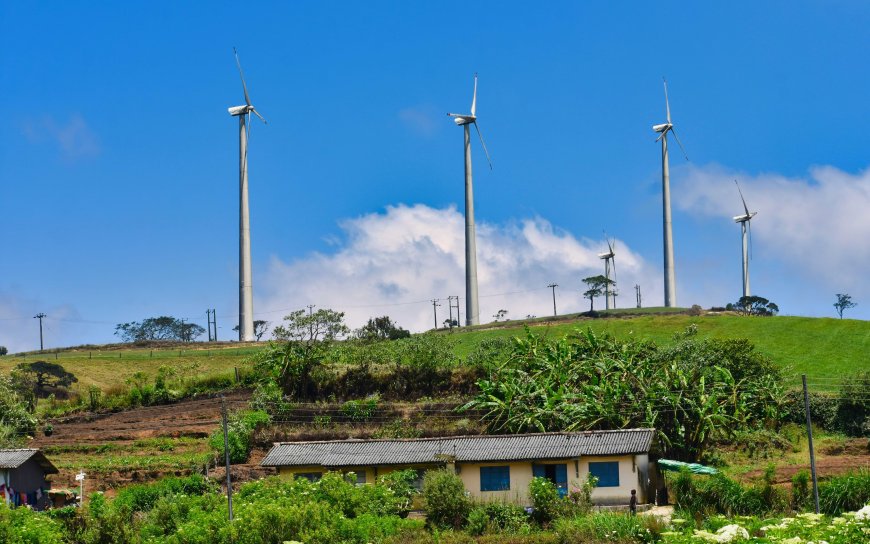
Koruson 1 comprises three 140 MW wind farms — Coleskop, Phezukomoya and Sankraal — being developed by EDF Power Solutions, alongside a planned 1.5 GW main transmission station. Koruson 2 is being developed by Envusa Energy, a joint venture between Anglo American and EDF Power Solutions, together with Pele Green Energy and a community trust. With infrastructure and communities spread across two provinces, separate planning and approval processes could create duplication, inconsistent timelines and uncertainty for developers and financiers.
The new framework is intended to remove that friction. The two provinces will coordinate spatial planning, land-use approvals and environmental reviews through a permanent inter-provincial oversight committee that includes government representatives and the developers. The committee is expected to meet quarterly and coordinate implementation, monitoring, community engagement, security, safety and emergency response. Instead of forcing a project to navigate two administrative systems independently, the provinces are creating a mechanism to manage it as one regional development.
That matters because the economics of large renewable projects extend beyond the turbines themselves. Transmission infrastructure, roads, land access, environmental approvals, local businesses and community investments all have to move together. Koruson will also have a consolidated trust through which EDF Power Solutions and Envusa Energy can align community development resources across the area, giving communities on both sides of the provincial boundary a more coordinated framework for participation in the project.
Read Also: Why Egypt Is Linking Its Wind Boom to a Turbine Manufacturing Industry
Koruson therefore points to a broader challenge for South Africa’s energy transition. As renewable projects become larger and transmission infrastructure stretches across administrative boundaries, the government’s ability to coordinate projects can become as important as the technology used to generate the electricity. If the new arrangement reduces approval delays and gives developers and lenders greater certainty, it could become a model for other infrastructure projects that no longer fit neatly inside a single province. The renewable energy build-out is creating projects that operate across borders; the institutions approving them may now have to do the same.