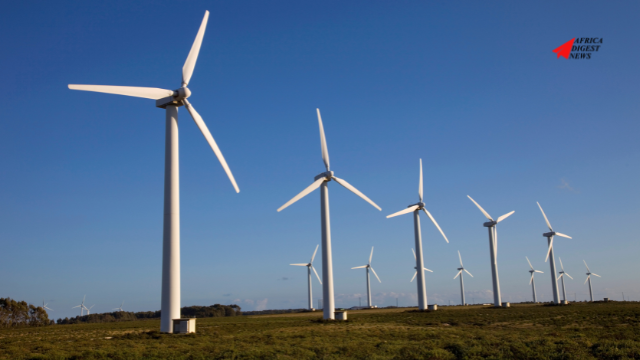
The debate often turns into a competition, as though one technology must replace the other. That approach ignores how electricity systems actually work. Power grids are built around reliability, economics and geography—not loyalty to a single energy source.
Wind and solar solve different problems. Countries that understand this are building stronger, more resilient electricity systems.
The Similarity
At their core, wind and solar achieve the same objective. They convert naturally occurring energy into electricity without burning fuel.
- A solar panel converts sunlight into electrical current.
- A wind turbine converts moving air into electrical current.
Neither consumes coal, diesel or natural gas while generating electricity. Once installed, both depend on resources that arrive every day without fuel deliveries or international supply chains. That is why both technologies have become central to Africa’s long-term energy plans.
Where Solar Has the Advantage
Africa receives some of the highest levels of solar radiation in the world.
Large parts of the continent experience abundant sunshine throughout the year, making solar an obvious choice for homes, schools, health centres and commercial buildings.
Solar also offers unmatched flexibility. A homeowner can install a small rooftop system. A factory can build its own solar plant.
Governments can develop utility-scale solar farms supplying hundreds of megawatts to the national grid. Construction timelines are generally shorter than those of large wind projects, making solar attractive where electricity demand is growing rapidly.
Its biggest limitation is equally obvious. Solar generation depends on daylight. Electricity production falls during cloudy conditions and stops entirely after sunset.
Where Wind Has the Advantage
Wind behaves differently. Strong wind resources can generate electricity during the day, throughout the night and during seasons when solar production is lower.
In locations with consistently high wind speeds, wind turbines often produce more electricity per installed megawatt than solar farms because they operate at higher capacity factors. Parts of Kenya, Egypt and Morocco consistently demonstrate this advantage.
Wind also requires fewer generating units to produce large amounts of electricity. A single modern utility-scale turbine can supply enough electricity for thousands of homes under favourable conditions.
The challenge is geography. Excellent wind resources exist only in specific regions. Unlike sunlight, which reaches nearly every part of Africa, commercially viable wind corridors are concentrated in particular coastal areas, mountain passes and elevated plains.
Comparing Wind and Solar
| Factor | Wind Energy | Solar Energy |
| Primary Resource | Wind | Sunlight |
| Best Locations | Coastal areas, ridges, high plateaus | Nearly every region with good sunlight |
| Electricity Production | Day and night when wind is available | Daylight only |
| Typical Capacity Factor | Higher | Lower |
| Construction Speed | Moderate | Faster |
| Best Scale | Utility-scale projects | Utility-scale and distributed systems |
| Land Use | Land beneath turbines often remains usable for farming | Solar arrays occupy more continuous surface area |
| Maintenance | More mechanical components | Fewer moving parts |
Which Costs Less?
There is no universal answer. Cost depends on local conditions. A wind farm built in an area with poor wind speeds will struggle to compete with solar. Likewise, a solar project affected by persistent cloud cover or limited land may produce less value than a nearby wind installation.
The quality of the resource matters more than the technology itself. Developers therefore begin with detailed resource assessments before deciding what to build. Projects located in high-resource areas consistently deliver lower electricity costs because they generate more energy over their operating lives.
Which Is Better for Africa?
The question assumes there can only be one winner. There isn’t. Africa’s geography is too diverse for a single answer. Northern Kenya has some of the continent’s strongest wind resources. The Sahara receives extraordinary levels of solar radiation.
South Africa possesses both. Egypt has world-class wind corridors along the Gulf of Suez while also developing major solar projects. Different regions demand different solutions. Trying to power the entire continent with one technology would ignore the natural advantages each country possesses.
Why Wind and Solar Work Better Together
Electricity demand does not disappear when the sun sets. Factories continue operating. Hospitals remain open. Telecommunications networks stay active.
This is where wind and solar complement one another. Solar generally produces its highest output during daylight hours. Wind often strengthens during evening and nighttime periods in many regions.
Together they reduce dependence on any single weather pattern while creating a steadier supply of renewable electricity.
When battery storage, hydropower and modern transmission networks are added to the mix, electricity systems become even more dependable. This complementary approach is increasingly reflected in power system planning across Africa.
The Better Question
Asking whether wind is better than solar oversimplifies Africa’s energy challenge.
The better question is this: Which renewable resource produces the greatest amount of dependable electricity at the lowest long-term cost in this location? The answer changes from one region to another.
Africa possesses exceptional solar resources. It also possesses world-class wind corridors. Countries that develop both according to their natural strengths will build stronger grids, reduce dependence on imported fuels and create electricity systems capable of supporting industrial growth for decades to come.


