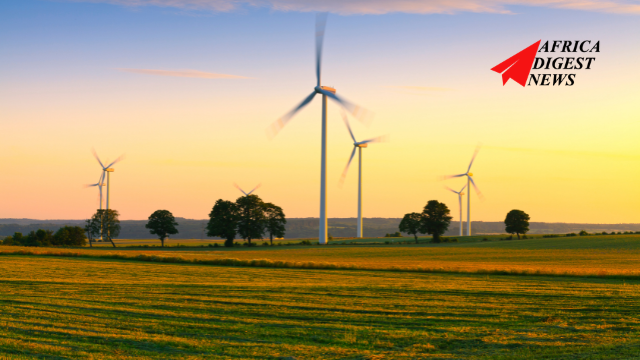
South Africa’s energy transition is increasingly being positioned as an industrial strategy rather than simply a response to the electricity crisis. President Cyril Ramaphosa says reforms implemented under the Energy Action Plan have helped unlock billions of rand in new generation investment, expand private-sector participation and bring the country to a point where rolling blackouts have largely been brought under control. The next challenge, he argues, is to turn improved electricity availability into cheaper power, stronger industry and new manufacturing opportunities.
The reforms have opened significant space for private investment through independent power producers, renewable-energy procurement, battery-storage projects and private power purchase agreements. At the same time, the creation of the National Transmission Company South Africa (NTCSA) is intended to establish a more independent transmission system and provide greater access to the grid. Ramaphosa also points to the planned South African Wholesale Electricity Market, which would allow multiple generators to compete to supply electricity rather than relying predominantly on a vertically integrated utility model.
For Ramaphosa, however, attracting renewable investment is only part of the transition. He wants South Africa to capture more of the industrial value created by the shift to clean energy. That means developing local manufacturing capacity for solar panels, wind turbines, batteries, transformers, transmission equipment and other components. The government is using its broader infrastructure programme—including transmission, rail, ports and water investment—to create sufficient demand and certainty for domestic manufacturers to invest.
Read Also: Sasol Taps Envision Energy to Design Green Hydrogen System in South Africa
The scale of the opportunity is substantial. Government is promoting an estimated R2.2 trillion energy investment pipeline through 2039, including about R440 billion for transmission expansion, with plans for roughly 105 GW of additional generation capacity and 14,500 km of new transmission lines. International climate finance is also playing a role, with South Africa’s Just Energy Transition Partnership initially mobilising $8.5 billion from international partners for areas including renewable energy, transmission, electric vehicles and green hydrogen.
But the transition is entering a more difficult phase. Ending load shedding does not automatically mean affordable electricity, and rising power prices are increasingly a concern for energy-intensive industries such as metals and engineering. There are also tensions over how quickly Eskom should transfer transmission assets to NTCSA and how aggressively the grid should be opened to private generators. Ramaphosa’s argument is ultimately that South Africa must move from solving an electricity shortage to building a competitive electricity market—one capable of delivering reliable, affordable power while turning the clean-energy transition into investment, manufacturing and industrial growth.