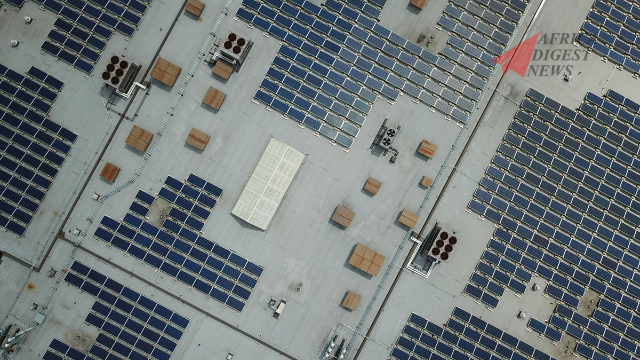
Coca-Cola Beverages Africa has commissioned a 4-megawatt solar power installation across its bottling facilities in Kenya, marking a step forward in the company’s strategy to integrate renewable energy into its manufacturing operations while improving energy cost stability. The distributed solar rollout forms part of the group’s broader effort to reduce emissions from production sites across Africa and strengthen long-term operational resilience in energy-intensive manufacturing environments.
Installed across several bottling plants, the photovoltaic systems are designed to supply a portion of the electricity required for daily production activities. The project reduces reliance on grid electricity, helping limit exposure to price volatility while supporting cleaner industrial power consumption. For beverage manufacturers operating at scale, energy costs represent a significant component of production expenditure.
On-site solar generation provides a predictable supply source that improves planning certainty while lowering dependence on fossil-fuel-linked electricity systems. In Kenya, where renewable energy already represents a substantial share of national generation, distributed solar installations further strengthen reliability at the facility level.
The project aligns with The Coca-Cola Company’s global sustainability programme under its World Without Waste framework, which includes commitments to reduce greenhouse-gas emissions and expand renewable energy use across operations worldwide. Industrial solar adoption is increasingly becoming part of corporate decarbonisation strategies across Africa.
Read Also: Cross-Border Electricity Trade in Africa: Powering Regional Integration
Companies are turning to on-site renewable generation not only to meet environmental targets but also to manage operational risks associated with energy supply disruptions. Kenya’s high solar irradiation levels make distributed photovoltaic systems particularly effective for supporting manufacturing loads throughout the year.
The installation also supports national renewable energy ambitions by demonstrating how private-sector investment can complement public electricity infrastructure development. During the construction phase, the project generated employment opportunities for local workers, while ongoing maintenance and monitoring requirements will continue to support technical jobs linked to renewable energy deployment.
As more manufacturers adopt distributed solar systems, projects like this are helping define a new model for industrial energy use across the region. For Coca-Cola Beverages Africa, the 4-megawatt rollout signals a practical shift toward cleaner production systems while reinforcing Kenya’s position as one of the continent’s leading markets for corporate renewable energy integration.
By Thuita Gatero, Managing Editor, Africa Digest News. He specializes in conversations around data centers, AI, cloud infrastructure, and energy.