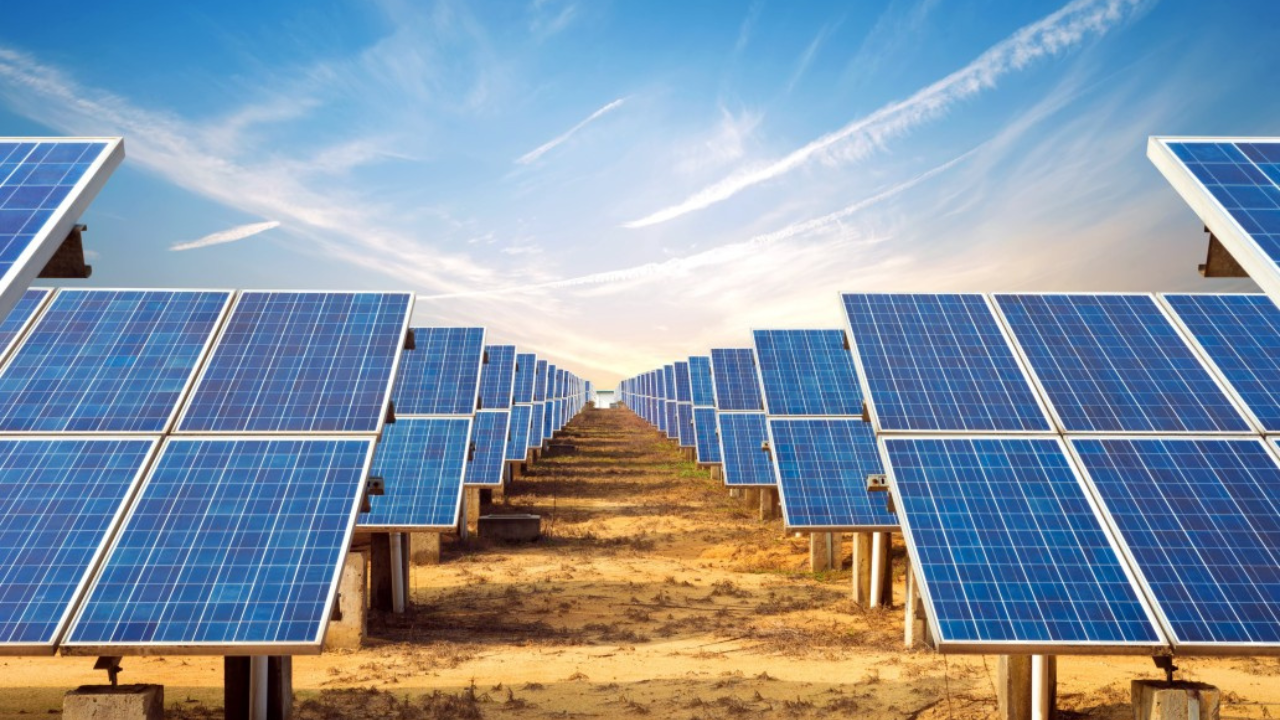
Côte d’Ivoire is financing a 66 MW solar plant in a way that could matter far beyond the project itself. The Poro Power Green Bond, tied to the Korhogo solar project in the northern Poro region, is being described as the first project-finance green bond issued in Côte d’Ivoire and the wider West African Economic and Monetary Union. More importantly, the institutions behind the transaction were African. Africa Finance Corporation led the financing, reaching financial close in April 2026 and disbursing €43 million from a €65 million dual-currency facility.
The real innovation, however, is not the word “green” on the bond. It is the currency structure. Part of the financing is in CFA francs while the plant will earn revenue from selling electricity in local currency. That sounds technical, but it addresses one of the less visible problems in African infrastructure finance: the project earns money in one currency while its lenders demand repayment in another. If the local currency weakens, a project can become more expensive to finance even when the power plant itself is performing exactly as planned. Matching part of the debt to the revenue currency reduces that mismatch.
That is particularly important for solar because the financing challenge is often bigger than the technology challenge. A 66 MW solar farm does not require an untested technology; what it requires is enough long-term capital, a credible buyer for its electricity and a financing structure that can survive currency and market risks. Poro Power 1 SA, the special-purpose company behind the project and led by Ivorian group PFO Africa, is effectively demonstrating that African financial institutions can assemble those pieces without relying entirely on offshore capital.
Read Also: What’s Really Driving Africa’s Solar Expansion
The plant is expected to become Côte d’Ivoire’s largest solar facility when it begins operating in 2027. It is projected to supply electricity to more than 100,000 households and avoid more than 72,000 tonnes of CO₂ emissions a year. Those numbers matter, but the more interesting outcome may be what happens after Korhogo. If the structure works, other renewable projects in the UEMOA market have a model for raising long-term capital in regional markets while keeping part of their debt aligned with the currency in which they earn revenue.
Africa does not necessarily have a shortage of money. It often has a shortage of financial structures that make African projects investable to African capital. The Poro bond tests whether local-currency financing, regional institutions and green capital can become a repeatable way of building infrastructure rather than a one-off transaction. Côte d’Ivoire’s 66 MW plant is therefore only part of the story. The bigger question is whether Africa can start financing more of its power infrastructure in the same way it consumes it, in its own markets, through its own institutions and in currencies closer to where the revenue is generated.